
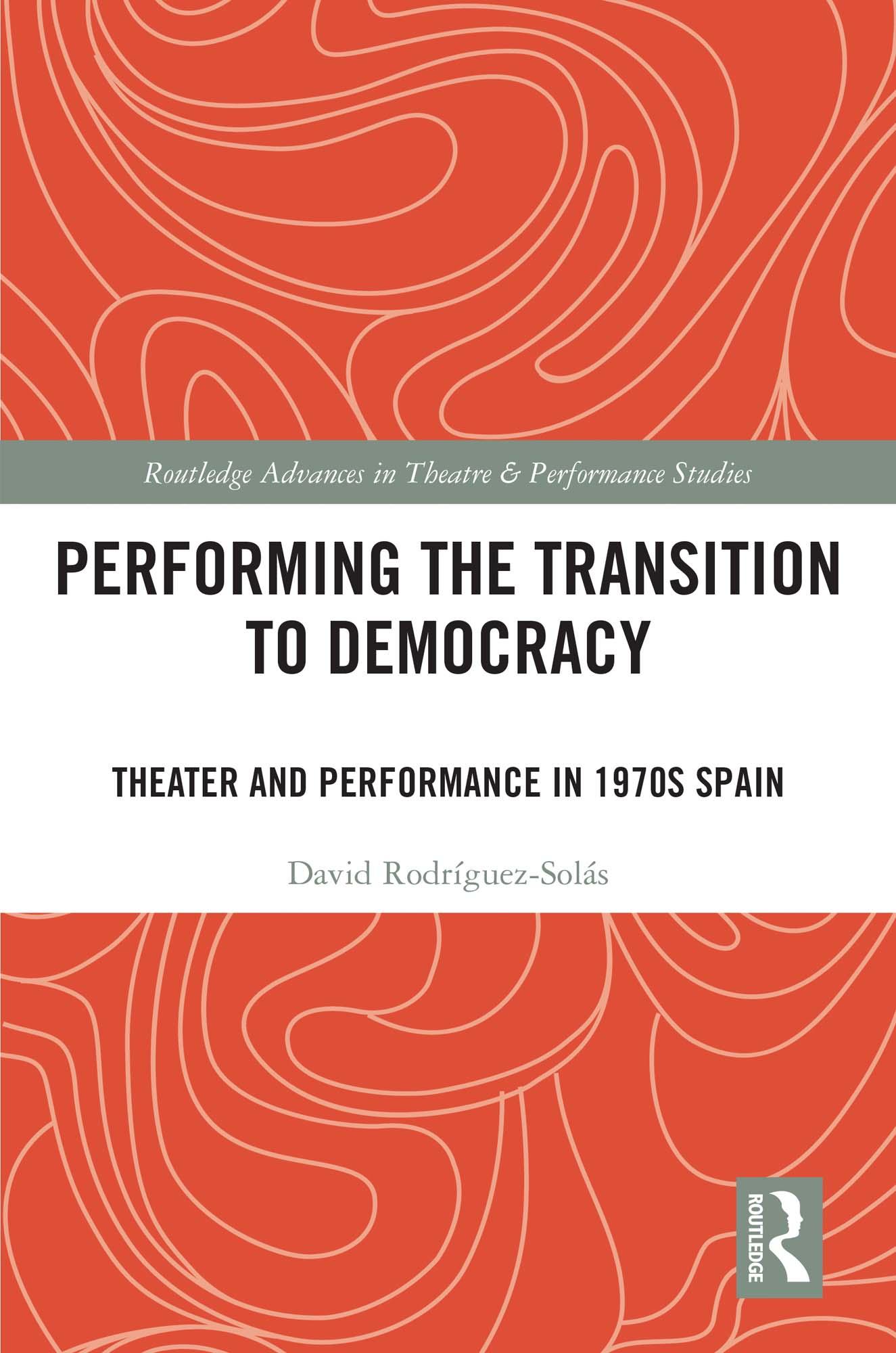
This book examines troupes, plays, festivals, performative practices, and audiences active during the final years of the Franco dictatorship and the beginning of the transition to democracy.
This period, spanning 1968 to 1982, is considered the historical moment that most directly shaped contemporary Spanish politics and society. The dominant narrative of the Transition has long portrayed it as a normalized, non-confrontational, and consensual process steered by political elites. But the world of Spanish theater tells a very different story - one in which ordinary Spaniards played a vital role in the transition to democracy. The chapters of this book draw on censorship files, photographs, audiovisual and textual material, and the author’s own interviews with more than a dozen audience and troupe members. Using these sources, David Rodriguez-Solas examines the notable experimentation during this period with theatrical performance and music; the establishment of performing spaces and festivals; the development of touring networks as a way to evade censorship; and the creation of networks of support that opposed diverse forms of violence and repression.
This study will be of great interest to students and scholars interested in theater and the cultural and political history of Spain in the 1960s and 1970s.
Betal nemt med kort, Klarna, Apple Pay eller Google Pay. Ikke tilfreds? Du har altid 14 dages fortrydelsesret. Læs mere i vores vilkår. Har du spørgsmål, så send os en mail på hello@memmo.org.
Memmo gør det nemmere at studere – uanset hvor du er i verden. Hos os samler du dine kursusbøger og smarte studieværktøjer ét sted: resuméer, quizzer, podcasts og flashcards. Og så er der Ted, din studieven, der svarer på alt, du undrer dig over. Over 50 000 studerende studerer allerede her – bygget til at hjælpe dig med at lære hurtigere og stresse mindre.