
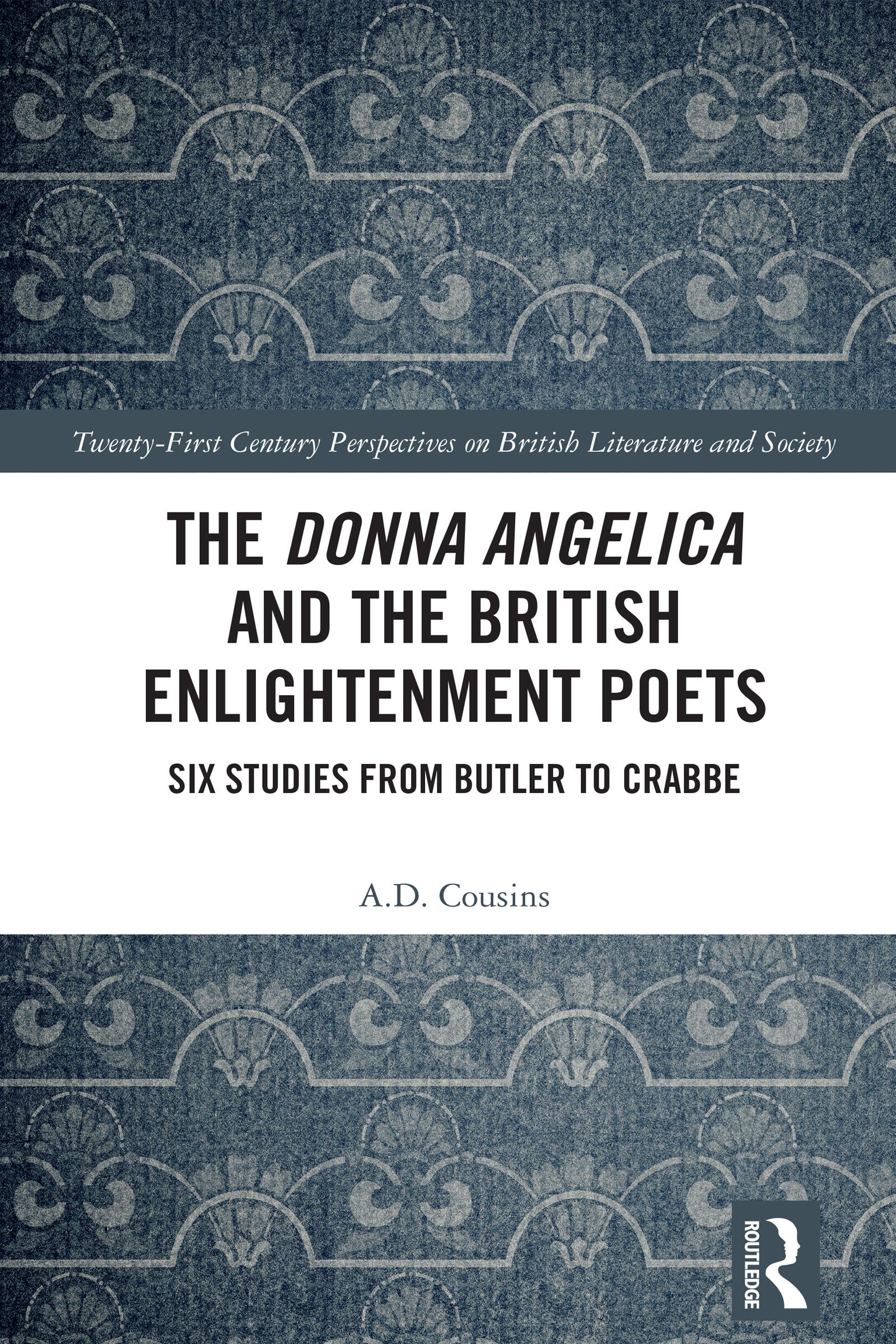
The aim of the book is to propose new interpretations of poets who are among the most valued and discussed in the British Enlightenment. In fulfilling its aim, the book covers English poetry—and intellectual history—from the Restoration to the later eighteenth century. It examines how the myth of the donna angelica (the angelic lady), ancient in origin but given its best-known form within the medieval literature of fin’amor, lives on beyond the Middle Ages and the Renaissance into the Enlightenment. To be more precise, it studies how some major Augustan poets appropriate and recreate what, for convenience, can be called the donna angelica topos (or, the angelic lady motif). They do so for a great many reasons linked with quite diverse circumstances. Nevertheless, the myth’s intellectual richness, emotional intensity, and inherent ambiguities mean that it offers each of them a powerful way for articulating, interpreting, exploring refractions of eros—whether singly or diversely directed, concerned with sexuality or spirituality, informing personal or public experience. The myth has as many faces, so to speak, as does desire; it is one and yet many. Thus, the book pursues a particular fable of eros that appears in a multiplicity of texts in a multiplicity of guises. It studies how some of the most interesting poets from Dryden to Crabbe bring the angelic lady motif into modernity.
Betal nemt med kort, Klarna, Apple Pay eller Google Pay. Ikke tilfreds? Du har altid 14 dages fortrydelsesret. Læs mere i vores vilkår. Har du spørgsmål, så send os en mail på hello@memmo.org.
Memmo gør det nemmere at studere – uanset hvor du er i verden. Hos os samler du dine kursusbøger og smarte studieværktøjer ét sted: resuméer, quizzer, podcasts og flashcards. Og så er der Ted, din studieven, der svarer på alt, du undrer dig over. Over 50 000 studerende studerer allerede her – bygget til at hjælpe dig med at lære hurtigere og stresse mindre.