
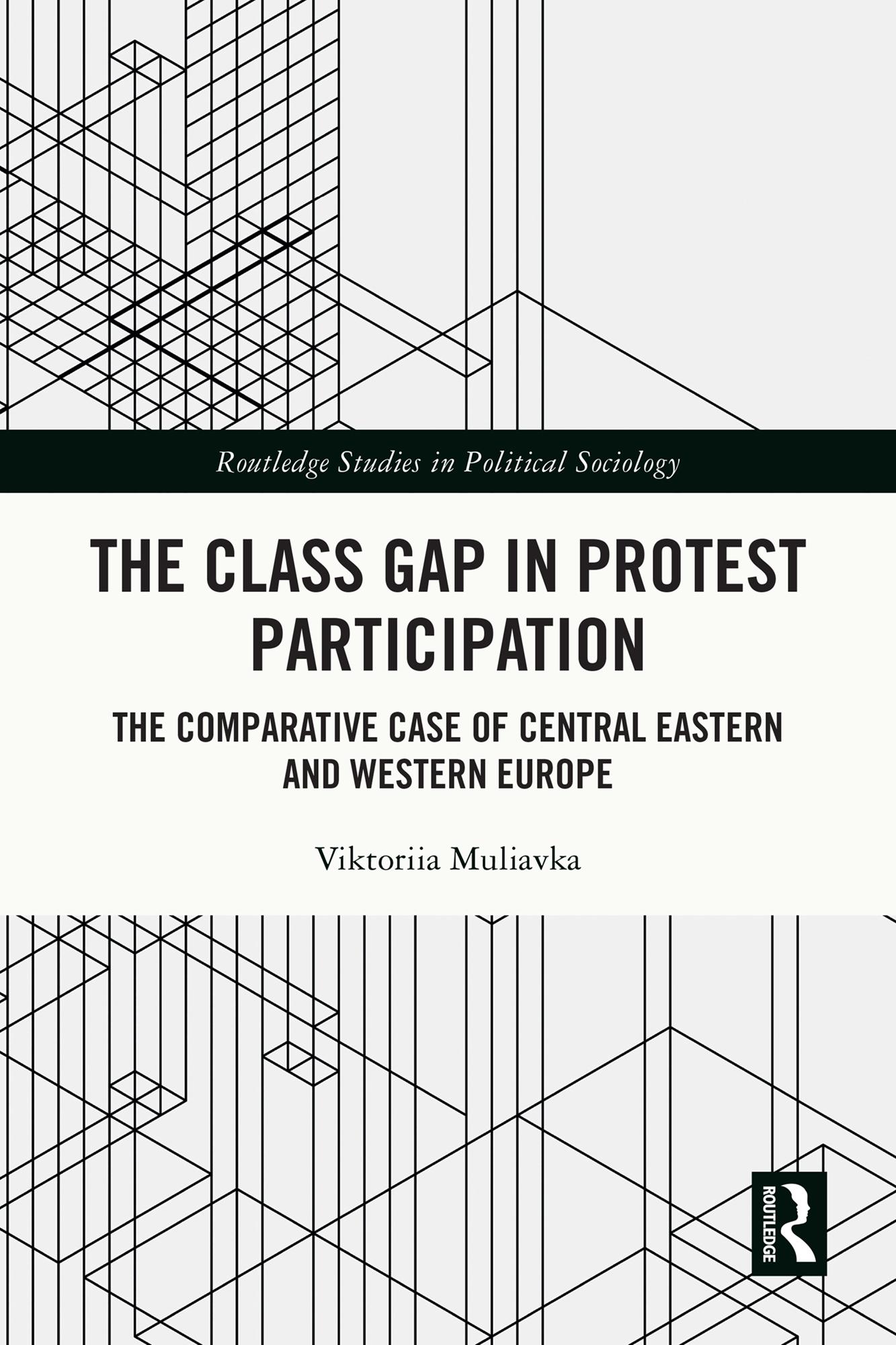
The Class Gap in Protest Participation discusses a theoretically grounded empirical analysis of the relationship between class and protest involvement across Central Eastern and Western Europe.
In recent decades, mass protests have surged in both frequency and scale, yet there remains a significant variability in citizen involvement in non-electoral politics across Europe. While affluent Western democracies often witness robust civic engagement, countries of Central and Eastern Europe exhibit comparatively limited political participation. This regional gap is particularly pronounced when examining post-socialist workers who show minimal protest activity. Addressing this phenomenon, the book starts from the following question: Why do workers in Central and Eastern Europe demonstrate disproportionately lower rates of protest engagement compared to their Western European counterparts? The study reveals that the answer lies beyond conventional explanations such as legacies of communism. Cross-regional disparities in working-class protest activism are driven by differences in labor protection and left mobilization capacity. These variations stem from the historical context and the economic dependency of post-socialist countries, which create distinct conditions for workers' political engagement in the core and (semi-)periphery.
This book will be of interest to political scientists and sociologists, especially researchers interested in political participation, social inequality, and post-socialist transformations.
Betal nemt med kort, Klarna, Apple Pay eller Google Pay. Ikke tilfreds? Du har altid 14 dages fortrydelsesret. Læs mere i vores vilkår. Har du spørgsmål, så send os en mail på hello@memmo.org.
Memmo gør det nemmere at studere – uanset hvor du er i verden. Hos os samler du dine kursusbøger og smarte studieværktøjer ét sted: resuméer, quizzer, podcasts og flashcards. Og så er der Ted, din studieven, der svarer på alt, du undrer dig over. Over 50 000 studerende studerer allerede her – bygget til at hjælpe dig med at lære hurtigere og stresse mindre.