
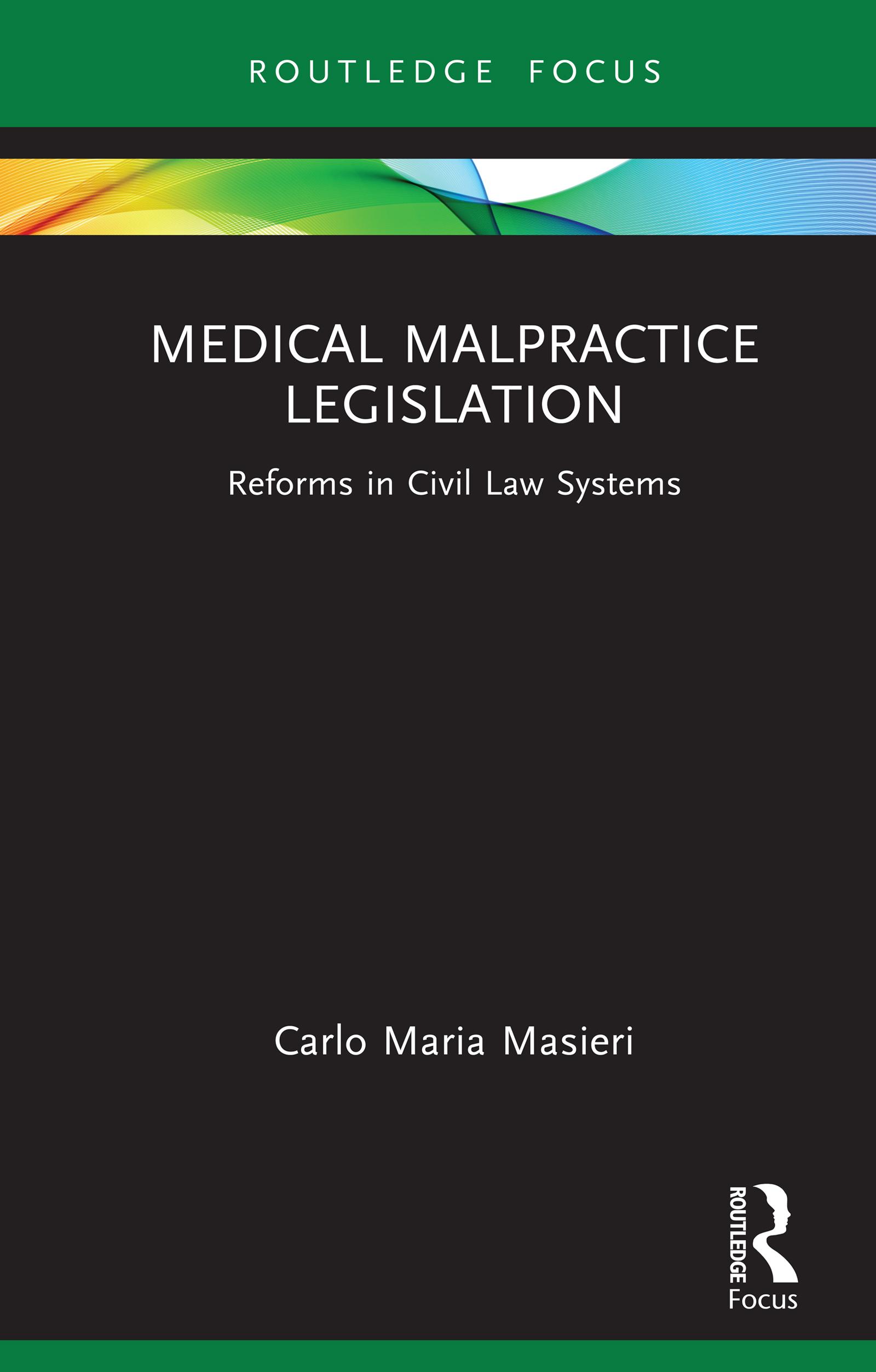
This book aims to analyse the legal tools that the legislatures of France, Germany and Italy adopted in order to regulate medical malpractice.
In the mid-1970s, a reform movement started in the United States, where there was considerable concern about then ongoing medical malpractice crises. Since the beginning of the current century, France, Germany and Italy have passed statutes that aim to reform medical liability rules. Thus, it is first interesting to assess whether any medical malpractice crises have been identified in these systems and, second, how these have been faced through the passing of new statutes on the continent. Accordingly, the first chapter explores the idea of medical malpractice crisis and its relationship with the insurance market, also considering the reflections of American scholars. It then reconstructs the French, German and Italian legal frameworks, as well as their insurance and litigation contexts, reviewing and commenting on the quantitative evidence that was collected before the reforms. The second chapter briefly summarises the debate on medical malpractice reforms in France, Germany and Italy. It then analyses the statutes that have been passed, distinguishing between reforms that consolidate case law and reforms that introduce innovative solutions, sometimes repealing court-developed doctrines. In particular, the chapter examines in a comparative perspective the diff erent options adopted in these civil law countries with regard to the rules on liability, burden of proof, statute of limitations and damages. Moreover, the chapter examines the reforms of insurance, procedural and evidence law, to the extent they affect medical malpractice cases. The third chapter reviews and analyses the current available data related to medical malpractice litigation and insurance after the reforms adopted in France, Germany and Italy, in order to find out evidence of their effectiveness and efficiency. It also highlights some aspects of medical malpractice law that still belong to the domain of the judiciary. It finally points out which problems may be addressed by the legislatures and what further data should be collected in the future.
This work may interest legal scholars, healthcare providers, insurers and policymakers.
Betal nemt med kort, Klarna, Apple Pay eller Google Pay. Ikke tilfreds? Du har altid 14 dages fortrydelsesret. Læs mere i vores vilkår. Har du spørgsmål, så send os en mail på hello@memmo.org.
Memmo gør det nemmere at studere – uanset hvor du er i verden. Hos os samler du dine kursusbøger og smarte studieværktøjer ét sted: resuméer, quizzer, podcasts og flashcards. Og så er der Ted, din studieven, der svarer på alt, du undrer dig over. Over 50 000 studerende studerer allerede her – bygget til at hjælpe dig med at lære hurtigere og stresse mindre.