
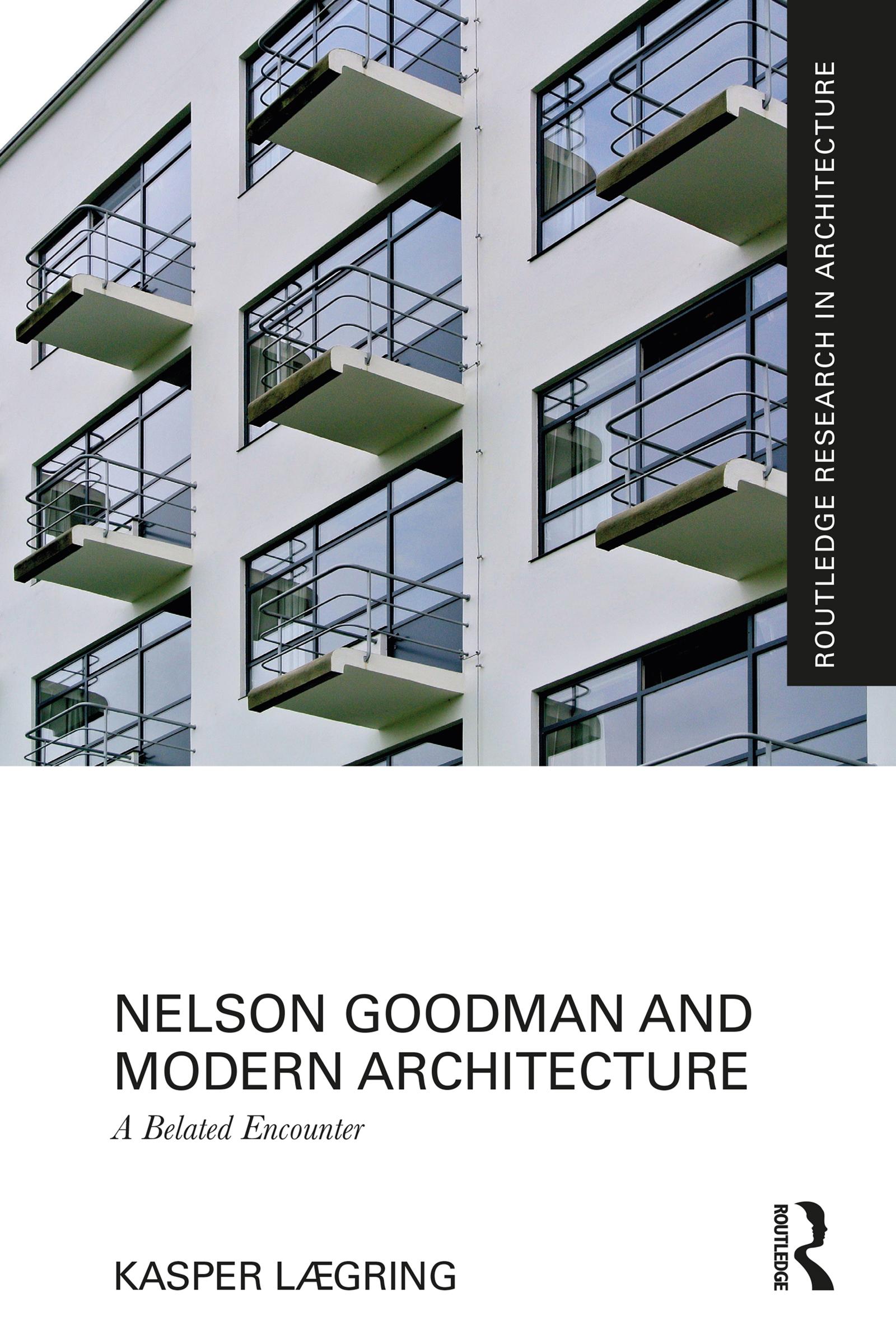
This book orchestrates a convergence of two discourses from the 1960s—Nelson Goodman’s aesthetic theory on one side and critiques of modern architecture articulated by figures like Peter Blake, Charles Jencks, and Robert Venturi/Denise Scott Brown on the other. Grounded in Goodman’s aesthetic theory, the book explores his conceptual framework within the context of modern architecture.
At the heart of the investigation lies Goodman’s concept of exemplification. While his notion of denotation pertains to representational elements, often ornaments, in architecture, exemplification accentuates specific formal properties at the expense of others, including color, spatial orientation, transparency, seriality, and the like. Supplemented by findings from phenomenology, the book traces these effects in buildings, notably those by Ludwig Mies van der Rohe, Walter Gropius, Le Corbusier, and Frank Lloyd Wright—all key figures in the critiques of modern architecture.
Employing Goodman’s framework, the book aims to address accusations of emptiness and alienation directed at modern architecture in the postwar era. It illustrates that modern architecture symbolizes aesthetically in a fundamentally different way than architecture from earlier periods.
This book will be of interest to architects, artists, researchers, and students in architecture, architectural history, theory, cultural theory, philosophy, and aesthetics.
Betal nemt med kort, Klarna, Apple Pay eller Google Pay. Ikke tilfreds? Du har altid 14 dages fortrydelsesret. Læs mere i vores vilkår. Har du spørgsmål, så send os en mail på hello@memmo.org.
Memmo gør det nemmere at studere – uanset hvor du er i verden. Hos os samler du dine kursusbøger og smarte studieværktøjer ét sted: resuméer, quizzer, podcasts og flashcards. Og så er der Ted, din studieven, der svarer på alt, du undrer dig over. Over 50 000 studerende studerer allerede her – bygget til at hjælpe dig med at lære hurtigere og stresse mindre.