
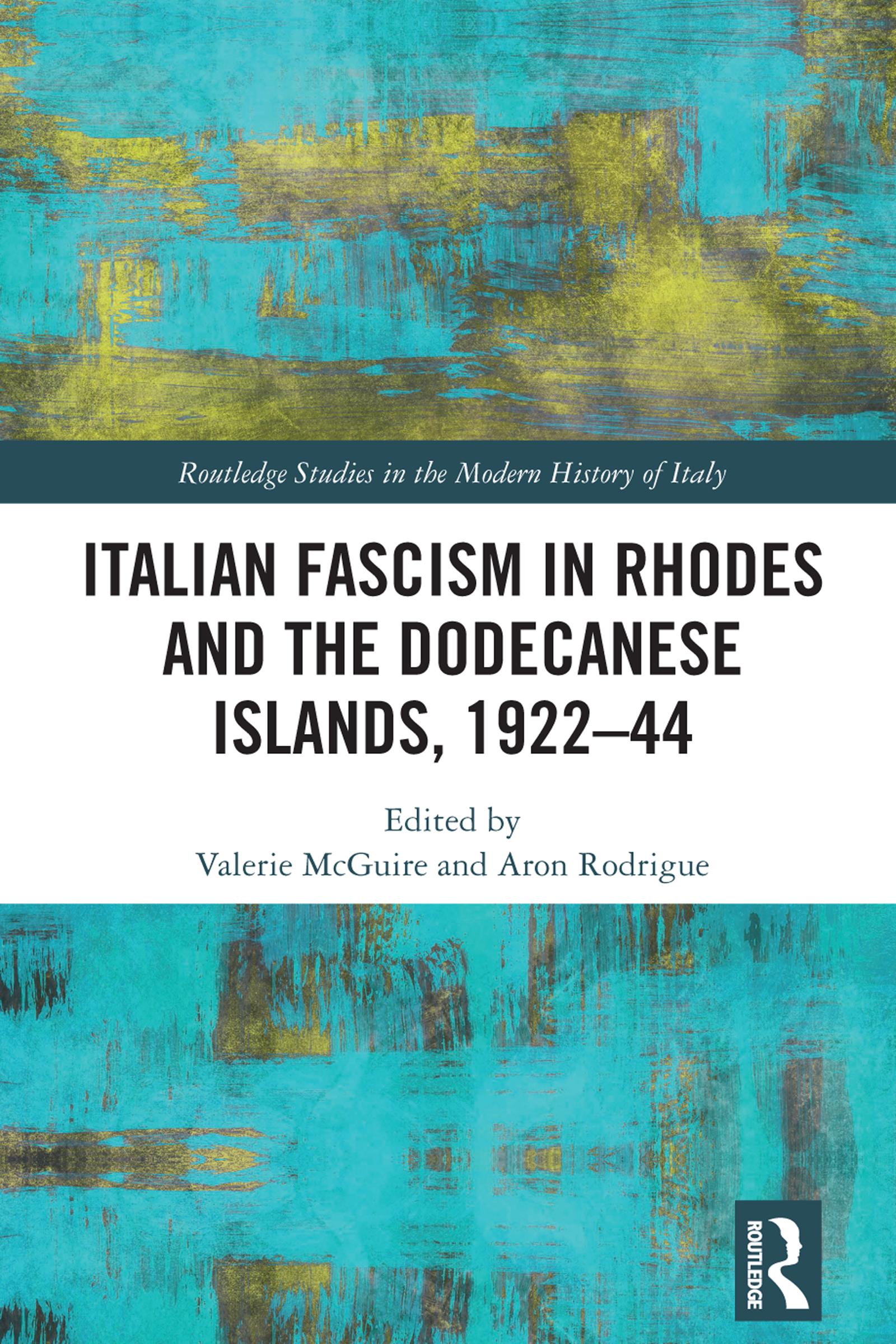
This book is the first English-language collection of scholarly essays to investigate the ambiguous and supporting role that colonialism in the Aegean Region played in Mussolini’s imperial ambitions, bringing to light a history rarely scrutinized until recently.
The Dodecanese archipelago is often absent from histories of Italian fascist colonialism, as Italian territories in East Africa, Libya, and the Balkans have figured more centrally in discussions of how nationalism and later fascism relied on the empire to promote discourses of national renewal and regeneration. Over the past twenty years, a new wave of research has emerged, animated by the opening of previously closed state archives in various countries. This volume’s international contributors provide fresh perspectives on a topic frequently mythologized as a “golden period” of social and cultural intimacy among twentieth-century Greeks, Turks, and Jews. Themes include the fascist adaptation in the islands of Ottoman imperial governance, programs of infrastructure, development, and administration in the Dodecanese, Jewish history and memory in Rhodes, and the place of the islands in larger regional tensions of the interwar period.
The volume will be of interest to scholars of Italian history, modern colonialism, fascism, Mediterranean studies, the end of the Ottoman Empire, and Sephardic Jewry.
Betal nemt med kort, Klarna, Apple Pay eller Google Pay. Ikke tilfreds? Du har altid 14 dages fortrydelsesret. Læs mere i vores vilkår. Har du spørgsmål, så send os en mail på hello@memmo.org.
Memmo gør det nemmere at studere – uanset hvor du er i verden. Hos os samler du dine kursusbøger og smarte studieværktøjer ét sted: resuméer, quizzer, podcasts og flashcards. Og så er der Ted, din studieven, der svarer på alt, du undrer dig over. Over 50 000 studerende studerer allerede her – bygget til at hjælpe dig med at lære hurtigere og stresse mindre.