
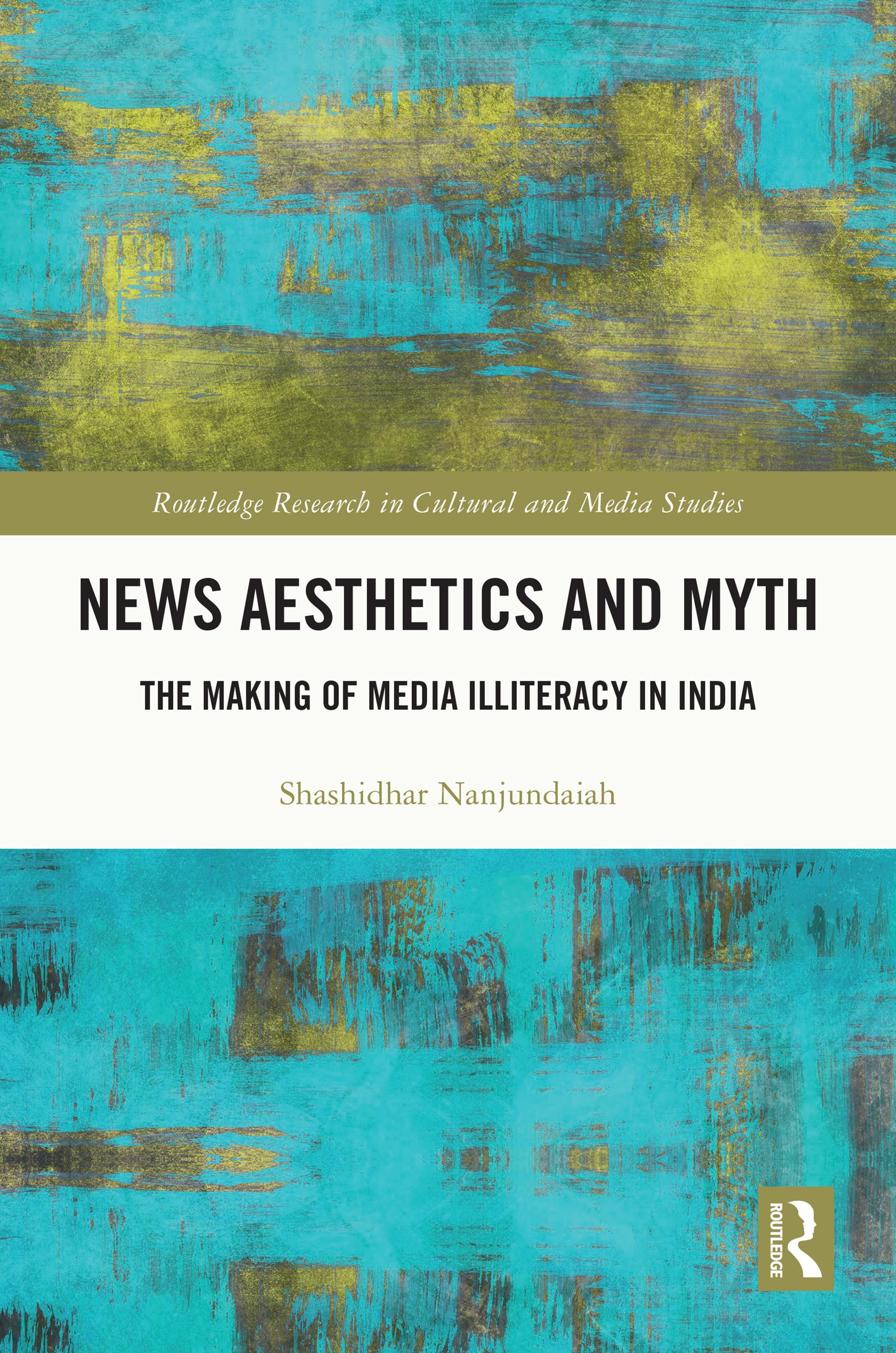
This book considers the presence of media illiteracy in a world in which we are supposedly consumed by media, live a media life, in a media ecosystem, surrounded by mediated communication.
Unpacking this paradoxical situation, the author proposes that before venturing into media literacy, we must first understand the workings of how mystification occurs. Departing from the idea that aesthetics work on an agreed set of principles between art and society, the author applies this ideology of aesthetics to news-based narration. Using empirical cases from India, the author proposes demystification as a possible methodology to approach media illiteracy and recommends completely transformed media literacy programs that deliver to communities, drawing from the construct of critical pedagogy. The book offers the possibilities for a collectivistic, non-Western, postcolonialist model of learning by using the very collective and hierarchical identities of societies that must be critiqued.
This vital and innovative book will be an important resource for scholars and students in the areas of media literacy and critical media literacy, media education, journalism, mass communication, aesthetics and media technology.
Betal nemt med kort, Klarna, Apple Pay eller Google Pay. Ikke tilfreds? Du har altid 14 dages fortrydelsesret. Læs mere i vores vilkår. Har du spørgsmål, så send os en mail på hello@memmo.org.
Memmo gør det nemmere at studere – uanset hvor du er i verden. Hos os samler du dine kursusbøger og smarte studieværktøjer ét sted: resuméer, quizzer, podcasts og flashcards. Og så er der Ted, din studieven, der svarer på alt, du undrer dig over. Over 50 000 studerende studerer allerede her – bygget til at hjælpe dig med at lære hurtigere og stresse mindre.