
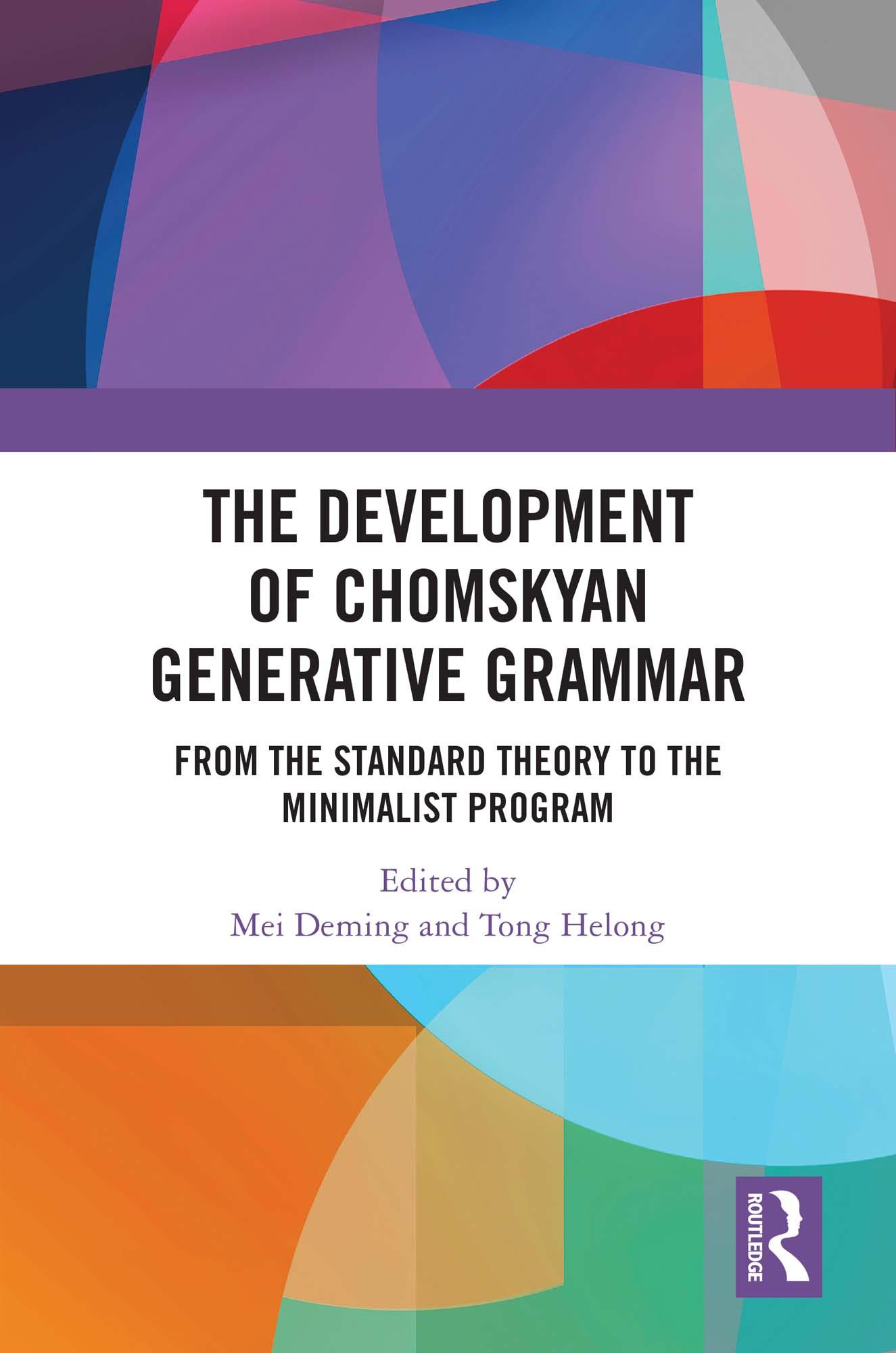
This book explores the major theories of generative grammar from a historical perspective, providing an overview of the evolution of this linguistic framework.
Generative grammar is widely recognized for its major contributions to the study of theoretical linguistics in the twentieth century and has had a profound impact on the fields of linguistics, psychology, computer science, and cognitive science. This book consists of eight chapters that trace the development of generative grammar from its beginnings to its current focus on minimalism. The first chapter outlines the major stages of generative grammar, namely Classical Theory, Standard Theory, Extended Standard Theory, Revised Extended Standard Theory, Government and Binding Theory, and the Minimalist Program. The second chapter reviews the development of the C‑command relation and illustrates its use in syntactic analysis. Each of the following six chapters focuses on a specific area of generative grammar, including phrase structure, movement, Case, argument structure, binding, and raising and control.
The volume will be an invaluable resource for researchers, teachers, and students in the fields of generative grammar, syntax, formal linguistics, and the social and cognitive sciences.
Betal nemt med kort, Klarna, Apple Pay eller Google Pay. Ikke tilfreds? Du har altid 14 dages fortrydelsesret. Læs mere i vores vilkår. Har du spørgsmål, så send os en mail på hello@memmo.org.
Memmo gør det nemmere at studere – uanset hvor du er i verden. Hos os samler du dine kursusbøger og smarte studieværktøjer ét sted: resuméer, quizzer, podcasts og flashcards. Og så er der Ted, din studieven, der svarer på alt, du undrer dig over. Over 50 000 studerende studerer allerede her – bygget til at hjælpe dig med at lære hurtigere og stresse mindre.