
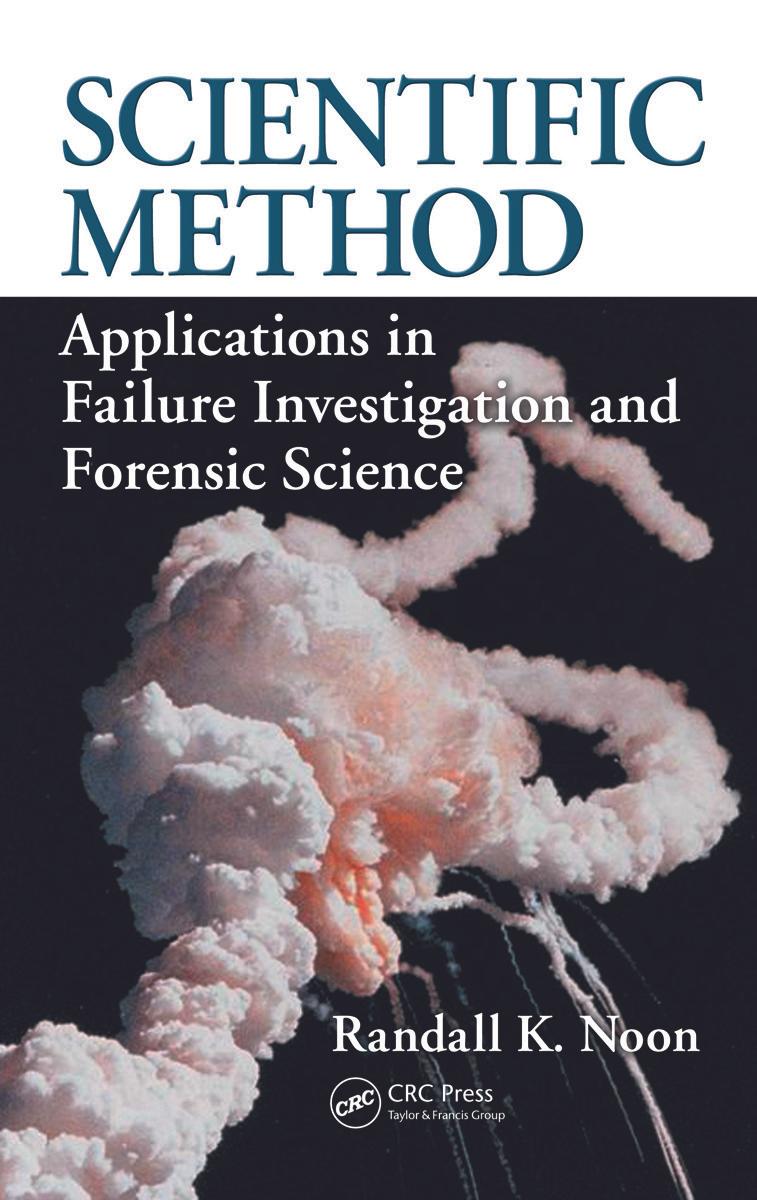
Most failure or accident investigations begin at the end of the story: after the explosion, after the fire has been extinguished, or after the collapse. In many instances, information about the last event and the starting event is known reasonably well. Information about what occurred between these endpoints, however, is often unclear, confusing, and perhaps contradictory. Scientific Method: Applications in Failure Investigation and Forensic Science explains how scientific investigative methods can best be used to determine why and how a particular event occurred.
While employing examples from forensic engineering, the book uses principles and ideas applicable to most of the forensic sciences. The author examines the role of the failure investigator, describes the fundamental method for investigation, discusses the optimal way to organize evidence, and explores the four most common reasons why some investigations fail. The book provides three case studies that exemplify proper report writing, contains a special chapter profiling a criminal case by noted forensic specialist Jon J. Nordby, and offers a reading list of resources for further study.
Concise and illustrative, this volume demonstrates how the scientific method can be applied to failure investigation in ways that avoid flawed reasoning while delivering convincing reconstruction scenarios. Investigators can pinpoint where things went wrong, providing valuable information that can prevent another catastrophe.
Betal nemt med kort, Klarna, Apple Pay eller Google Pay. Ikke tilfreds? Du har altid 14 dages fortrydelsesret. Læs mere i vores vilkår. Har du spørgsmål, så send os en mail på hello@memmo.org.
Memmo gør det nemmere at studere – uanset hvor du er i verden. Hos os samler du dine kursusbøger og smarte studieværktøjer ét sted: resuméer, quizzer, podcasts og flashcards. Og så er der Ted, din studieven, der svarer på alt, du undrer dig over. Over 50 000 studerende studerer allerede her – bygget til at hjælpe dig med at lære hurtigere og stresse mindre.