
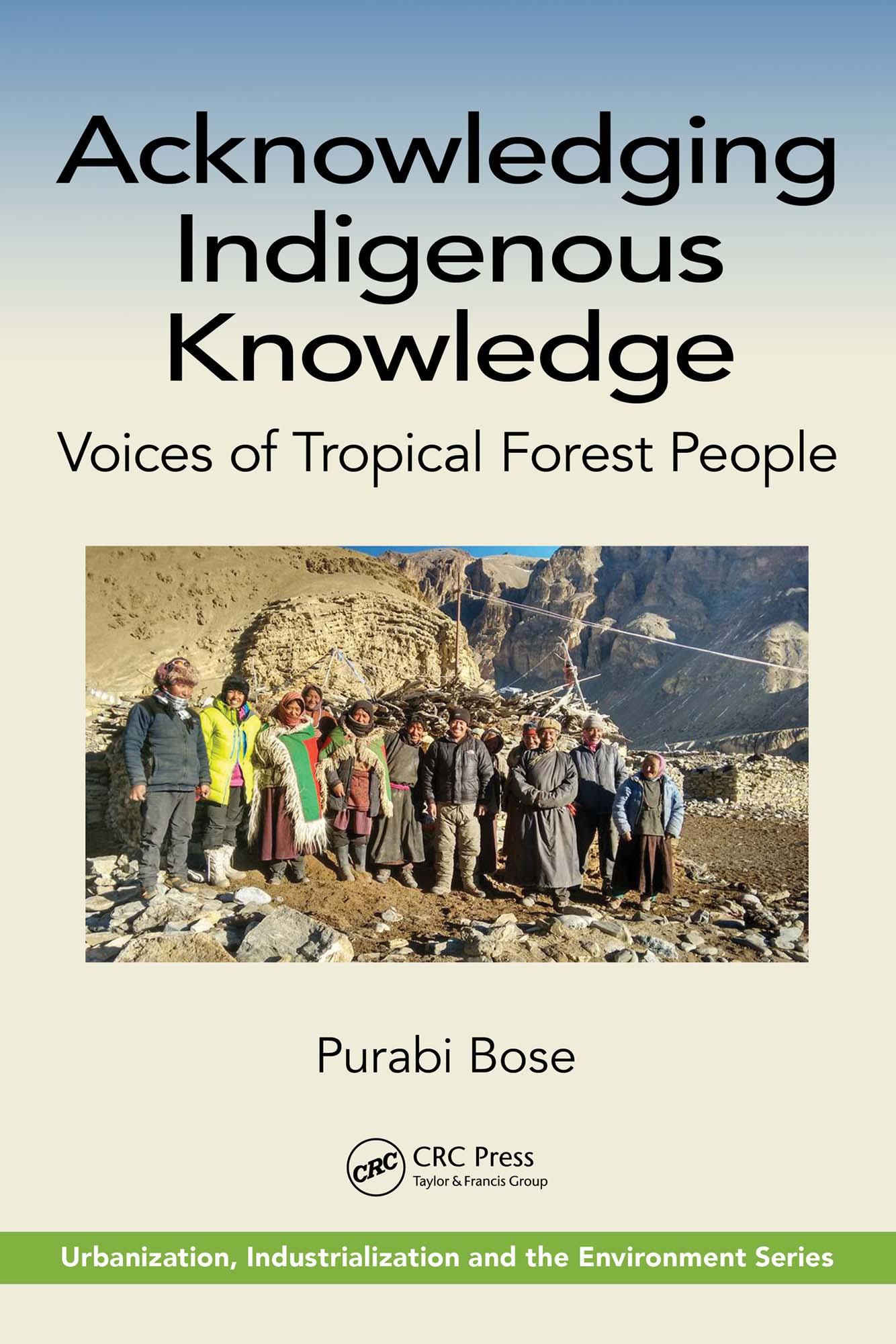
This book explores how the landscapes in indigenous territories are rapidly changing due to increased global industrial demand. This deforestation and urbanization have isolated the indigenous people from practicing ‘traditional ways of life.’ Portrayed in this book is the indigenous people’s perspective of their indigenous knowledge (IK) about the environment and why losing IK is a threat to humans, wildlife, and nature. Insight is shared into why acknowledging IK as a science can help solve climate change, food and nutrition insecurity, and increasing new types of pandemics through evidence‑based stories from indigenous people.
Features:
• Bridges the fractured space between science and nature.
• Documents the perspectives of indigenous peoples about their ancestral knowledge.
• Provides ethnographic qualitative comparative case studies of forest‑dwelling indigenous peoples over a 19‑year period.
• Covers largely remote indigenous territories of ten tropical countries in the Global South.
• Provides evidence‑based stories examining indigenous knowledge’s role in the tropics in preserving diverse landscapes and providing nature‑based solutions.
Betal nemt med kort, Klarna, Apple Pay eller Google Pay. Ikke tilfreds? Du har altid 14 dages fortrydelsesret. Læs mere i vores vilkår. Har du spørgsmål, så send os en mail på hello@memmo.org.
Memmo gør det nemmere at studere – uanset hvor du er i verden. Hos os samler du dine kursusbøger og smarte studieværktøjer ét sted: resuméer, quizzer, podcasts og flashcards. Og så er der Ted, din studieven, der svarer på alt, du undrer dig over. Over 50 000 studerende studerer allerede her – bygget til at hjælpe dig med at lære hurtigere og stresse mindre.