
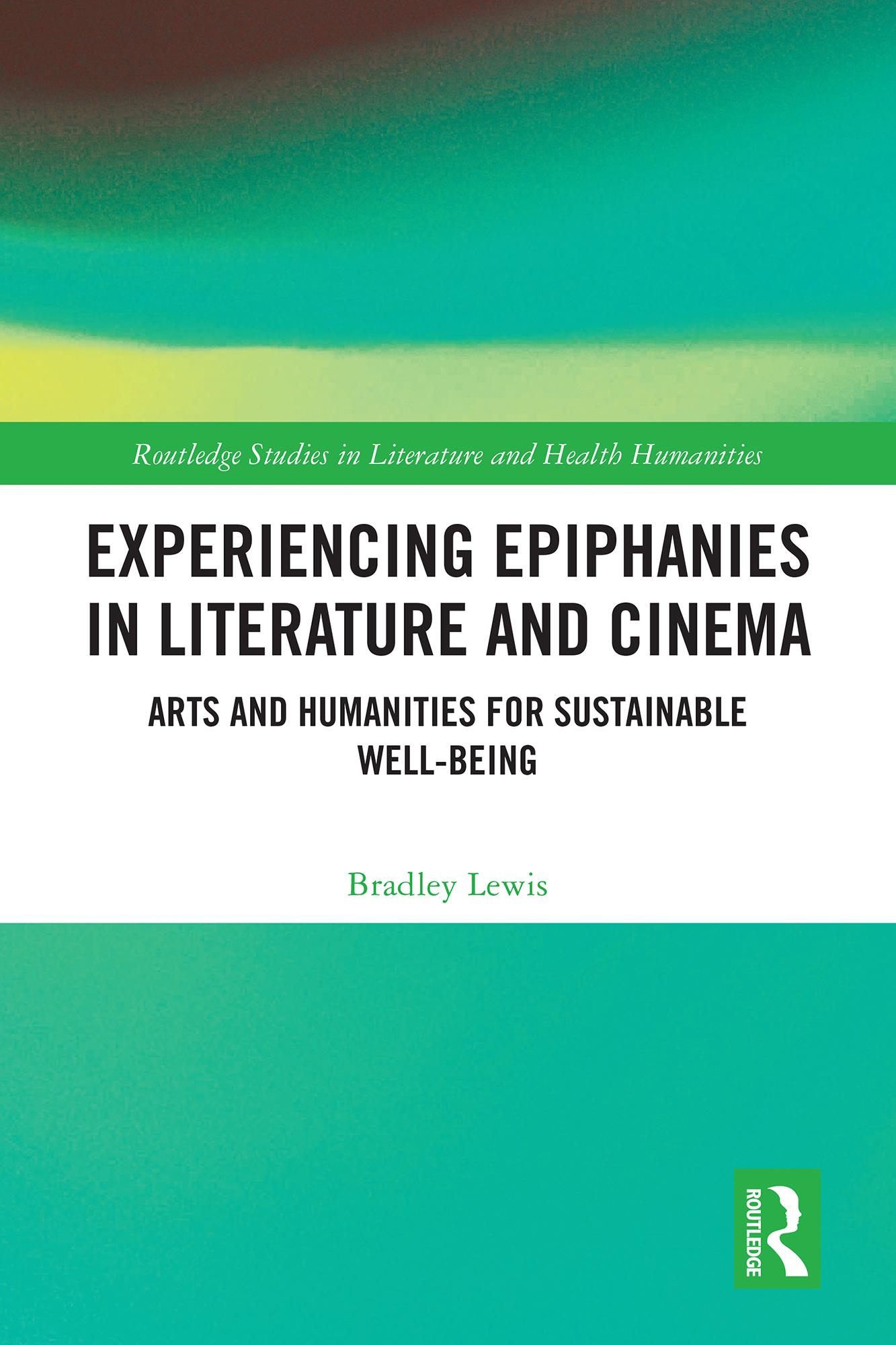
Experiencing Epiphanies in Literature and Cinema uses health humanities and psychological humanities to explore literary and cinematic epiphanies. James Joyce first adopted the term “epiphany” from its religious use to articulate momentsof luminous intensity or “sudden spiritual manifestation.” This study develops and extends Joyce’s use of epiphany through a range of literary and cinematic examples, from William Shakespeare to Ruth Ozeki and from Yasujirō Ozu to Jim Jarmusch. This wealth of epiphanies in the arts is important from a health humanities perspective in that they provide access to aesthetic and sustainable experiences of well-being, joy, and human flowering. They also provide antidotes to aesthetics of anti-epiphany—a showing forth of terror, horror, and panic. Experiencing Epiphanies is accordingly both critical and affirmative, diagnostic and therapeutic. It uses critique to understand the increasing need for well-being in contemporary times, and it uses affirmation to develop underutilized resources in the arts for transforming, configuring, and refiguring our everyday lives.
Betal nemt med kort, Klarna, Apple Pay eller Google Pay. Ikke tilfreds? Du har altid 14 dages fortrydelsesret. Læs mere i vores vilkår. Har du spørgsmål, så send os en mail på hello@memmo.org.
Memmo gør det nemmere at studere – uanset hvor du er i verden. Hos os samler du dine kursusbøger og smarte studieværktøjer ét sted: resuméer, quizzer, podcasts og flashcards. Og så er der Ted, din studieven, der svarer på alt, du undrer dig over. Over 50 000 studerende studerer allerede her – bygget til at hjælpe dig med at lære hurtigere og stresse mindre.