
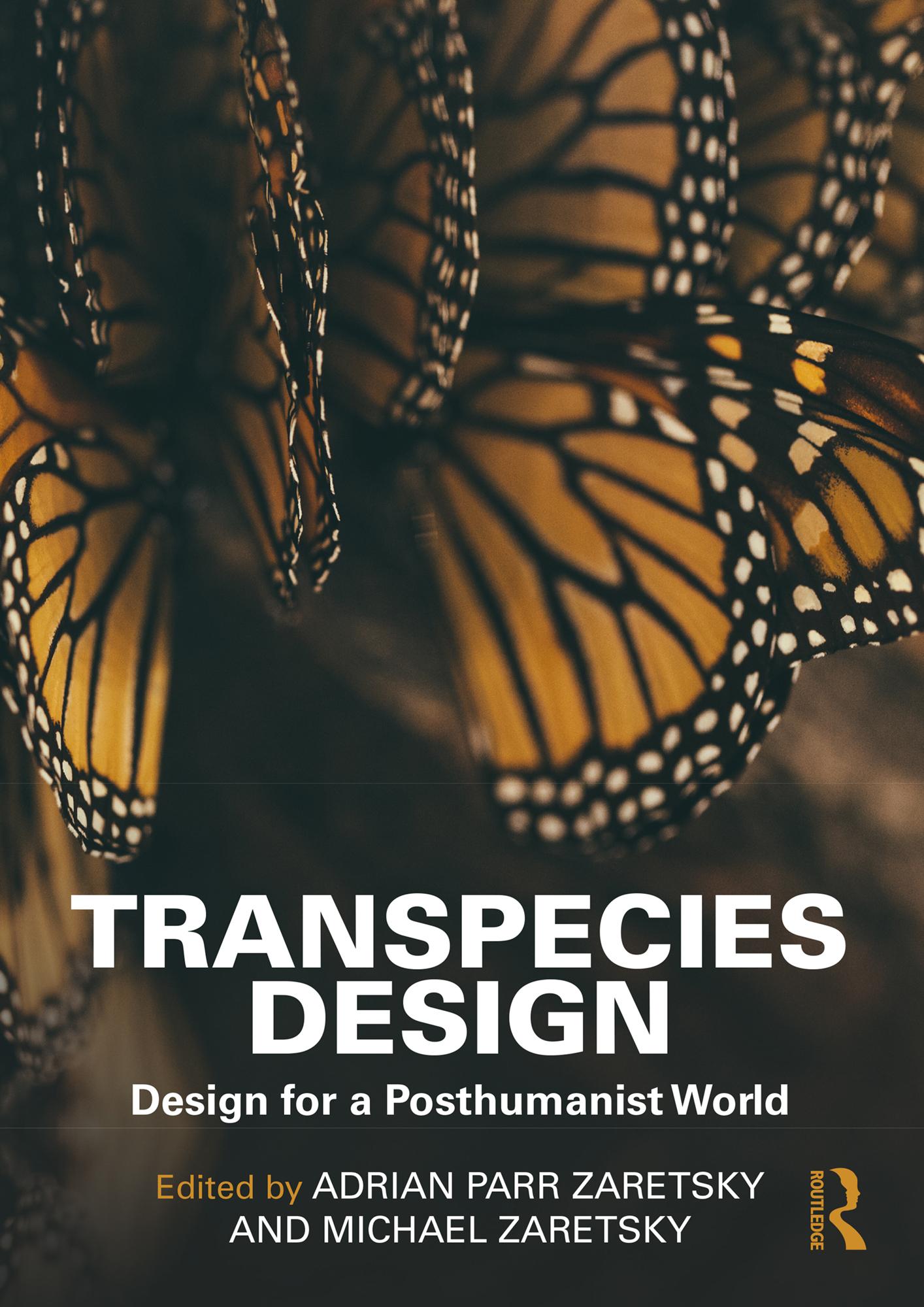
In May 2019, the United Nations released the Global Assessment Report on Biodiversity and Ecosystem Services which warned that human activities will drive nearly one million species to extinction in a few decades. The primary reasons for this are habitat loss and biodiversity demise caused by changing climate, pollution, introducing nonindigenous species, clearing land, over population, and consumption. Given this situation, humans must change course as both human wellbeing and the wellbeing of other-than-human species are imbricated in one another. One way humanity can accomplish the needed transformation is to move beyond an anthropocentric view of life by embracing a transpecies approach that is premised upon interconnected flourishing.
Transpecies design, as outlined in this book, offers a new approach to regenerating the natural environment while honoring biodiversity. Rather than presenting the human experience as the goal of design, transpecies design takes the inextricable linkages connecting living things as both its starting point and end goal. As such, it moves beyond human experience serving as the fundamental ingredient for making better design processes and decisions.
This book is essential reading for artists, designers, and architects, as well as students of architecture, landscape architecture, interior architecture, art, product design, urban design, planning, environmental philosophy, and cultural studies.
Betal nemt med kort, Klarna, Apple Pay eller Google Pay. Ikke tilfreds? Du har altid 14 dages fortrydelsesret. Læs mere i vores vilkår. Har du spørgsmål, så send os en mail på hello@memmo.org.
Memmo gør det nemmere at studere – uanset hvor du er i verden. Hos os samler du dine kursusbøger og smarte studieværktøjer ét sted: resuméer, quizzer, podcasts og flashcards. Og så er der Ted, din studieven, der svarer på alt, du undrer dig over. Over 50 000 studerende studerer allerede her – bygget til at hjælpe dig med at lære hurtigere og stresse mindre.