
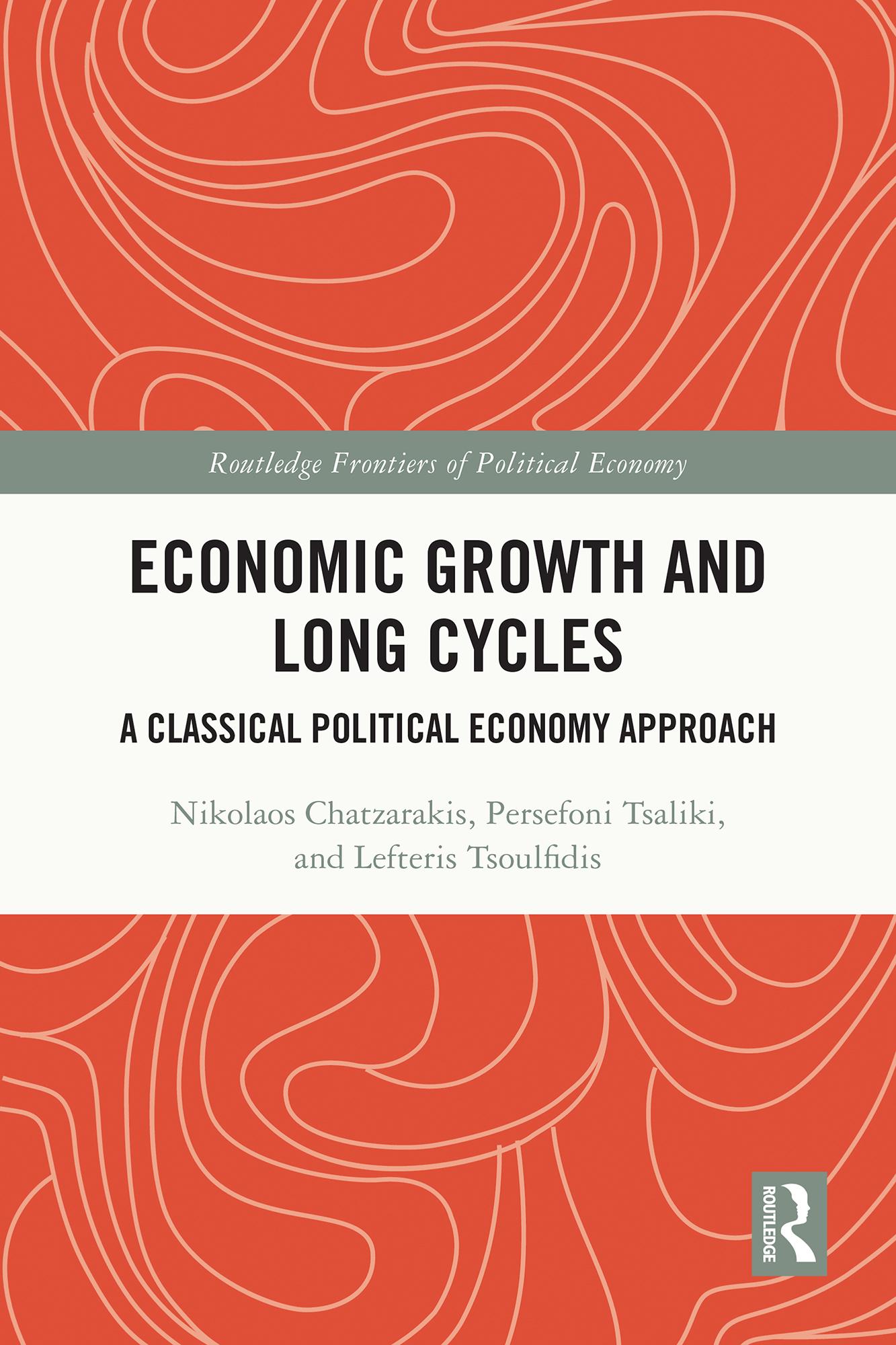
Contemporary capitalism is characterized by periods of vigorous economic growth and periods of slow or even negative growth. This book draws on the classical political economy approach to consider both economic cycles and economic growth and draw conclusions about the inherent instability of the modern economy. The book shows that the work of the old classical economists (Smith and Ricardo) and Marx is theoretically sound and capable of providing answers to both growth and cycles. It also demonstrates the potential and natural integration of growth and cycles in a single model. The microeconomic foundation of this model is the labor theory of value, which continues with the General Law of Capital Accumulation, the Law of the Falling Rate of Profit, and the movement of the Industrial Reserve Army of Labour. Finally, a dynamic model of growth-cum-cycles is constructed consisting of the evolution and interaction of five key variables, namely, the rate of profit, the propensity to invest in fixed capital, technological change, the reserve army of labour, and the rate of capital devaluation. The analysis demonstrates that economic growth and cycles are not disconnected from each other, as they have been treated in the literature, but rather interdependent aspects of the same evolutionary process of a capitalist economy. This book will interest readers in the history of economic thought, economic growth and development, macroeconomics, and political economy.
Betal nemt med kort, Klarna, Apple Pay eller Google Pay. Ikke tilfreds? Du har altid 14 dages fortrydelsesret. Læs mere i vores vilkår. Har du spørgsmål, så send os en mail på hello@memmo.org.
Memmo gør det nemmere at studere – uanset hvor du er i verden. Hos os samler du dine kursusbøger og smarte studieværktøjer ét sted: resuméer, quizzer, podcasts og flashcards. Og så er der Ted, din studieven, der svarer på alt, du undrer dig over. Over 50 000 studerende studerer allerede her – bygget til at hjælpe dig med at lære hurtigere og stresse mindre.