
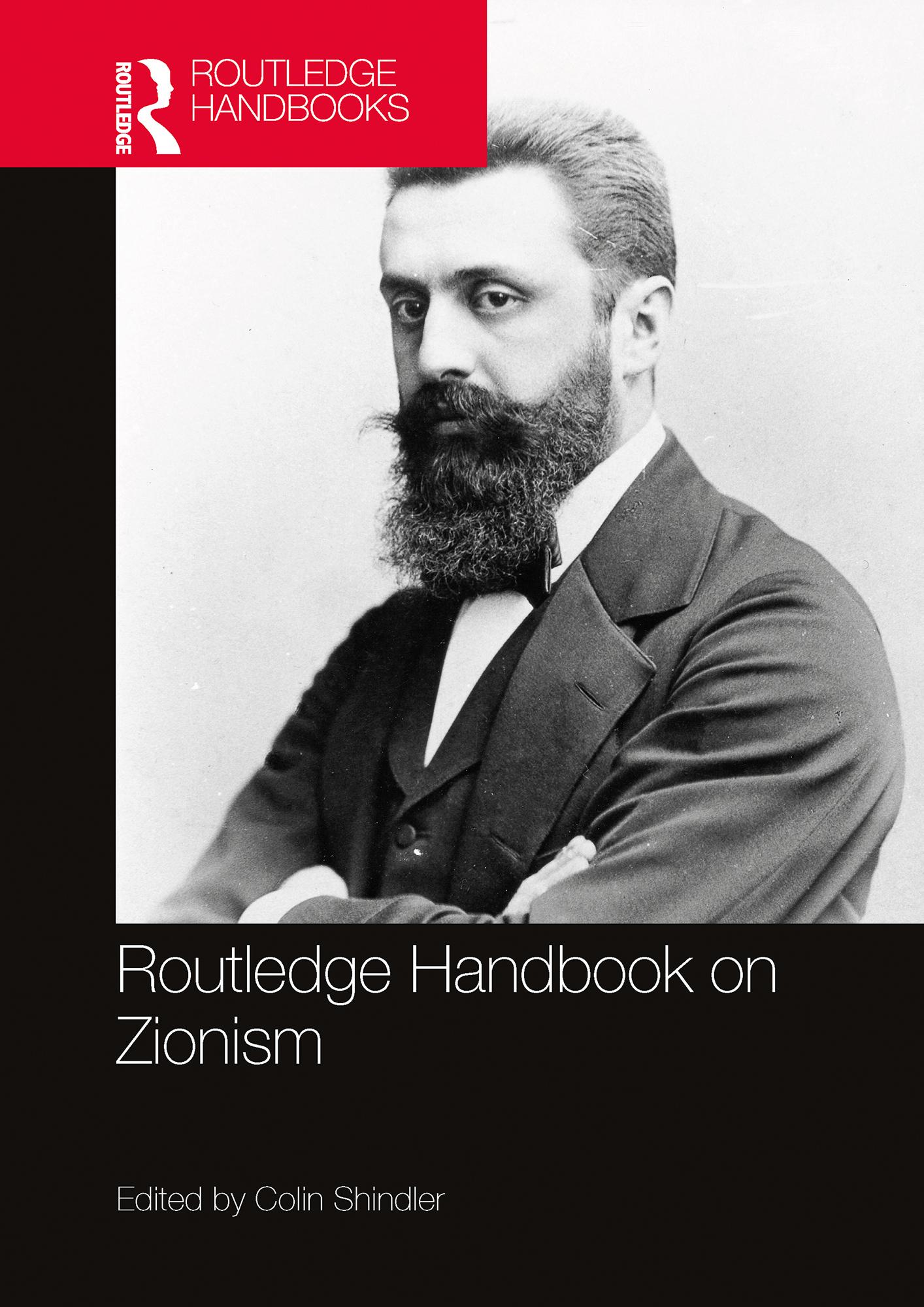
This Handbook, the first of its kind, provides an in- depth examination of the evolution, ideology, history and culture of Zionism and its various movements.
Distancing itself from the slogans and cliches of advocacy, the volume provides much-needed context and background on the emergence of Zionism. The Handbook is divided into eight parts – with contributions from some forty of the world’s leading scholars on Zionism –to elucidate its various strands. These include underrepresented areas such as Zionism in the Arab World before the establishment of the State of Israel, Zionism and Marxism, the emergence of the Zionist Right, the language war between Hebrew and Yiddish, the struggle for Jewish women’s suffrage, the poetry of Lea Goldberg, and Zionism in emerging new Jewish communities in locations like Papua New Guinea, Guatemala and Zimbabwe. Another section on Zionism in repressive states stretches from an examination of Zionism in Hitler’s Germany to the Ayatollahs’ Iran today; from subterranean Zionism in Stalin’s Russia to apartheid South Africa. The volume concludes by examining current issues, including the relationship between evangelicals and Zionism in the US, and the representation of Zionism in the age of the internet.
Providing a sweeping overview of Zionism in its many forms, the volume will appeal to students, researchers and general readers interested in Jewish studies in the Middle East and beyond, as well as those seeking to understand the roots of contemporary Israel.
Betal nemt med kort, Klarna, Apple Pay eller Google Pay. Ikke tilfreds? Du har altid 14 dages fortrydelsesret. Læs mere i vores vilkår. Har du spørgsmål, så send os en mail på hello@memmo.org.
Memmo gør det nemmere at studere – uanset hvor du er i verden. Hos os samler du dine kursusbøger og smarte studieværktøjer ét sted: resuméer, quizzer, podcasts og flashcards. Og så er der Ted, din studieven, der svarer på alt, du undrer dig over. Over 50 000 studerende studerer allerede her – bygget til at hjælpe dig med at lære hurtigere og stresse mindre.