
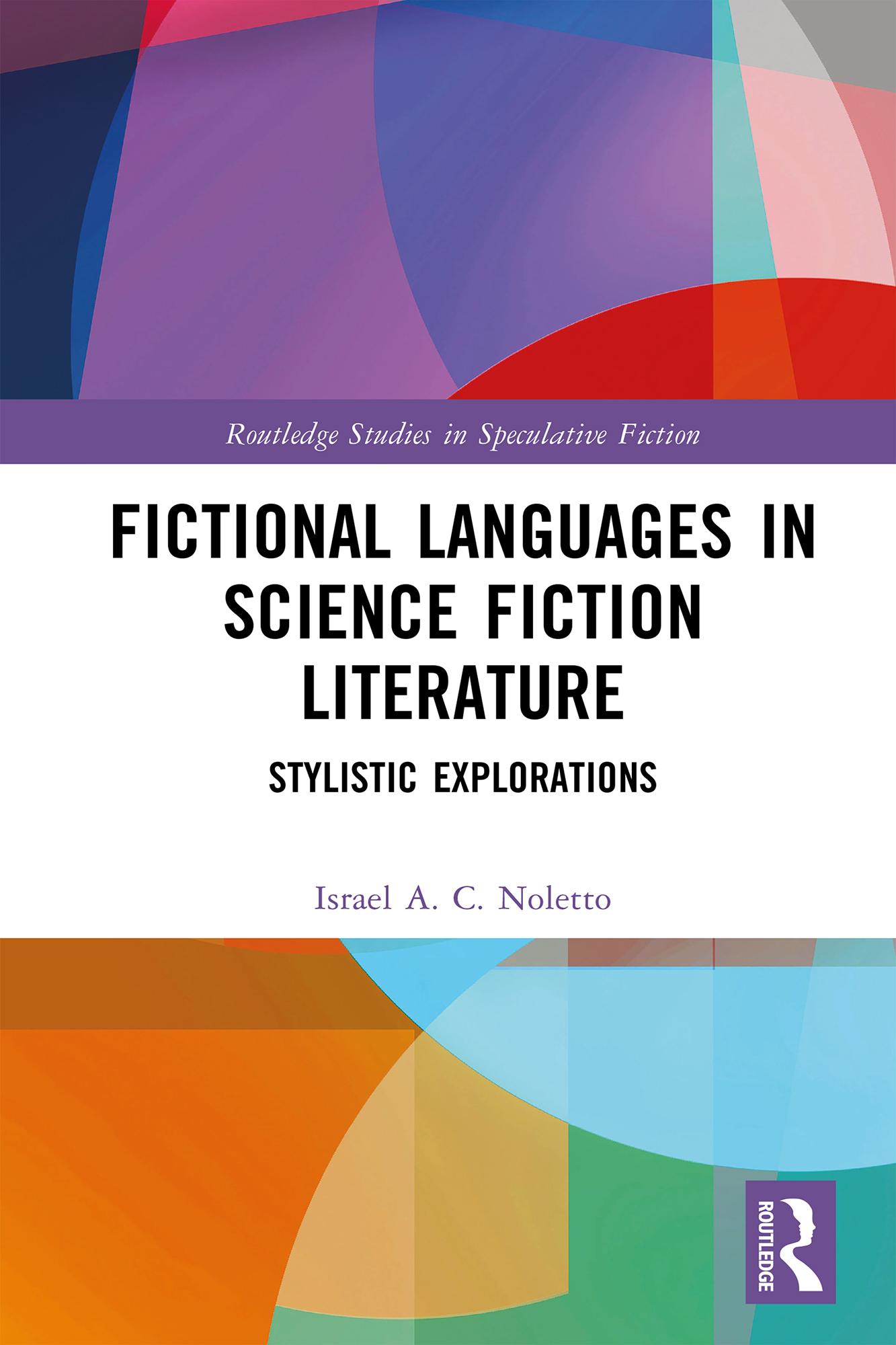
Fictional Languages in Science Fiction Literature surveys a large number of fictional languages, those created as part of a literary world, to present a multifaceted account of the literary phenomenon of glossopoesis (language invention). Consisting of a few untranslated sentences, exotic names, or even fully-fledged languages with detailed grammar and vocabulary, fictional languages have been a common element of English-language fiction since Thomas More’s Utopia (1516).
Different notions of the functions of such fictional languages in narrative have been proposed: as rooted in phonaesthetics and contextual features, or as being used for characterisation and construction of alterity. Framed within stylistics and informed by narrative theory, literary theory, literary pragmatics, and semiotics, this study combines previous typologies into a new 5-part reading model comprising unique analytical approaches tailored to science fiction’s specific discourse and style, exploring the relationship between glossopoesis, world-building, storytelling, interpretation, and rhetoric, both in prose and paratexts.
Betal nemt med kort, Klarna, Apple Pay eller Google Pay. Ikke tilfreds? Du har altid 14 dages fortrydelsesret. Læs mere i vores vilkår. Har du spørgsmål, så send os en mail på hello@memmo.org.
Memmo gør det nemmere at studere – uanset hvor du er i verden. Hos os samler du dine kursusbøger og smarte studieværktøjer ét sted: resuméer, quizzer, podcasts og flashcards. Og så er der Ted, din studieven, der svarer på alt, du undrer dig over. Over 50 000 studerende studerer allerede her – bygget til at hjælpe dig med at lære hurtigere og stresse mindre.