
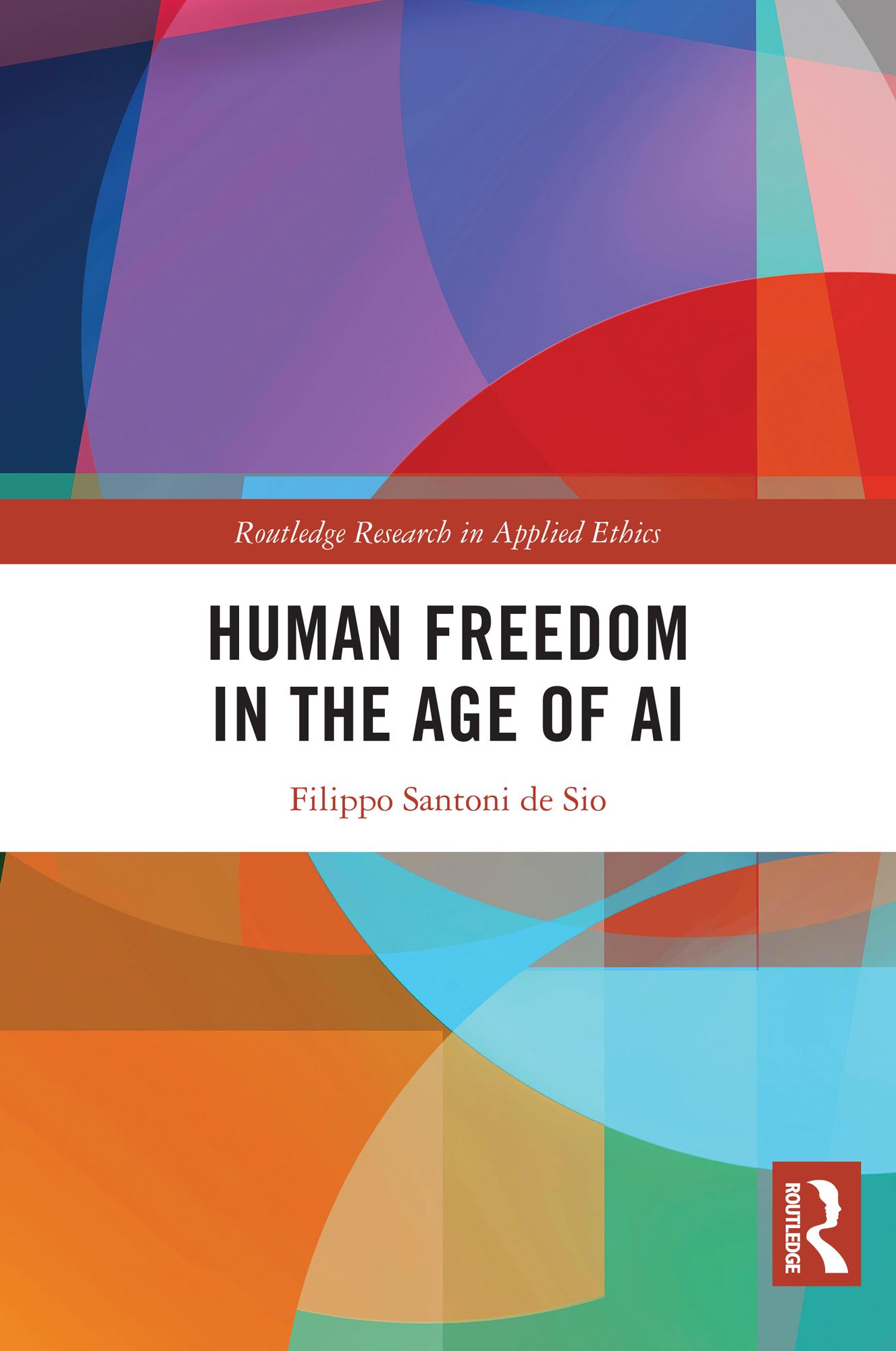
This book claims that artificial intelligence (AI) may affect our freedom at work, in our daily life, and in the political sphere. The author provides a philosophical framework to help make sense of and govern the ethical and political impact of AI in these domains. AI presents great opportunities and risks, raising the question of how to reap its potential benefits without endangering basic human and societal values. The author identifies three major risks for human freedom. First, AI offers employers new forms of control of the workforce, opening the door to new forms of domination and exploitation. Second, it may reduce our capacity to remain in control of and responsible for our decisions and actions, thereby affecting our free will and moral responsibility. Third, it may increase the power of governments and tech companies to steer the political debate, thereby affecting the possibility of a free and inclusive political participation. The author claims that it is still possible to promote human freedom in our interactions with AI. This requires designing AI systems that help promote workers’ freedom, strengthen human control and responsibility, and foster a free, active, and inclusive democratic participation.
Human Freedom in the Age of AI will be of interest to scholars and graduate students working on the ethics of technology, philosophy of technology, political philosophy, design, and artificial intelligence.
Betal nemt med kort, Klarna, Apple Pay eller Google Pay. Ikke tilfreds? Du har altid 14 dages fortrydelsesret. Læs mere i vores vilkår. Har du spørgsmål, så send os en mail på hello@memmo.org.
Memmo gør det nemmere at studere – uanset hvor du er i verden. Hos os samler du dine kursusbøger og smarte studieværktøjer ét sted: resuméer, quizzer, podcasts og flashcards. Og så er der Ted, din studieven, der svarer på alt, du undrer dig over. Over 50 000 studerende studerer allerede her – bygget til at hjælpe dig med at lære hurtigere og stresse mindre.