
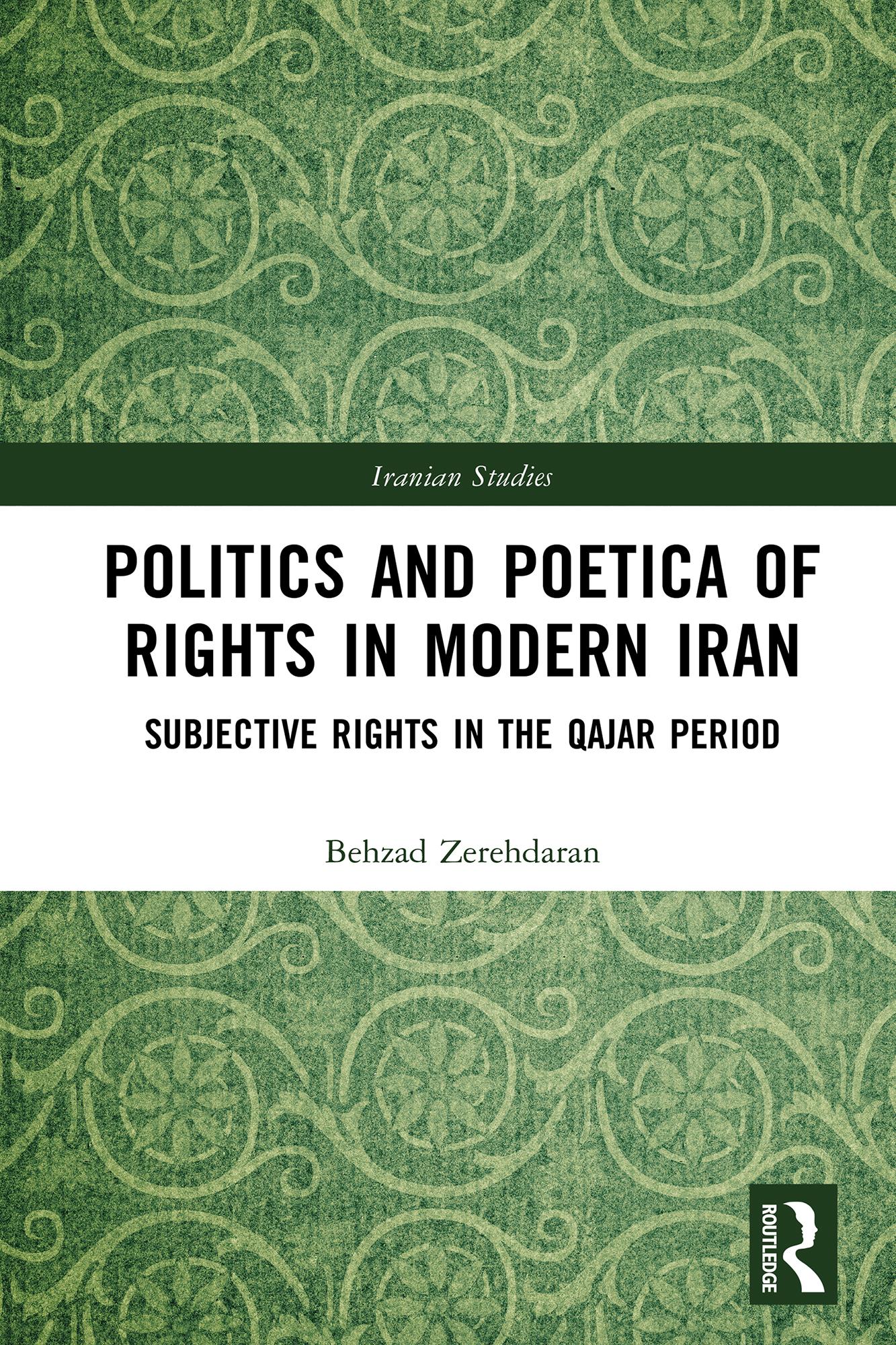
This book delves into the history of subjective rights within the context of 19th-century Iran, specifically during the eventful Qajar era. The crux of its research lies in the emergence and evolution of the concept of subjective rights as opposed to the notion of objective rights.
During this pivotal period, this transition marked a paradigm shift from “right as to be right” to “right as to have a right.” A central pillar of this book is the creation of a meta-theory, one that sheds light on the semantical evolution of the concept of rights. Within these pages, readers will find a concise history, tracing the conceptual path that led from the objective to the subjective realm of rights. In addition to these historical explorations, it delves into the intricate field of rights theory, investigating the foundations and justifications of rights. Employing the Hohfeldian framework, it analyses various conceptions of rights as they manifest within travel literature, enlightenment literature, and dream literature of the Qajar era.
This book will be of interest to scholars and students with an interest in Iranian studies, Iranian history, Persian literature and human rights.
Betal nemt med kort, Klarna, Apple Pay eller Google Pay. Ikke tilfreds? Du har altid 14 dages fortrydelsesret. Læs mere i vores vilkår. Har du spørgsmål, så send os en mail på hello@memmo.org.
Memmo gør det nemmere at studere – uanset hvor du er i verden. Hos os samler du dine kursusbøger og smarte studieværktøjer ét sted: resuméer, quizzer, podcasts og flashcards. Og så er der Ted, din studieven, der svarer på alt, du undrer dig over. Over 50 000 studerende studerer allerede her – bygget til at hjælpe dig med at lære hurtigere og stresse mindre.