
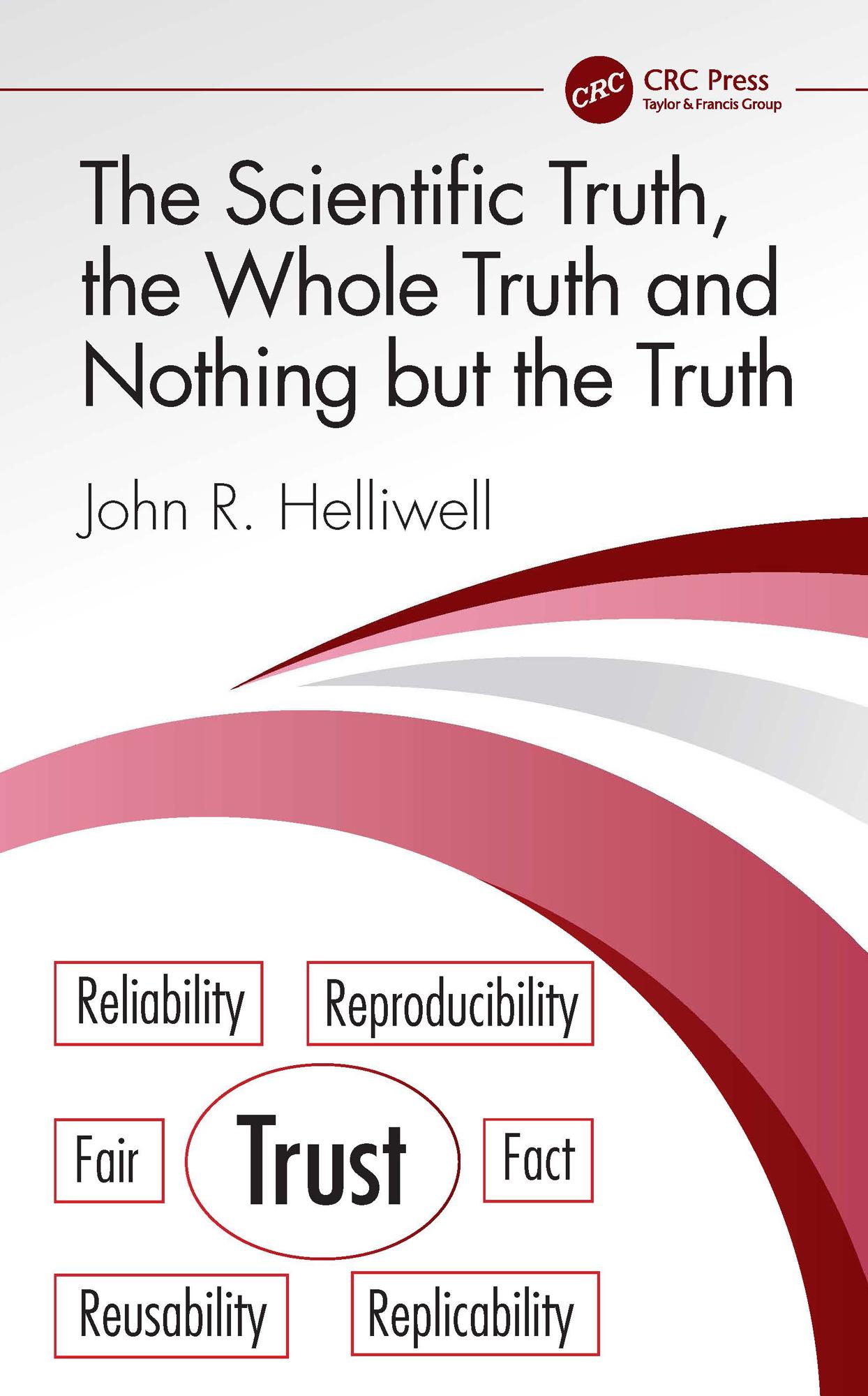
There is a limited understanding amongst scientists, students, and the public about realizing trust in scientific findings. This should be a paramount objective. Scientists and the public need to know more about the link between the philosophy of science and science research methods. There is a limited understanding of why accuracy is important and that it is not the same as precision. Also, there is often the need to be pragmatic and so measure an approximation of a real system, and the classic case is reductionism in biology versus whole organism biology. The author brings these topics together in terms of trusting in science.
Features
- Covers how scientific truth is perceived and increases the preparedness of early career scientists.
- Examines the relatively new field of machine learning and artificial intelligence as applied to crystallography databases in biology and chemistry for new discoveries.
- Describes the major changes in digital data archiving and how vast “raw data” archives are being increasingly developed for machine learning and artificial intelligence as well as complete truth.
- This unique volume will be of interest to pre-university and university undergraduate students, principally in science.
- Presents scientific research examples from physics, chemistry, and biology together with their methodologies
Betal nemt med kort, Klarna, Apple Pay eller Google Pay. Ikke tilfreds? Du har altid 14 dages fortrydelsesret. Læs mere i vores vilkår. Har du spørgsmål, så send os en mail på hello@memmo.org.
Memmo gør det nemmere at studere – uanset hvor du er i verden. Hos os samler du dine kursusbøger og smarte studieværktøjer ét sted: resuméer, quizzer, podcasts og flashcards. Og så er der Ted, din studieven, der svarer på alt, du undrer dig over. Over 50 000 studerende studerer allerede her – bygget til at hjælpe dig med at lære hurtigere og stresse mindre.