
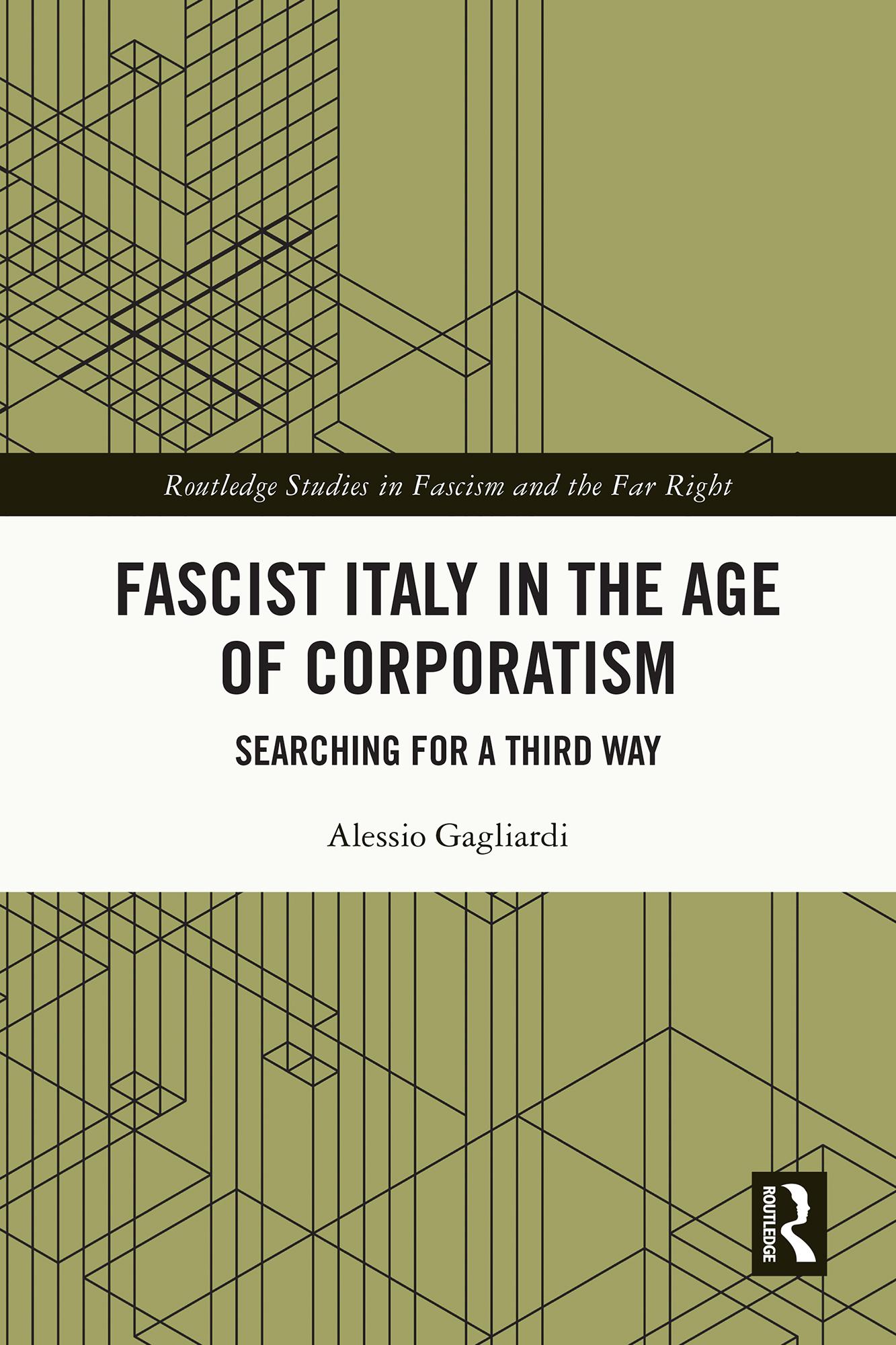
The interwar period was marked in Europe by the rediscovery of corporatism as a possible solution to the crucial problems of modern mass society. This was the result of general changes across industrialised countries in the relationship between the state and social groups. In Italy, it took on a uniquely authoritarian shape. Fascist regime became the cradle of a new model of corporatism, a “third way” alternative to both capitalism and communism, destined to influence both political, juridical, and economic debate and similar legislative experiments undertaken by other countries, be they democratic or authoritarian.
The book offers an overview of corporatism in Fascist Italy. It examines not only the ideology but also the acts and real activities of corporative institutions (corporazioni). It dwells upon internal debates, the political and institutional importance acquired by corporative institutions in the Fascist regime, and the behaviour of entrepreneurial organizations and labour unions.
At the same time, the book highlights the role of Italy in the transnational circulation of the corporative ideal by reconstructing both the considerable influence of Mussolini’s regime in a range of different political and geographical contexts and the way in which the authorities in Rome turned to coeval international experiences.
Betal nemt med kort, Klarna, Apple Pay eller Google Pay. Ikke tilfreds? Du har altid 14 dages fortrydelsesret. Læs mere i vores vilkår. Har du spørgsmål, så send os en mail på hello@memmo.org.
Memmo gør det nemmere at studere – uanset hvor du er i verden. Hos os samler du dine kursusbøger og smarte studieværktøjer ét sted: resuméer, quizzer, podcasts og flashcards. Og så er der Ted, din studieven, der svarer på alt, du undrer dig over. Over 50 000 studerende studerer allerede her – bygget til at hjælpe dig med at lære hurtigere og stresse mindre.