
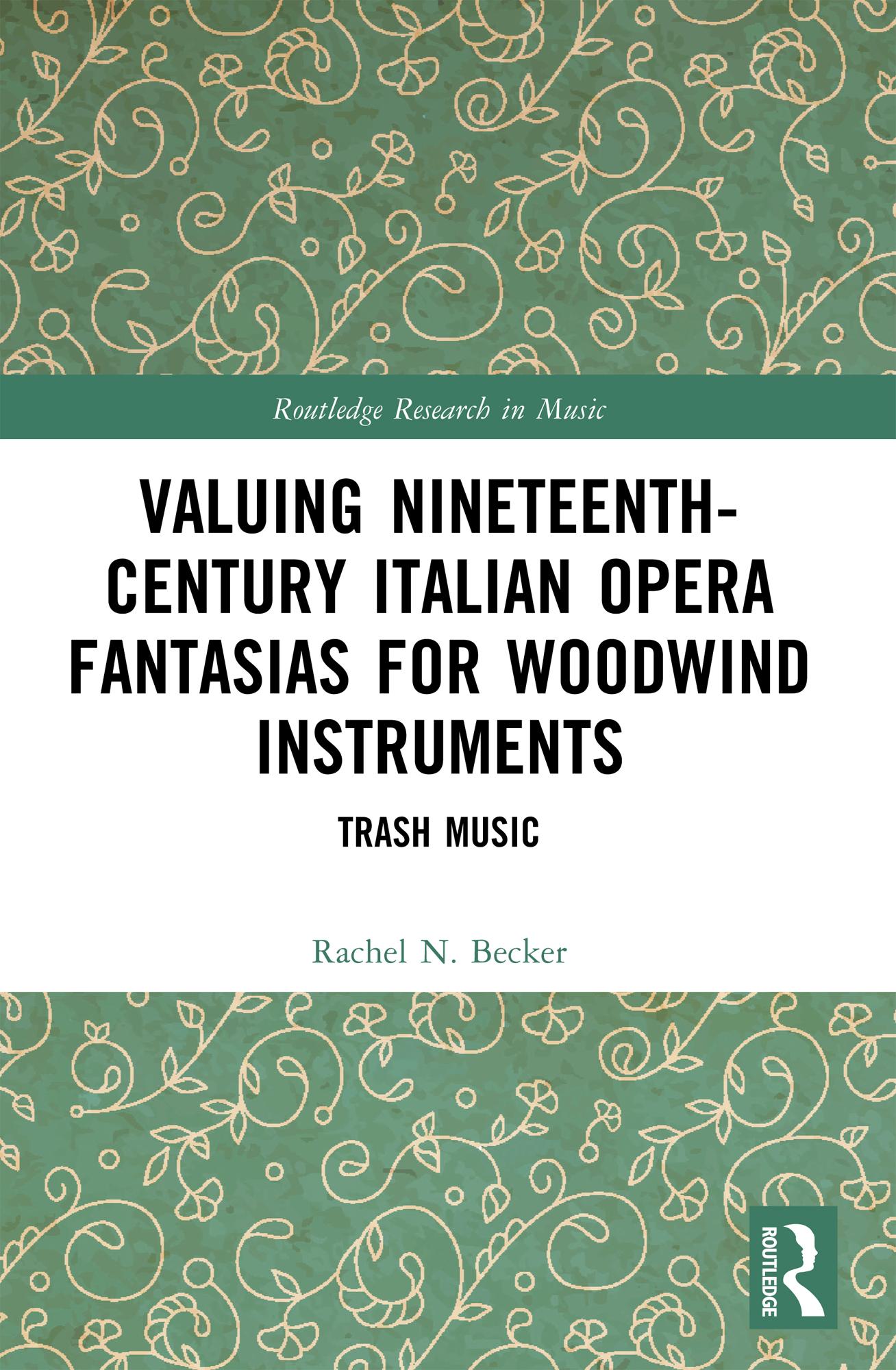
This book approaches opera fantasias – instrumental works that use themes from a single opera as the body of their virtuosic and flamboyant material – both historically and theoretically, concentrating on compositions for and by woodwind-instrument performers in Italy in the nineteenth century.
Important overlapping strands include the concept of virtuosity and its gradual demonization, the strong gendered overtones of individual woodwind instruments and of virtuosity, the distinct Italian context of these fantasias, the presentation and alteration of opera narratives in opera fantasias, and the technical and social development of woodwind instruments. Like opera itself, the opera fantasia is a popular art form, stylistically predictable yet formally flexible, based heavily on past operatic tradition and prefabricated materials. Through archival research in Italy, theoretical analysis, and exploration of European cultural contexts, this book clarifies a genre that has been consciously stifled and societal resonances that still impact music reception and performance today.
Betal nemt med kort, Klarna, Apple Pay eller Google Pay. Ikke tilfreds? Du har altid 14 dages fortrydelsesret. Læs mere i vores vilkår. Har du spørgsmål, så send os en mail på hello@memmo.org.
Memmo gør det nemmere at studere – uanset hvor du er i verden. Hos os samler du dine kursusbøger og smarte studieværktøjer ét sted: resuméer, quizzer, podcasts og flashcards. Og så er der Ted, din studieven, der svarer på alt, du undrer dig over. Over 50 000 studerende studerer allerede her – bygget til at hjælpe dig med at lære hurtigere og stresse mindre.