
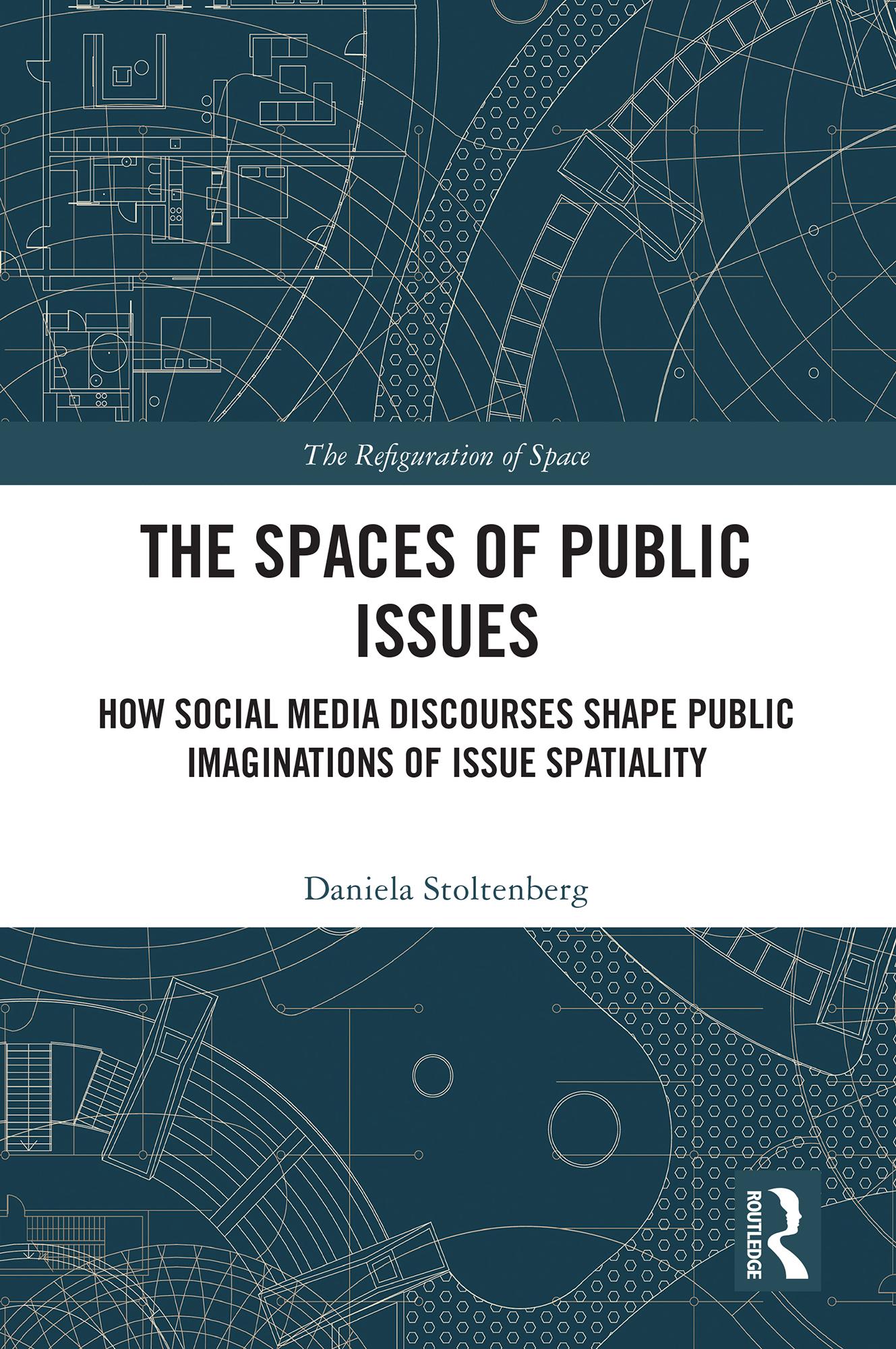
Ideas about matters of public concern are shaped by the spaces associated with them: Events occur in particular places, political regulations apply to specific territories, people in different locations are differentially affected by issues. Yet, political communication research has neglected the question of how the spaces of public issues are constructed in the public sphere. This is especially true for research on social media communication, which is often perceived as placeless. Yet, social media discourses are driven by unequal attention patterns based on users’ interests, resources, and abilities. To understand how these patterns manifest spatially, this interdisciplinary monograph builds on public spheres theory, communication infrastructure theory, and urban sociology to develop the framework of issue spatiality. It focuses on how social media users discuss different places in urban policy issue discourses. By applying the framework to four large-scale Twitter discourses on housing markets and cycling infrastructure in two German cities, Berlin and Frankfurt, the research reveals the spatial patterns and inequalities of social media discourses. It demonstrates that digital discourses are overwhelmingly focused on a small number of places in the urban center. These places emerge as the locus of activism and political controversy, while the urban periphery remains hidden or is discussed in purely administrative terms. Places with dense civic infrastructure and privileged residents receive disproportionate attention. The book provides an in-depth look at the ways in which socio-spatial inequalities are inscribed in public communication and shape ideas about societal issues.
Betal nemt med kort, Klarna, Apple Pay eller Google Pay. Ikke tilfreds? Du har altid 14 dages fortrydelsesret. Læs mere i vores vilkår. Har du spørgsmål, så send os en mail på hello@memmo.org.
Memmo gør det nemmere at studere – uanset hvor du er i verden. Hos os samler du dine kursusbøger og smarte studieværktøjer ét sted: resuméer, quizzer, podcasts og flashcards. Og så er der Ted, din studieven, der svarer på alt, du undrer dig over. Over 50 000 studerende studerer allerede her – bygget til at hjælpe dig med at lære hurtigere og stresse mindre.