
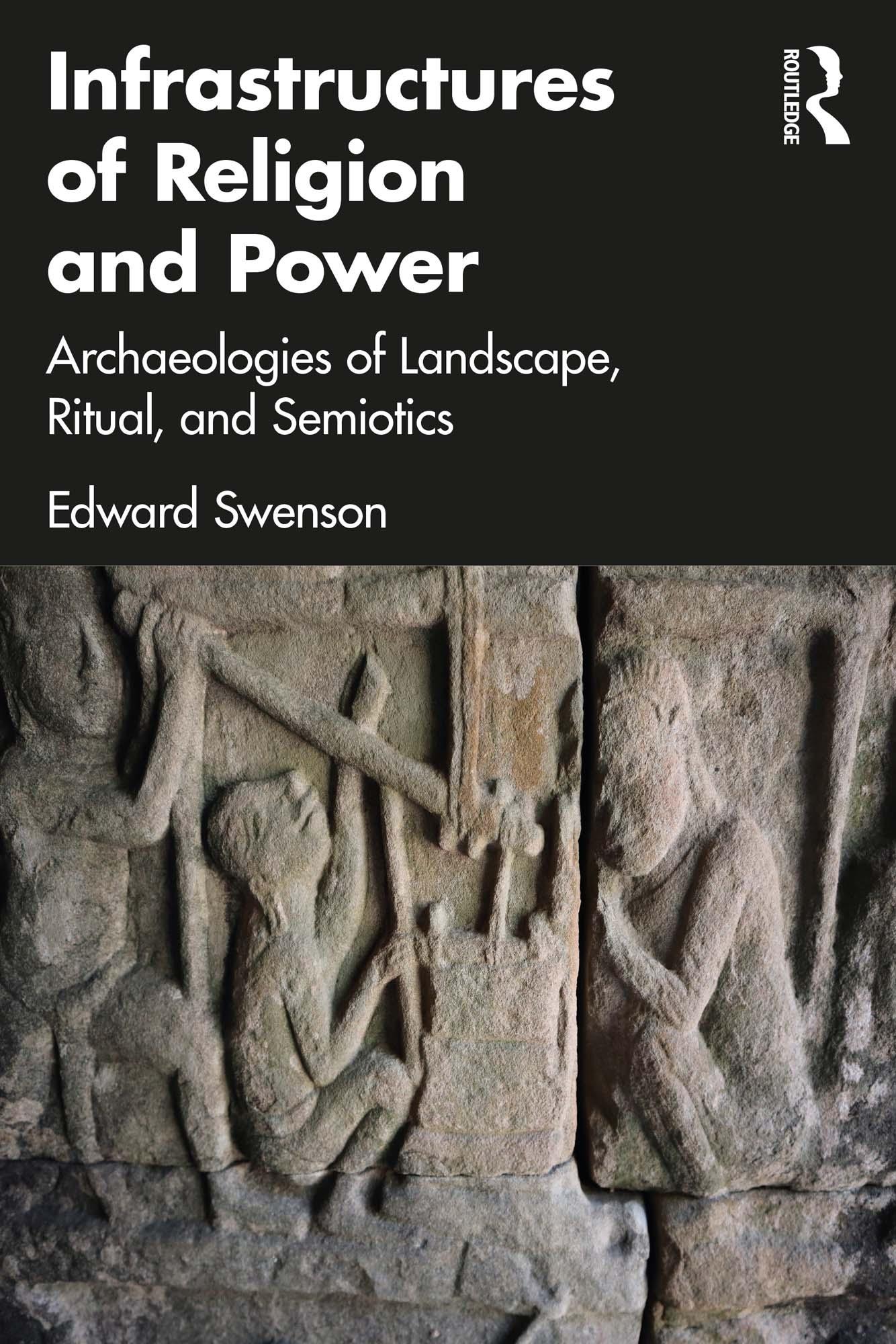
This book explores the central role of religion in place-making and infrastructural projects in ancient polities.
It presents a trilectic approach to archaeological study of religious landscapes that combines Indigenous philosophies with the spatial and semiotic thinking of Lefebvre, Peirce, and proponents of assemblage theories. Case studies from ancient Angkor and the Andes reveal how rituals of place-making activated processes of territorialization and semiosis fundamental to the experience of political worlds that shaped power relations in past societies. The perspectives developed in the book permit a reconstruction of how landscapes were variably conceived, perceived, and lived in the spirit of Henri Lefebvre, and how these registers may have aligned or clashed. In the end, the examination of built environments, infrastructures, and rituals staged within specialized buildings demonstrates how archaeologists can better infer past ontologies, cosmologies, ideologies of time and place, and historically specific political struggles.
The study will appeal to students and researchers interested in ritual, infrastructures, landscape, archaeological theory, political institutions, semiotics, human geography, and the civilizations of the ancient Andes and Angkor.
Betal nemt med kort, Klarna, Apple Pay eller Google Pay. Ikke tilfreds? Du har altid 14 dages fortrydelsesret. Læs mere i vores vilkår. Har du spørgsmål, så send os en mail på hello@memmo.org.
Memmo gør det nemmere at studere – uanset hvor du er i verden. Hos os samler du dine kursusbøger og smarte studieværktøjer ét sted: resuméer, quizzer, podcasts og flashcards. Og så er der Ted, din studieven, der svarer på alt, du undrer dig over. Over 50 000 studerende studerer allerede her – bygget til at hjælpe dig med at lære hurtigere og stresse mindre.