
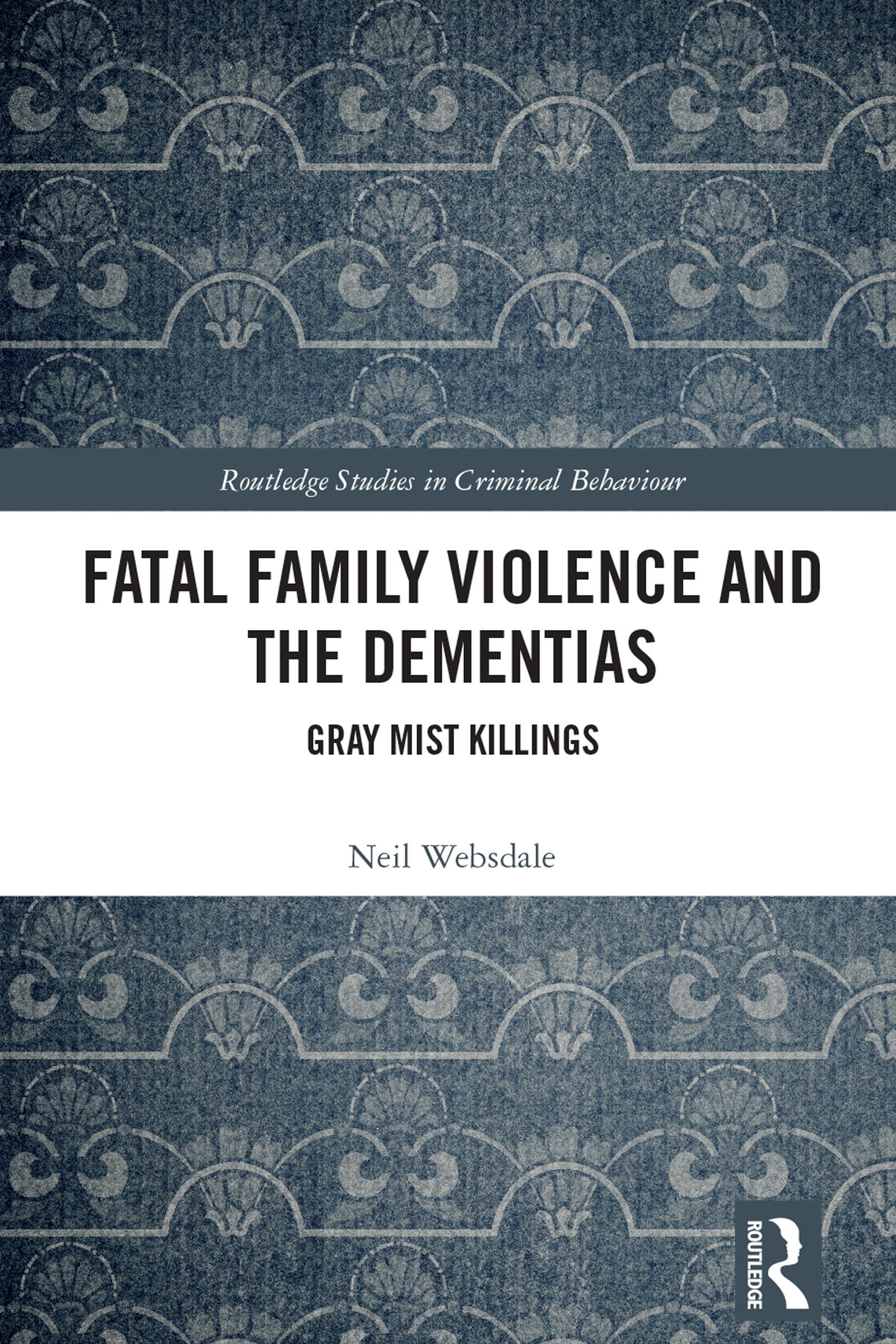
This book explores dementia-related aggression, violence, and homicide through a detailed analysis of “gray mist killings.” The term gray mist killing refers to intimate partner homicides (IPHs) committed by spouses/partners suffering from dementia, homicides of dementia sufferers committed by their caregiving spouses/partners or other family members, and IPHs attributable to the complications of caring for a co-resident family member suffering from dementia.
Killings by people with dementia raise questions about the role of biological, psychological, and sociological forces. This book therefore encourages discussions around the relative weighting of these interrelated forces, and why the criminal justice system and the courts have a hard time handling these killings. It also adds to our understanding of the social responses to people with dementia, the orchestration of services, the nature of caring, and the interaction between sufferers and those familial, community, and state actors that provide support and care. The vividly detailed case studies (from the US, UK and Australia) uniquely inform criminological debates about violence, homicide, and the social responses to these complex phenomena. They are organized around the apparent motives for the killing, such as mercy, theft, prior intimate partner violence, mental illness, and exhaustion. The social responses of families, communities, and state actors are examined and contextualized against what researchers and dementia specialists suggest are promising or best practices for intervention. Apparent triggers or circumstantial precipitants for the killings invite discussion of signals, risks, and preventive interventions. The book culminates in an attempt to make sense of gray mist killings, as well as a discussion of broader implications and significance in relation to globalization, violence against women, the rising prevalence of the dementias, declining birthrates, climate change, and sustainable economic development.
Drawing from a variety of disciplines, this book will be of great interest to students and scholars of criminology, sociology, psychology, psychiatry, anthropology, gender studies, social work, law, public policy, and gerontology. It should also appeal to judges, prosecutors, lawyers, social workers, gerontologists, law enforcement, adult protective services, physicians, psychologists, and psychiatrists.
The Open Access version of this book, available at http://www.taylorfrancis.com, has been made available under a Creative Commons Attribution-Non Commercial-No Derivatives (CC-BY-NC-ND) 4.0 license.
Betal nemt med kort, Klarna, Apple Pay eller Google Pay. Ikke tilfreds? Du har altid 14 dages fortrydelsesret. Læs mere i vores vilkår. Har du spørgsmål, så send os en mail på hello@memmo.org.
Memmo gør det nemmere at studere – uanset hvor du er i verden. Hos os samler du dine kursusbøger og smarte studieværktøjer ét sted: resuméer, quizzer, podcasts og flashcards. Og så er der Ted, din studieven, der svarer på alt, du undrer dig over. Over 50 000 studerende studerer allerede her – bygget til at hjælpe dig med at lære hurtigere og stresse mindre.