
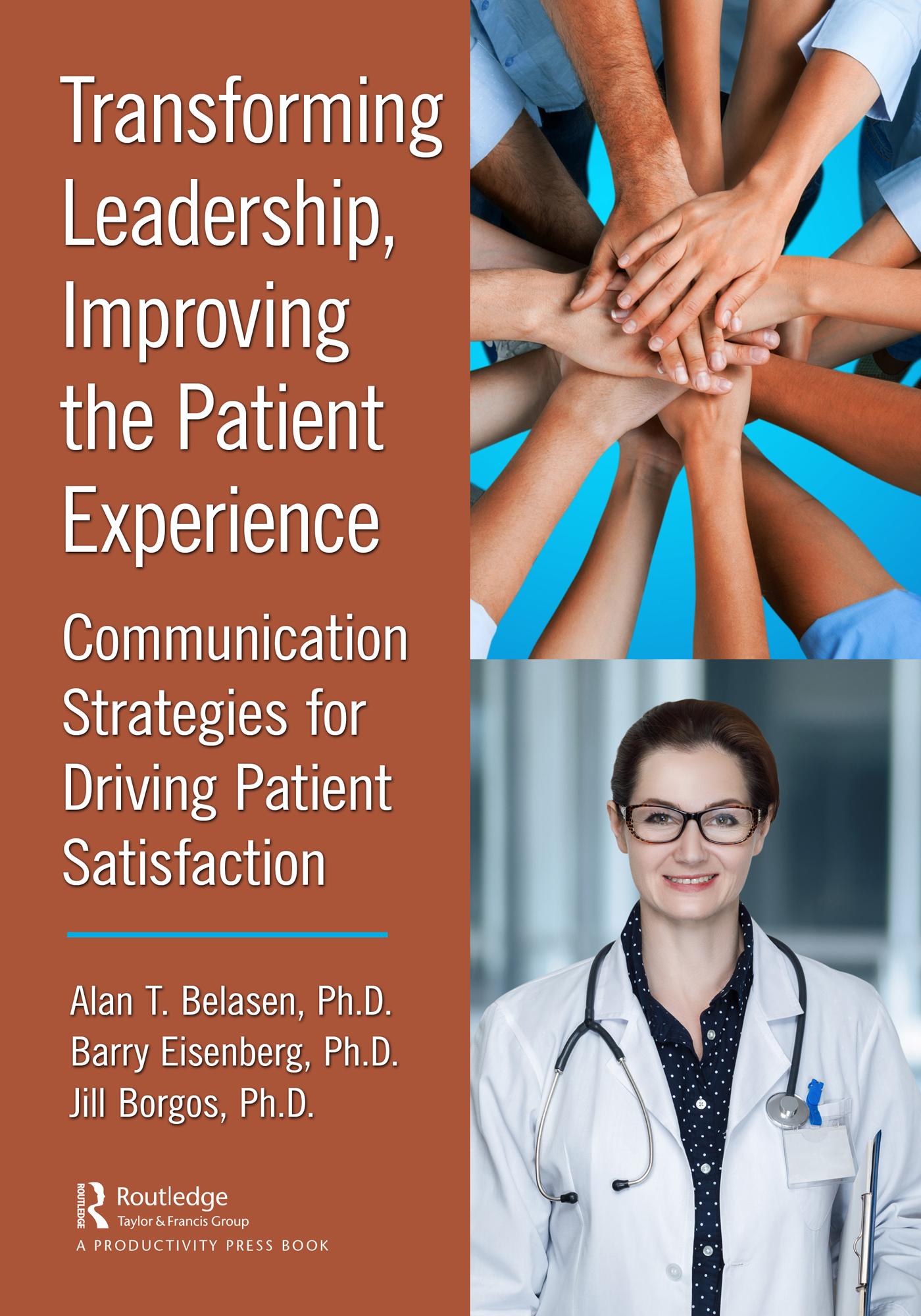
This book focuses on the patient experience as a leadership strategy. It explores the relationships between coordinated care, expert leadership, provider-patient communications, and the patient experience. When clinical and nonclinical staff collaborate effectively, healthcare teams can improve patient outcomes, prevent medical errors, improve efficiency, and increase patient satisfaction.
Surprisingly, however, healthcare leaders tend to prioritize specific metrics to improve hospital performance and patient satisfaction even though patient experience and provider-patient communications are intertwined. Determining the most effective strategy for achieving higher levels of service quality and patient satisfaction can prove elusive for providers.
Consider the evidence: a survey in 2012 of more than 17,000 healthcare leaders in North America, for example, found that leaders’ perceptions did not always match the data, and many hospital leaders overestimated the performance of their hospitals. Over 75% of the hospital leaders reported "quality of care" was something their hospital did well, while their patients, on average, rated them lower on perceived service quality. Ten years later, in 2022, only a few providers integrated best practices to achieve high patient satisfaction which severely impacted CMS Hospital Star Rating. This has significant effects on profit margins since patients consider the star rating differentials in their choices of hospitals and are willing to pay upward of 17% extra for treatments in 5-star hospitals, a revenue generating source of income at times when hospitals have seen falling revenues (down 4.8%) and rising labor (up 37%) from pre-COVID-19 pandemic levels.
To reduce the gap between perception and reality, hospital leaders can consider the link between communication goals (e.g., responsiveness of hospital staff, pain management, communication about medicines) and outcomes (e.g., increased adherence and compliance, readmission, healthcare delivery costs, hospital overall ratings) as well as improve the patient experience.
When intentions and outcomes are aligned, they create a powerful medium by which healthcare leaders can evaluate the gaps that exist between patient care measures and best practices and mitigate organizational or technological factors relevant to improving the patient experience. When the alignment is optimal, care teams develop a better sense of shared purpose, become more committed and accountable, and work together to improve the patient experience. When accomplished, patients participate more fully and actively in the exchange and are discharged with an enhanced commitment to carry out care management requirements.
Key topics in this practical guide include provider-patient communications; demonstrating the value of patient-focused care; how physician and nurse executives use synergy as a strategy; engaging board members in promoting quality and safety goals and in developing hospital community partnerships; building bridges between physicians, administrators, trustees, and hospital staff; and developing a leadership pipeline.
Betal nemt med kort, Klarna, Apple Pay eller Google Pay. Ikke tilfreds? Du har altid 14 dages fortrydelsesret. Læs mere i vores vilkår. Har du spørgsmål, så send os en mail på hello@memmo.org.
Memmo gør det nemmere at studere – uanset hvor du er i verden. Hos os samler du dine kursusbøger og smarte studieværktøjer ét sted: resuméer, quizzer, podcasts og flashcards. Og så er der Ted, din studieven, der svarer på alt, du undrer dig over. Over 50 000 studerende studerer allerede her – bygget til at hjælpe dig med at lære hurtigere og stresse mindre.