
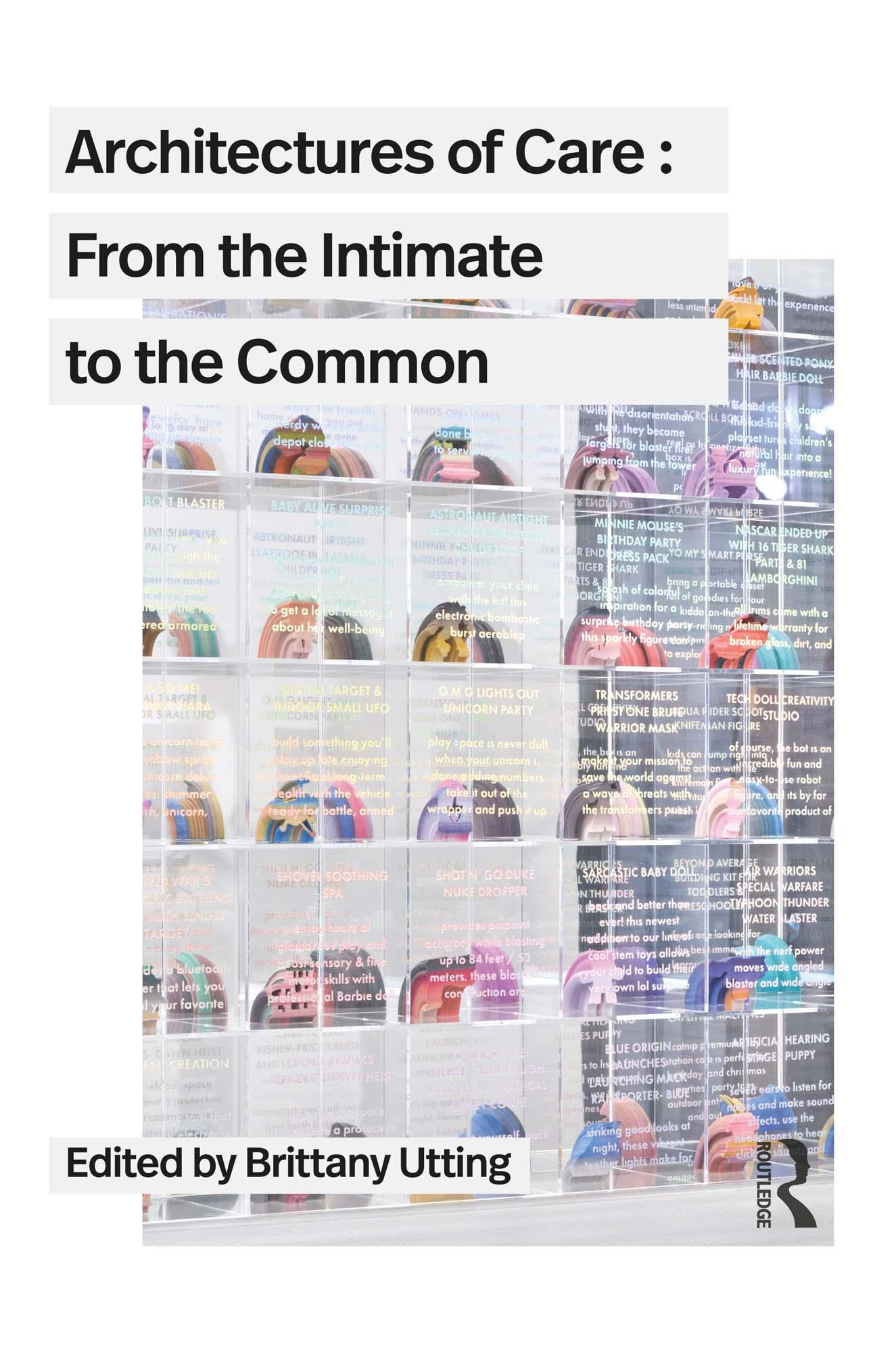
Drawing from a diverse range of interdisciplinary voices, this book explores how spaces of care shape our affective, material, and social forms, from the most intimate scale of the body to our planetary commons.
Typical definitions of care center around the maintenance of a livable life, encompassing everything from shelter and welfare to health and safety. Architecture plays a fundamental role in these definitions, inscribed in institutional archetypes such as the home, the hospital, the school, and the nursery. However, these spaces often structure modes of care that prescribe gender roles, bodily norms, and labor practices. How can architecture instead engage with an expanded definition of care that questions such roles and norms, producing more hybrid entanglements between our bodies, our collective lives, and our environments? Chapters in this book explore issues ranging from disabled domesticities and nursing, unbuilding whiteness in the built environment, practices and pedagogies of environmental care, and the solidarity networks within ‘The Cloud’. Case studies include Floating University Berlin, commoning initiatives by the Black Panther party, and hospitals for the United Mine Workers of America, among many other sites and scales of care.
Exploring architecture through the lenses of gender studies, labor theory, environmental justice, and the medical humanities, this book will engage students and academics from a wide range of disciplines.
Betal nemt med kort, Klarna, Apple Pay eller Google Pay. Ikke tilfreds? Du har altid 14 dages fortrydelsesret. Læs mere i vores vilkår. Har du spørgsmål, så send os en mail på hello@memmo.org.
Memmo gør det nemmere at studere – uanset hvor du er i verden. Hos os samler du dine kursusbøger og smarte studieværktøjer ét sted: resuméer, quizzer, podcasts og flashcards. Og så er der Ted, din studieven, der svarer på alt, du undrer dig over. Over 50 000 studerende studerer allerede her – bygget til at hjælpe dig med at lære hurtigere og stresse mindre.