
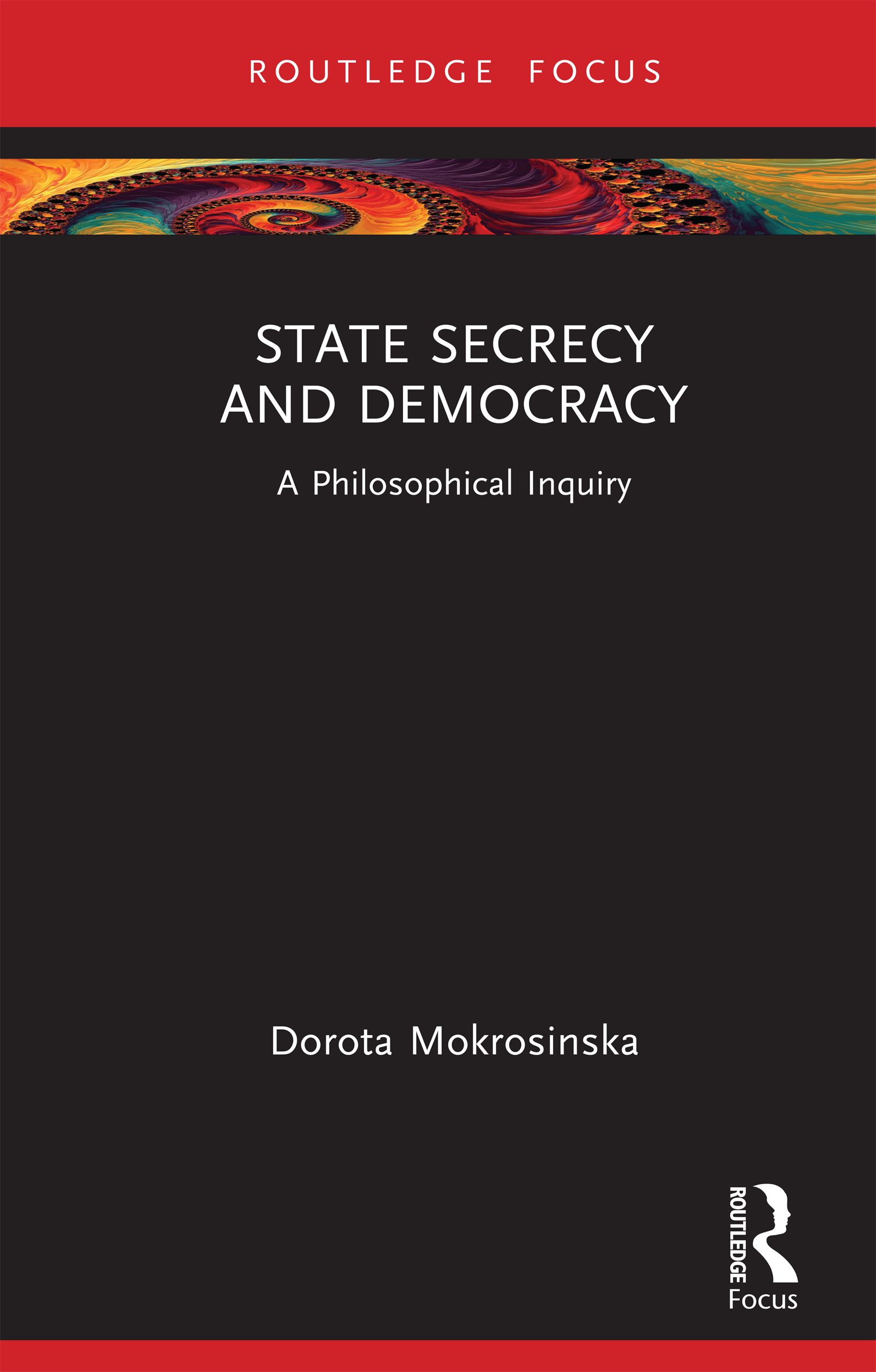
In the wake of controversial disclosures of classified government information by WikiLeaks and Edward Snowden, questions about the democratic status of secret uses of political power are rarely far from the headlines. Despite an increase in initiatives aimed at enhancing government transparency – such as freedom of information or sunshine laws – secrecy persists in both the foreign and domestic policy of democratic states, in the form of classified intelligence programs, espionage, secret military operations, diplomatic discretion, closed-door political bargaining, and bureaucratic opacity.
This book explores whether the state’s claim to restrict access to information can be justified. Dorota Mokrosinska answers this question with a qualified "yes," arguing that secrecy in exercising executive and legislative power can be seen as a legitimate exercise of democratic authority rather than as its justified suspension.
Past and recent examples of state secrecy are used throughout the book, including the Manhattan Project, decision-making leading to the Iraq War, the extraordinary renditions programs and secret detention sites in Eastern Europe, collaboration between international secret services, and the WikiLeaks and Snowden disclosures.
State Secrecy and Democracy: A Philosophical Inquiry is essential reading for those in political philosophy, ethics, politics, international relations and security studies, and law.
Betal nemt med kort, Klarna, Apple Pay eller Google Pay. Ikke tilfreds? Du har altid 14 dages fortrydelsesret. Læs mere i vores vilkår. Har du spørgsmål, så send os en mail på hello@memmo.org.
Memmo gør det nemmere at studere – uanset hvor du er i verden. Hos os samler du dine kursusbøger og smarte studieværktøjer ét sted: resuméer, quizzer, podcasts og flashcards. Og så er der Ted, din studieven, der svarer på alt, du undrer dig over. Over 50 000 studerende studerer allerede her – bygget til at hjælpe dig med at lære hurtigere og stresse mindre.