
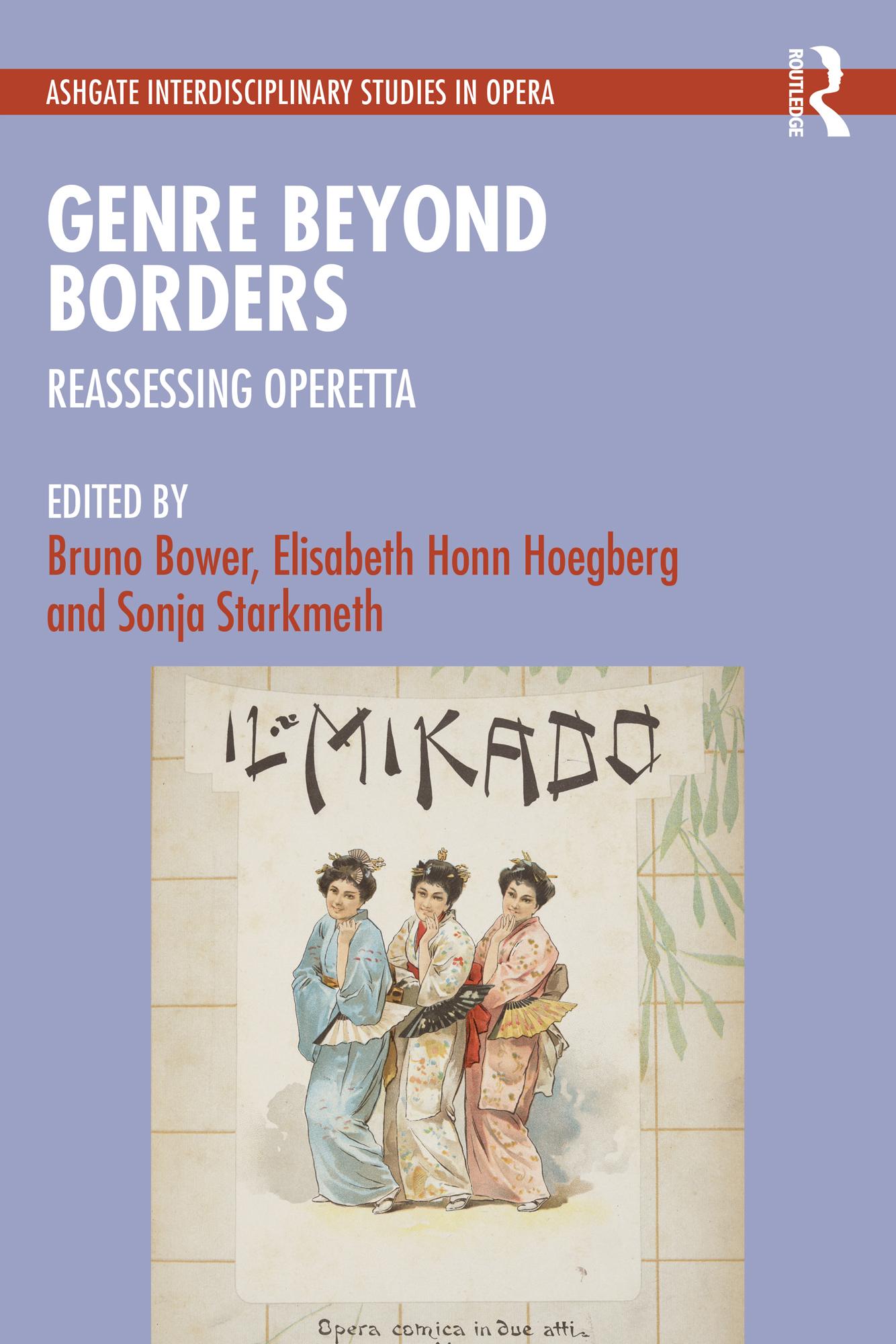
This book offers an innovative approach to understanding operetta, drawing attention to its malleability and resistance to boundaries. These shows have traversed (and continue to traverse) with ease the national borders which might superficially define them, or draw on features from many other genres without fundamentally changing in tone or approach. The chapters move from nineteenth-century London and Paris to twentieth-century North America, South America and Europe to present-day Australia. Some offer fresh understandings of familiar composers, such as Johann Strauss or Gilbert and Sullivan, while others examine works or composers that are less well-known. The chapter on Socialist operetta in Czechoslovakia in particular will almost certainly be a revelation to anyone from Western Europe or the US, where operetta is often understood to be a bourgeois phenomenon. As a summary of the current state of the field, this collection showcases the many possible pathways for future scholars who wish to explore it.
Betal nemt med kort, Klarna, Apple Pay eller Google Pay. Ikke tilfreds? Du har altid 14 dages fortrydelsesret. Læs mere i vores vilkår. Har du spørgsmål, så send os en mail på hello@memmo.org.
Memmo gør det nemmere at studere – uanset hvor du er i verden. Hos os samler du dine kursusbøger og smarte studieværktøjer ét sted: resuméer, quizzer, podcasts og flashcards. Og så er der Ted, din studieven, der svarer på alt, du undrer dig over. Over 50 000 studerende studerer allerede her – bygget til at hjælpe dig med at lære hurtigere og stresse mindre.