
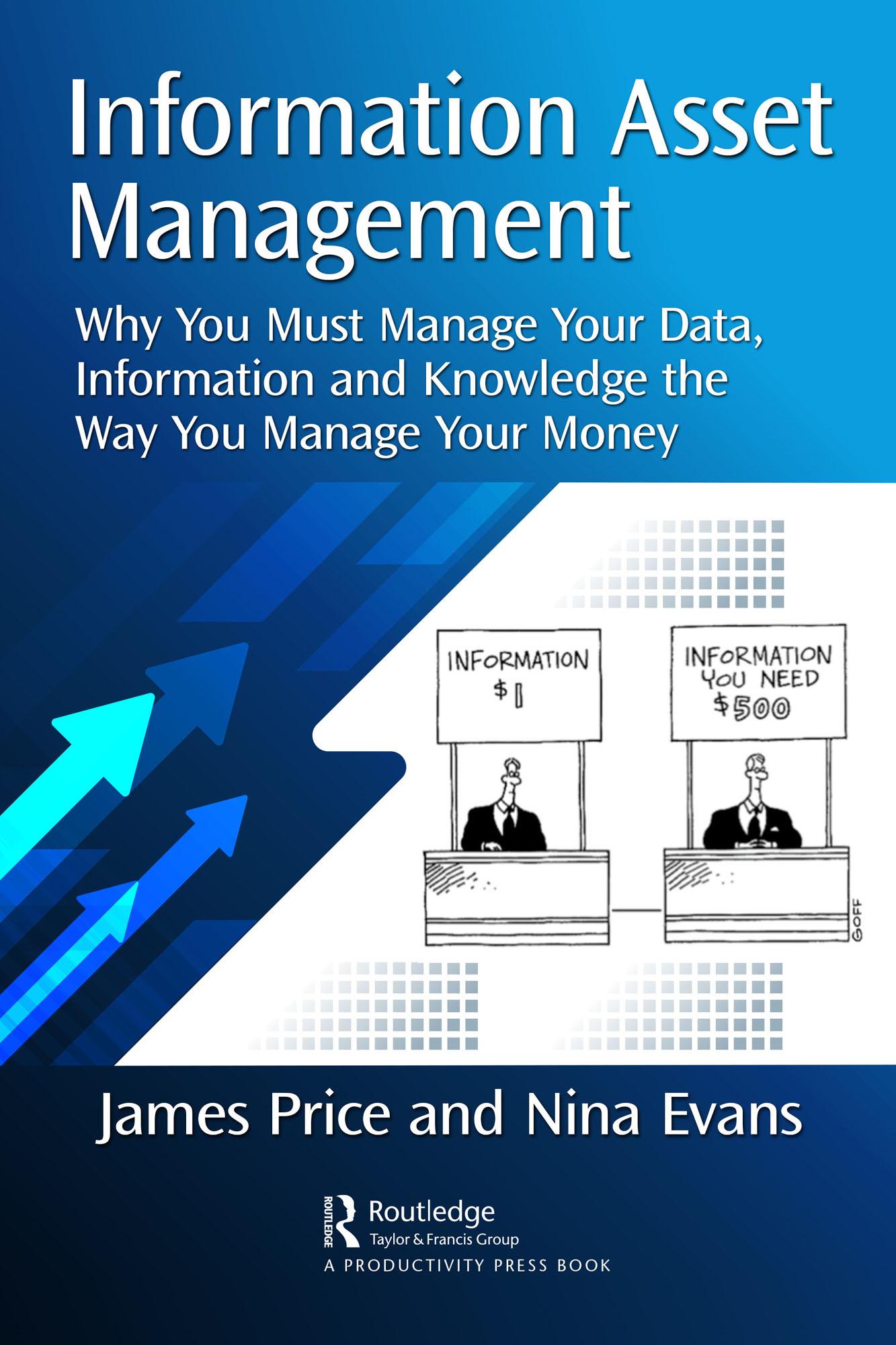
Organisations are using data, information and knowledge as a competitive weapon. Their data, information and knowledge are arguably their most valuable assets. Yet, this fourth asset is managed badly when compared to the other three assets, namely money, people and infrastructure with considerable risk to the organisation. Executives are accountable for the success of their organisations, and those who don’t manage this critical resource and business enabler effectively can be regarded as negligent. Information Assets carry enormous risk and value. Most boards and executives don’t know how to govern and manage IAs effectively and nobody is held accountable. Given this, organisations should govern and manage their Information Assets the way they manage their Financial Assets. The benefits of managing IAs well are compelling. These benefits include increased efficiency, productivity, employee satisfaction, improved decision-making, mitigating business risk and improving product, protecting corporate reputation and service delivery. Drawing on ground-breaking research, this book explains why Information Assets are so important to organisations and the barriers to managing them well.
This book is unique in the sense that it takes a fresh look at this topic, is based on experience and research, and includes interviews from more than 70 industry leaders. In short, this book is written by executives and explains where to start.
Betal nemt med kort, Klarna, Apple Pay eller Google Pay. Ikke tilfreds? Du har altid 14 dages fortrydelsesret. Læs mere i vores vilkår. Har du spørgsmål, så send os en mail på hello@memmo.org.
Memmo gør det nemmere at studere – uanset hvor du er i verden. Hos os samler du dine kursusbøger og smarte studieværktøjer ét sted: resuméer, quizzer, podcasts og flashcards. Og så er der Ted, din studieven, der svarer på alt, du undrer dig over. Over 50 000 studerende studerer allerede her – bygget til at hjælpe dig med at lære hurtigere og stresse mindre.