
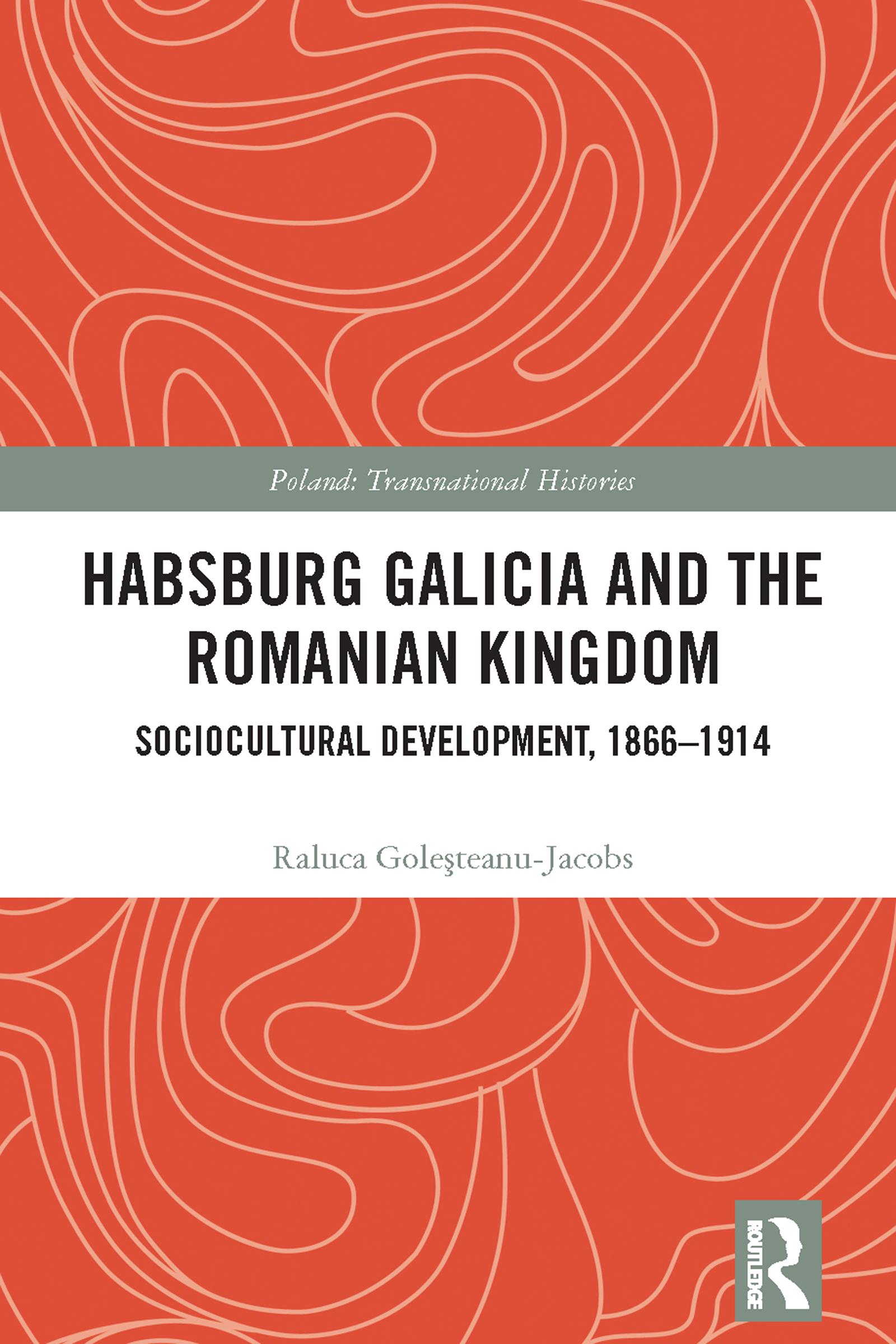
This comparative attempt, intended for postgraduates and scholars of Eastern-Central Europe, investigates the political, economic, and cultural landscape of Habsburg Galicia and the Romanian Kingdom in the second half of the 19th century. Often, in historiography and in the public sphere alike, the two cases under study have been separately regarded as contexts that provided atypical answers to modernity, and parts of a region that has been regarded as atypical in itself.
Recently, efforts have been made to integrate each of the cases in a post-imperial paradigm, identifying the complex interactions between their socio-political modernisation and historical memory. This book continues this trend by investigating for the first time the two cases together, as parts of a space of alterity, as labs of shifting ideologies and labels.
The public figures and the institutions depicted in the book are physically located in Central and in Eastern Europe, but by sometimes competing experiences they are illustrative for several identities and historical realms, local, regional, and continental. Secondly, the current work addresses dilemmas related to Nationalism and nation building, for the sake of separating those discourses which reflected on civic nationalism from those which directed the public mind to the values of ethnic nationalism.
Betal nemt med kort, Klarna, Apple Pay eller Google Pay. Ikke tilfreds? Du har altid 14 dages fortrydelsesret. Læs mere i vores vilkår. Har du spørgsmål, så send os en mail på hello@memmo.org.
Memmo gør det nemmere at studere – uanset hvor du er i verden. Hos os samler du dine kursusbøger og smarte studieværktøjer ét sted: resuméer, quizzer, podcasts og flashcards. Og så er der Ted, din studieven, der svarer på alt, du undrer dig over. Over 50 000 studerende studerer allerede her – bygget til at hjælpe dig med at lære hurtigere og stresse mindre.