
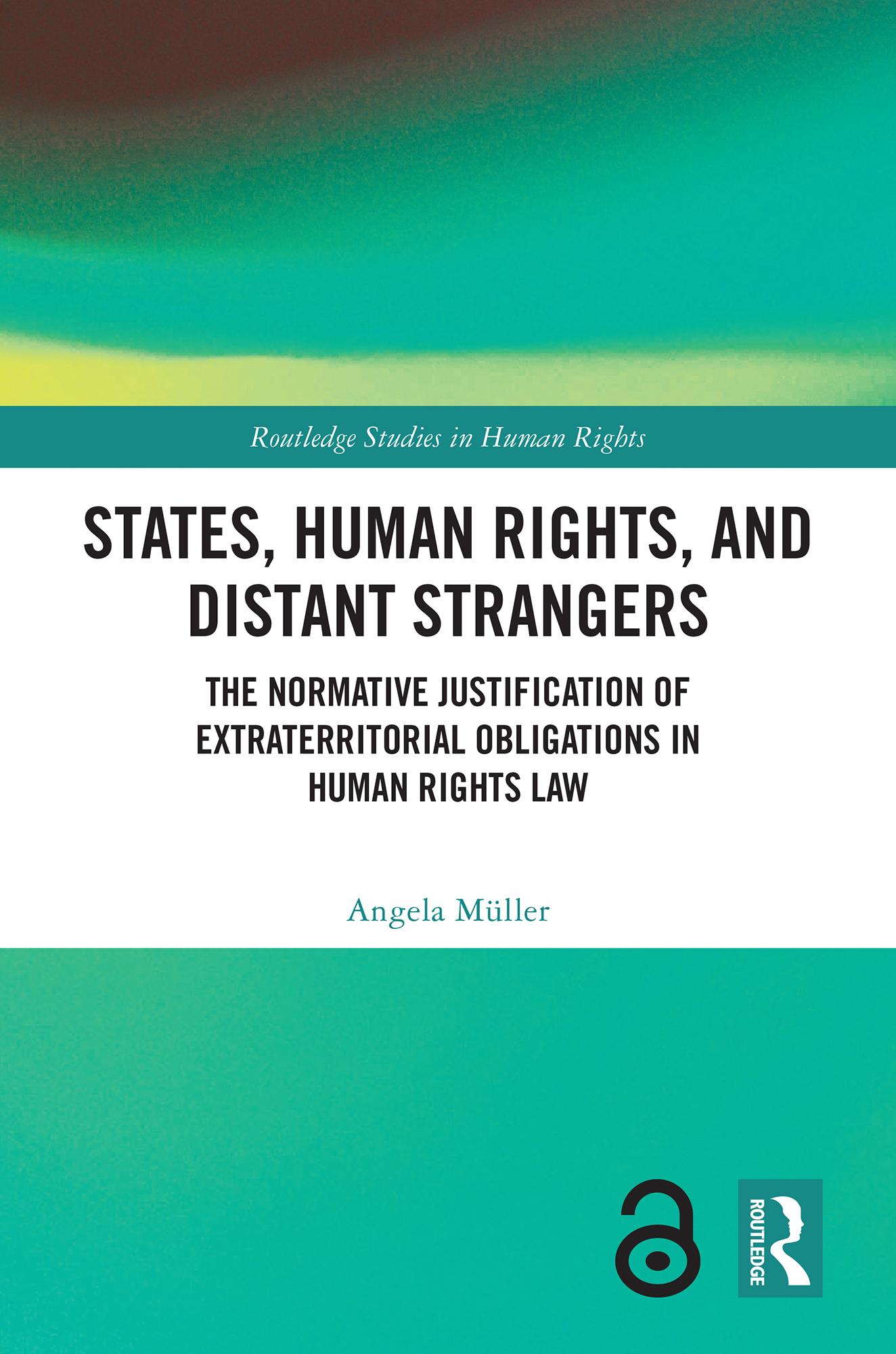
This book combines legal and philosophical perspectives to address the question of whether states are bound by human rights when they act with effects on people abroad—states’ extraterritorial human rights obligations. Taking an innovative approach, it begins with a profound legal analysis of the issue at national, supranational, and international levels and then engages in depth with counterarguments against extraterritorially applying human rights, on the basis of which it develops its own ethical justificatory theory of extraterritorial human rights obligations. The book closes the circle by showing what the practical implications of this theory for the interpretation (and possible evolvement) of human rights law would be. In a world where critiques of, and resistance to, the general idea of universal human rights are on rise, the book contributes to closing the gap between judicial and normative perspectives on extraterritorial human rights obligations by inquiring into the ethical underpinnings of this topical legal challenge.
This book will be of key interest to scholars and students in human rights, international law, and more broadly in political philosophy, philosophy of law, and international relations.
The Open Access version of this book, available at www.taylorfrancis.com, has been made available under a Creative Commons Attribution 4.0 license.
Betal nemt med kort, Klarna, Apple Pay eller Google Pay. Ikke tilfreds? Du har altid 14 dages fortrydelsesret. Læs mere i vores vilkår. Har du spørgsmål, så send os en mail på hello@memmo.org.
Memmo gør det nemmere at studere – uanset hvor du er i verden. Hos os samler du dine kursusbøger og smarte studieværktøjer ét sted: resuméer, quizzer, podcasts og flashcards. Og så er der Ted, din studieven, der svarer på alt, du undrer dig over. Over 50 000 studerende studerer allerede her – bygget til at hjælpe dig med at lære hurtigere og stresse mindre.