
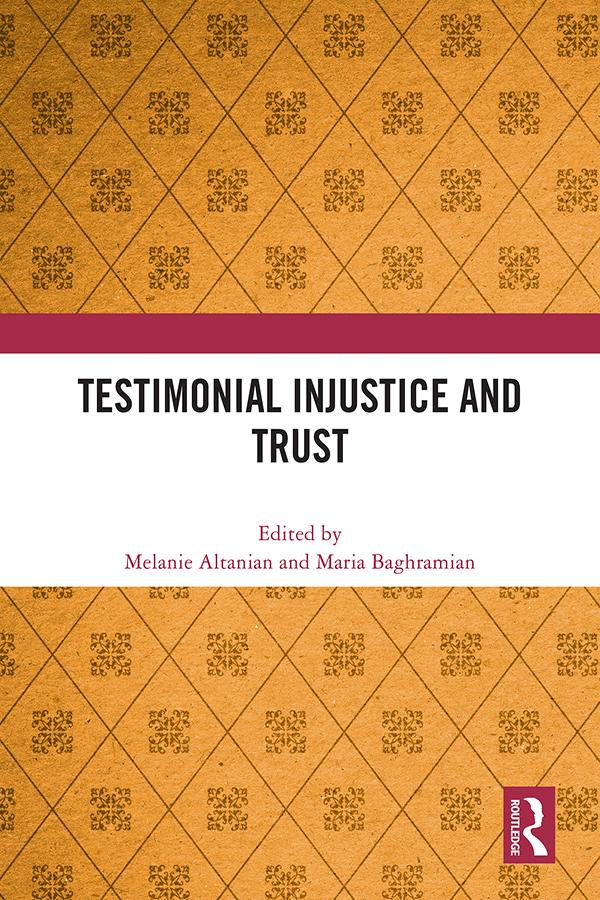
This book presents novel approaches and perspectives to scholarship on epistemic injustice and particularly, testimonial injustice and their connections with public trust.
Drawing from different philosophical schools of thought and approaches, the book provides a comprehensive analysis of the conditions, mechanisms and normative implications of testimonial injustice, a term most prominently introduced by Fricker (2007), and the role that trust can play in fostering testimonial justice. Through the application of theories of epistemic injustice, and testimonial injustice, to new contexts and cases, including gendered violence, disability, indigenous knowledge, genocide, vaccine hesitancy and the COVID-19 pandemic, the book sheds light on the real-world significance of these philosophical concepts.
Testimonial Injustice and Trust introduces new directions for further research and will appeal to scholars and students in (critical) social and political epistemology, normative ethics as well as social and political philosophy more generally. The chapters in this book were originally published in the International Journal of Philosophical Studies, Social Epistemology and Educational Philosophy and Theory.
Betal nemt med kort, Klarna, Apple Pay eller Google Pay. Ikke tilfreds? Du har altid 14 dages fortrydelsesret. Læs mere i vores vilkår. Har du spørgsmål, så send os en mail på hello@memmo.org.
Memmo gør det nemmere at studere – uanset hvor du er i verden. Hos os samler du dine kursusbøger og smarte studieværktøjer ét sted: resuméer, quizzer, podcasts og flashcards. Og så er der Ted, din studieven, der svarer på alt, du undrer dig over. Over 50 000 studerende studerer allerede her – bygget til at hjælpe dig med at lære hurtigere og stresse mindre.