
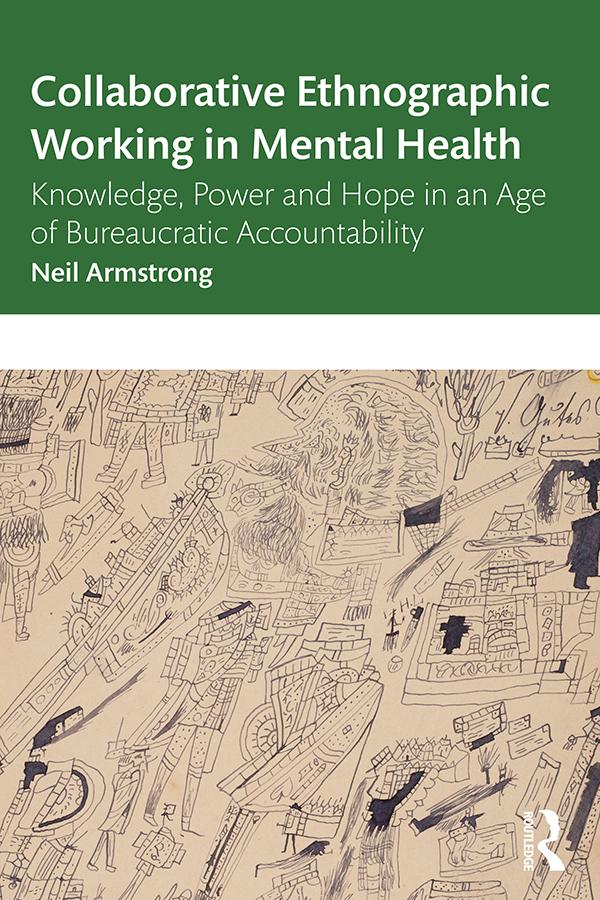
Collaborative Ethnographic Working in Mental Health seeks to chart a new direction for research into mental healthcare, with the aim of creating the conditions for more productive interdisciplinary dialogue.
People involved in mental health often fail to recognise how they are described by researchers from the humanities and social sciences, which inhibits productive collaboration. This book seeks to address this problem, by including clinicians and patients in the research process and by shifting attention away from power and knowledge and towards the organisational context. It explores how clinical thinking and behaviour, illness experience, and clinical relationships are all shaped by the bureaucratic context. In particular, it examines tensions between what we want from mental healthcare and how accountable bureaucracies actually work, and proposes that mental healthcare research should not just evaluate new interventions but should investigate new ways of organising.
This book is written with a non-specialist audience in mind, as it is intended for all with a stake in mental healthcare research and practice. It is also for those with an interest in ethnographic methods, as a novel way of deploying ethnography, autoethnography and coproduced ethnography to address clinically important research topics.
Betal nemt med kort, Klarna, Apple Pay eller Google Pay. Ikke tilfreds? Du har altid 14 dages fortrydelsesret. Læs mere i vores vilkår. Har du spørgsmål, så send os en mail på hello@memmo.org.
Memmo gør det nemmere at studere – uanset hvor du er i verden. Hos os samler du dine kursusbøger og smarte studieværktøjer ét sted: resuméer, quizzer, podcasts og flashcards. Og så er der Ted, din studieven, der svarer på alt, du undrer dig over. Over 50 000 studerende studerer allerede her – bygget til at hjælpe dig med at lære hurtigere og stresse mindre.