
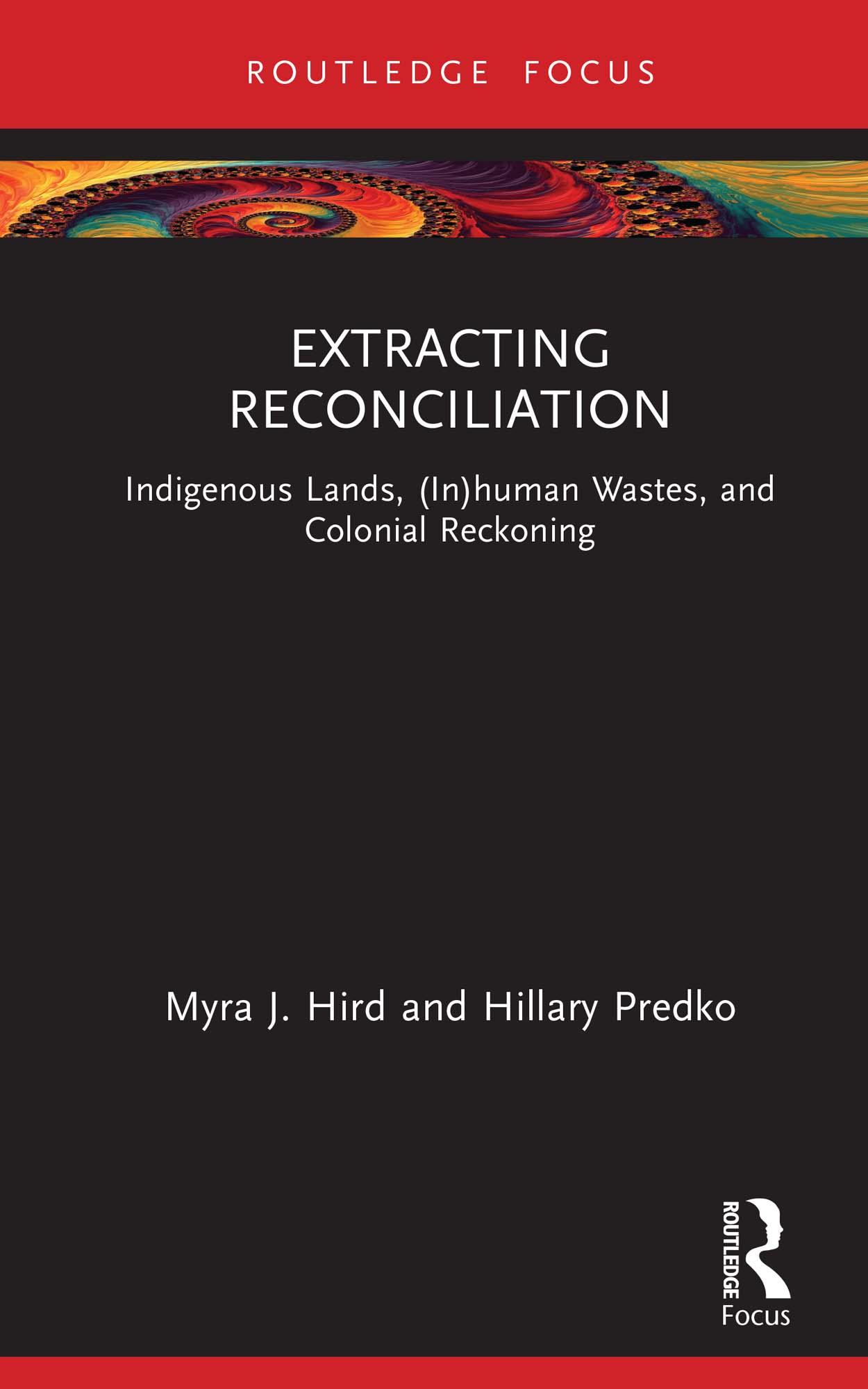
Extracting Reconciliation argues that reconciliation constitutes a critical contemporary mechanism through which colonialism is seeking to ensure continuing access to Indigenous lands and resources.
Making use of two historical case studies concerned with the intersection of resource extraction, Crown/Inuit relations, and waste legacies in Nunavut, Canada, the authors illuminate the mechanisms of colonial and neoliberal governance globally that promise reconciliation while delivering the status quo. Through Indigenous and non-Indigenous anticolonial and posthuman concepts and theories, the book engages with the inhuman politics of settler colonial extractivism and explores the socio-ethical social justice dimensions, political possibilities, and environmental implications of a much more challenging and accountable reckoning between (settler) colonialism and Indigenous land rights.
This book is of interest to students and scholars in gender studies, postcolonial studies, environmental studies, Indigenous studies, and politics.
Betal nemt med kort, Klarna, Apple Pay eller Google Pay. Ikke tilfreds? Du har altid 14 dages fortrydelsesret. Læs mere i vores vilkår. Har du spørgsmål, så send os en mail på hello@memmo.org.
Memmo gør det nemmere at studere – uanset hvor du er i verden. Hos os samler du dine kursusbøger og smarte studieværktøjer ét sted: resuméer, quizzer, podcasts og flashcards. Og så er der Ted, din studieven, der svarer på alt, du undrer dig over. Over 50 000 studerende studerer allerede her – bygget til at hjælpe dig med at lære hurtigere og stresse mindre.