
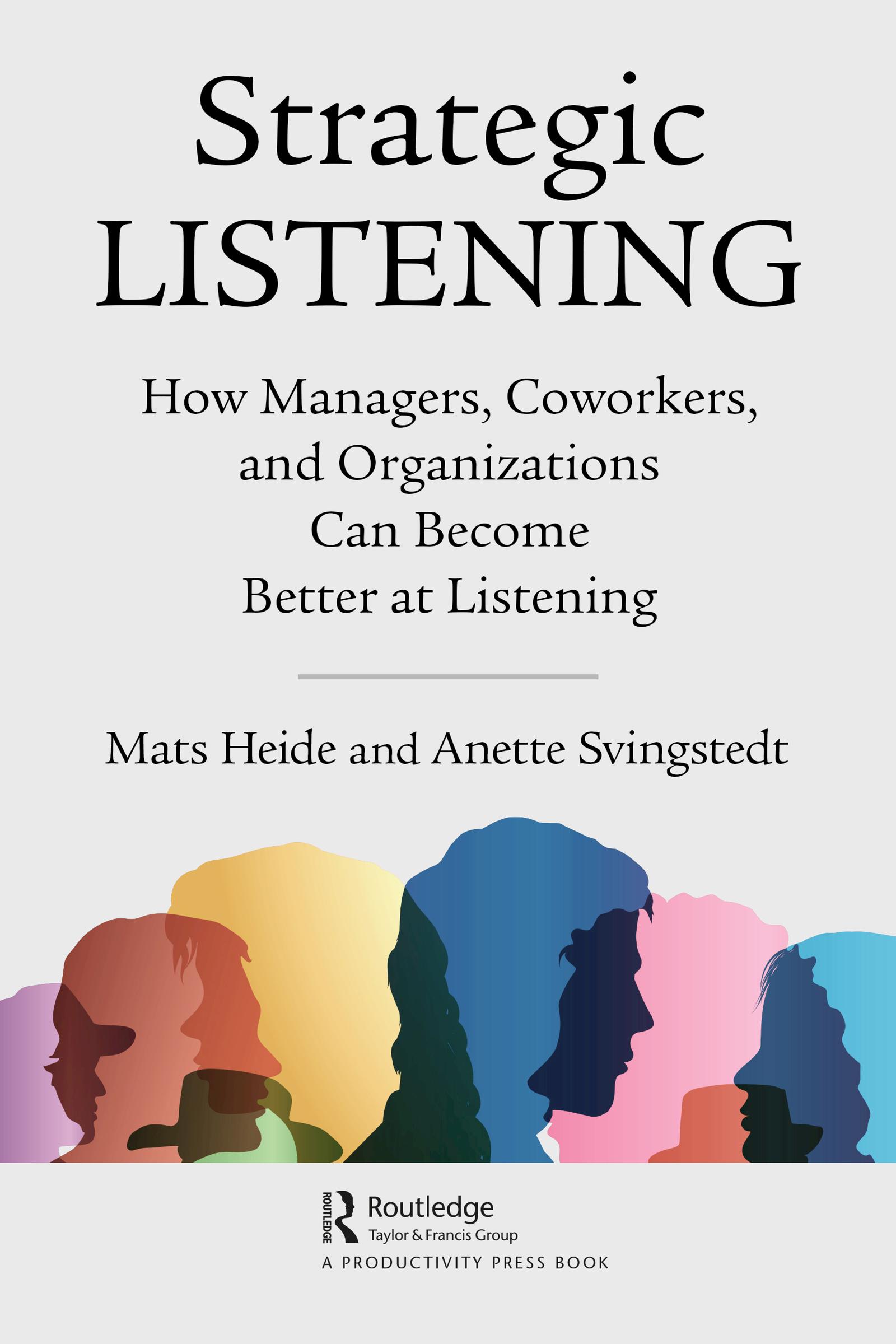
Listening is so simple, yet so difficult. Many times, listening is taken for granted. One could therefore say that listening is the forgotten part of communication. Although organizations have more digital and analog communication channels than ever, too little time is spent listening to customers, employees, and other influential groups. It is a shame that listening is not given more attention, as it is linked to many positive values. Examples include better conversations, increased trust and confidence, more outstanding commitment and job satisfaction, lower absenteeism due to illness, higher productivity and quality of work, increased sales, better relationships with customers and employees, and many other positive effects. To the extent that listening takes place, organizations rarely take a holistic approach to it. Strategic listening means a given objective for listening, thoughts about who should listen, when it should happen, and so on. An organization’s listening must become a strategic issue to exploit the great potential of increased listening.
This book provides answers to the following:
- Why is listening important?
- What are the barriers to listening?
- How can both individuals and organizations become better at listening?
- How can organizations develop strategic listening skills?
- How does one build a system to improve an organization’s strategic listening?
Betal nemt med kort, Klarna, Apple Pay eller Google Pay. Ikke tilfreds? Du har altid 14 dages fortrydelsesret. Læs mere i vores vilkår. Har du spørgsmål, så send os en mail på hello@memmo.org.
Memmo gør det nemmere at studere – uanset hvor du er i verden. Hos os samler du dine kursusbøger og smarte studieværktøjer ét sted: resuméer, quizzer, podcasts og flashcards. Og så er der Ted, din studieven, der svarer på alt, du undrer dig over. Over 50 000 studerende studerer allerede her – bygget til at hjælpe dig med at lære hurtigere og stresse mindre.