
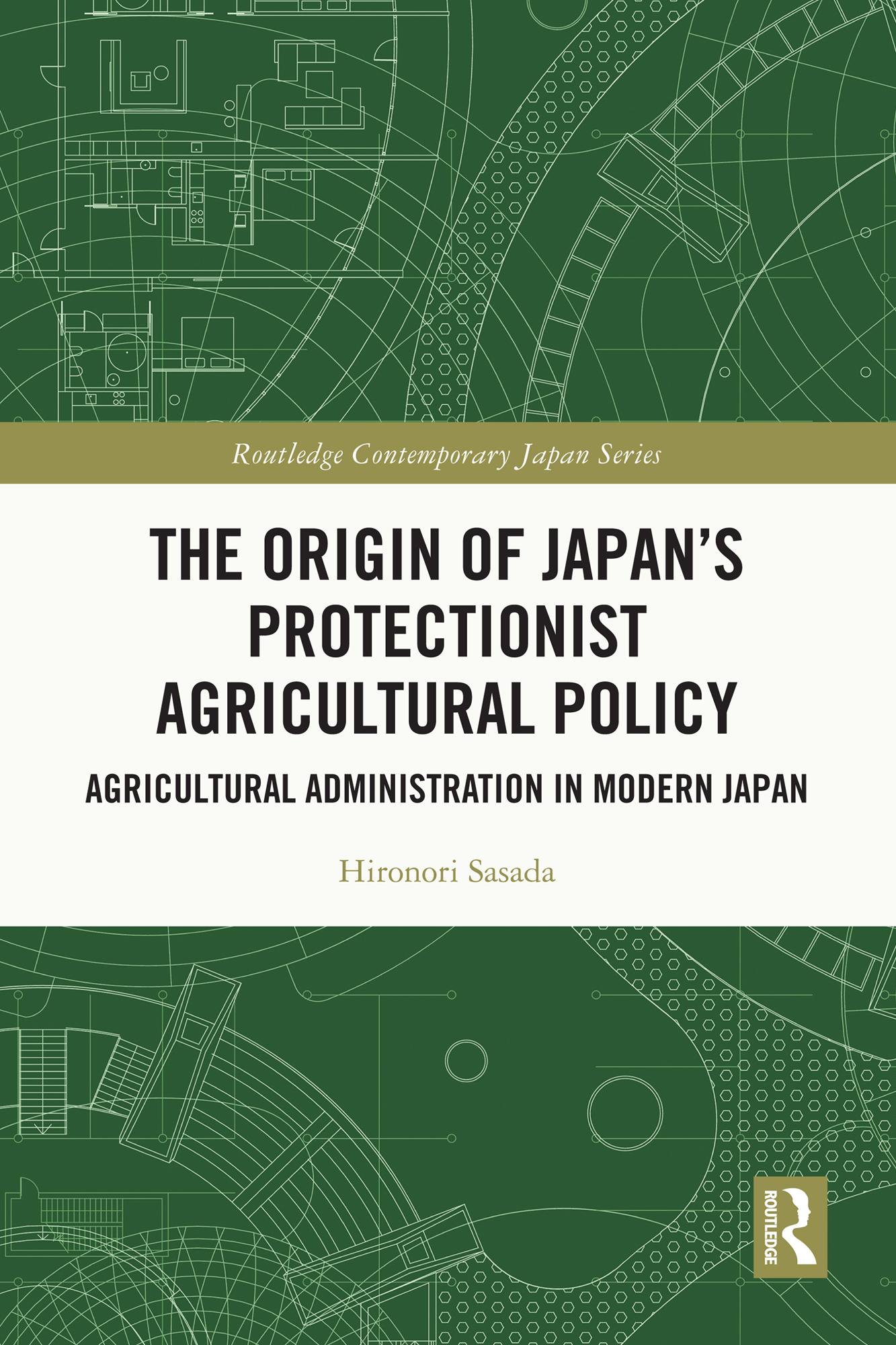
This book explores the origins of Japan’s protectionist agricultural policies through an in-depth historical analysis of Japanese agricultural policies between the Meiji period and the end of WWII.
It offers a constructivist account for the rise of protectionism, examining the policies of prewar agricultural bureaucrats who played critical roles in the policymaking process. It argues that protectionist agricultural policy in Japan was not originally generated by the "iron triangle" (a political alliance consisted of the Liberal Democratic Party, the Agricultural Ministry, and farmers’ organizations) but by a prewar agricultural bureaucrats’ policy idea called shōnō ron (thoughts on small-scale farming). Ultimately the book reveals how, contrary to suggestions of previous scholarship, the protective measures based on shōnō ron forged the necessary conditions for the emergence of "iron triangle" after the end of WWII, which in turn institutionalized Japan’s subsequent protectionist agricultural regime.
Examining such topics as the origin of protectionist policy, the formation of actors’ preferences, and the broader effects of agricultural policy ideas, this book will be a valuable reading for scholars and students of Japanese politics, agricultural policy, and political economy.
Betal nemt med kort, Klarna, Apple Pay eller Google Pay. Ikke tilfreds? Du har altid 14 dages fortrydelsesret. Læs mere i vores vilkår. Har du spørgsmål, så send os en mail på hello@memmo.org.
Memmo gør det nemmere at studere – uanset hvor du er i verden. Hos os samler du dine kursusbøger og smarte studieværktøjer ét sted: resuméer, quizzer, podcasts og flashcards. Og så er der Ted, din studieven, der svarer på alt, du undrer dig over. Over 50 000 studerende studerer allerede her – bygget til at hjælpe dig med at lære hurtigere og stresse mindre.