
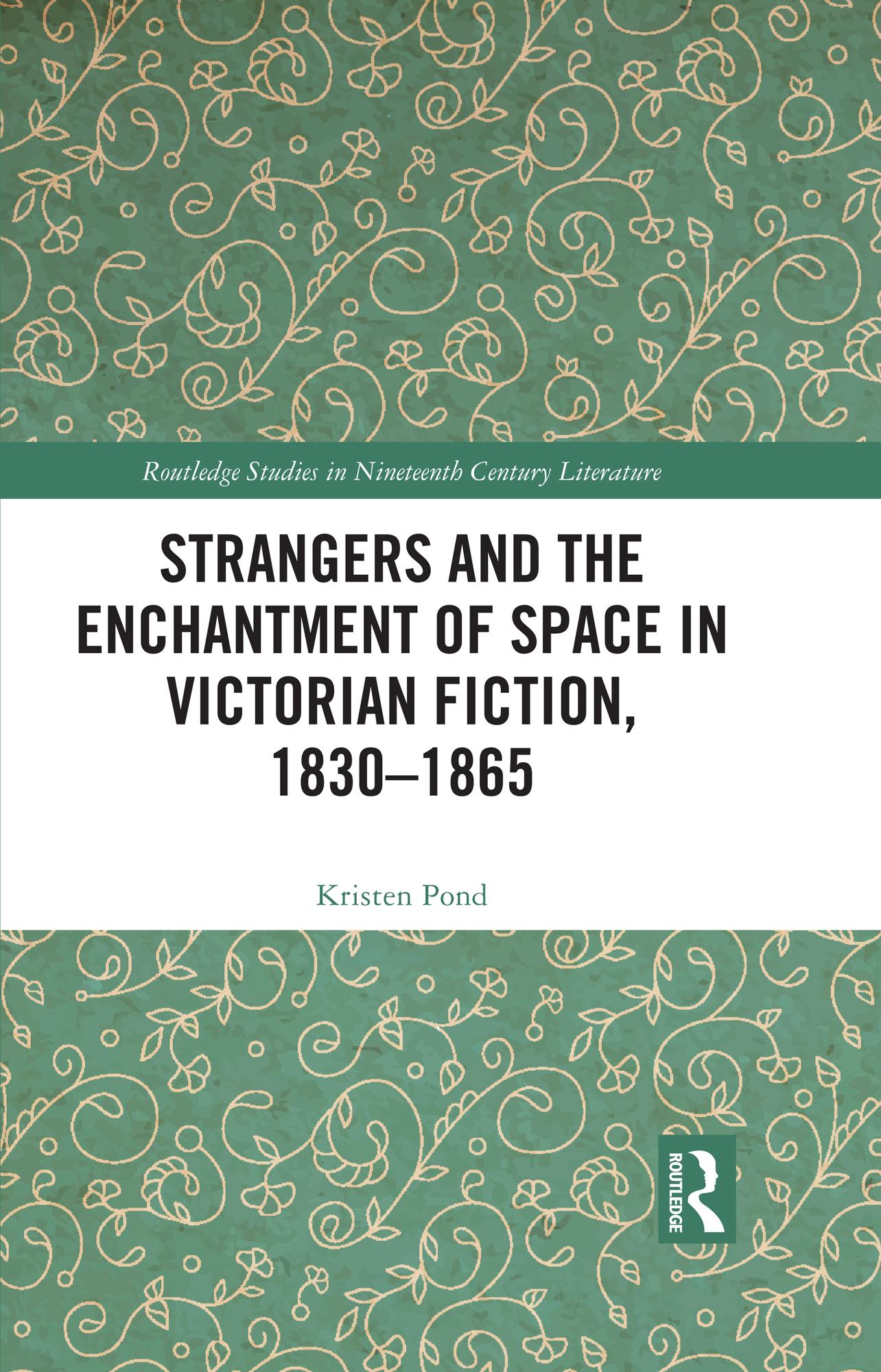
Tracing the origins of how we think about strangers to the Victorian period, Strangers and the Enchantment of Space in Victorian Fiction, 1830– 1865 explores the vital role strangers had in shaping social relations during the cultural transformations of the Industrial Revolution, transportation technologies, and globalization. While studies of nineteenth- century Britain tend to trace the rise of an aloof cosmopolitanism and distancing narrative strategies, this volume calls attention to the personalizing impulse in nineteenth- century literary form, investigating the deeply personal reflections on individual and national identities. In her book, Dr. Pond leads the reader through homes of the urban poor, wandering the Great Exhibition in the Crystal Palace, loitering in suburban neighborhoods, riding the railway, and touring a country estate. Readers will experience how the ordinary can be enchanting, and how the mundane can be unexpected, discovering a new way of thinking about strangers and their influence on our lives. Through an examination of the short and long fictional forms of Martineau, Dickens, Brontë, Gaskell, and Braddon, this study locates the figure of the stranger as a powerful topos in the story of Victorian literature and the ethics of social relations. This book will be ideal for those seeking to understand the dynamics of the stranger in Victorian fiction as a figure for understanding the changing dynamics of social relations in England in the early nineteenth century.
Betal nemt med kort, Klarna, Apple Pay eller Google Pay. Ikke tilfreds? Du har altid 14 dages fortrydelsesret. Læs mere i vores vilkår. Har du spørgsmål, så send os en mail på hello@memmo.org.
Memmo gør det nemmere at studere – uanset hvor du er i verden. Hos os samler du dine kursusbøger og smarte studieværktøjer ét sted: resuméer, quizzer, podcasts og flashcards. Og så er der Ted, din studieven, der svarer på alt, du undrer dig over. Over 50 000 studerende studerer allerede her – bygget til at hjælpe dig med at lære hurtigere og stresse mindre.