
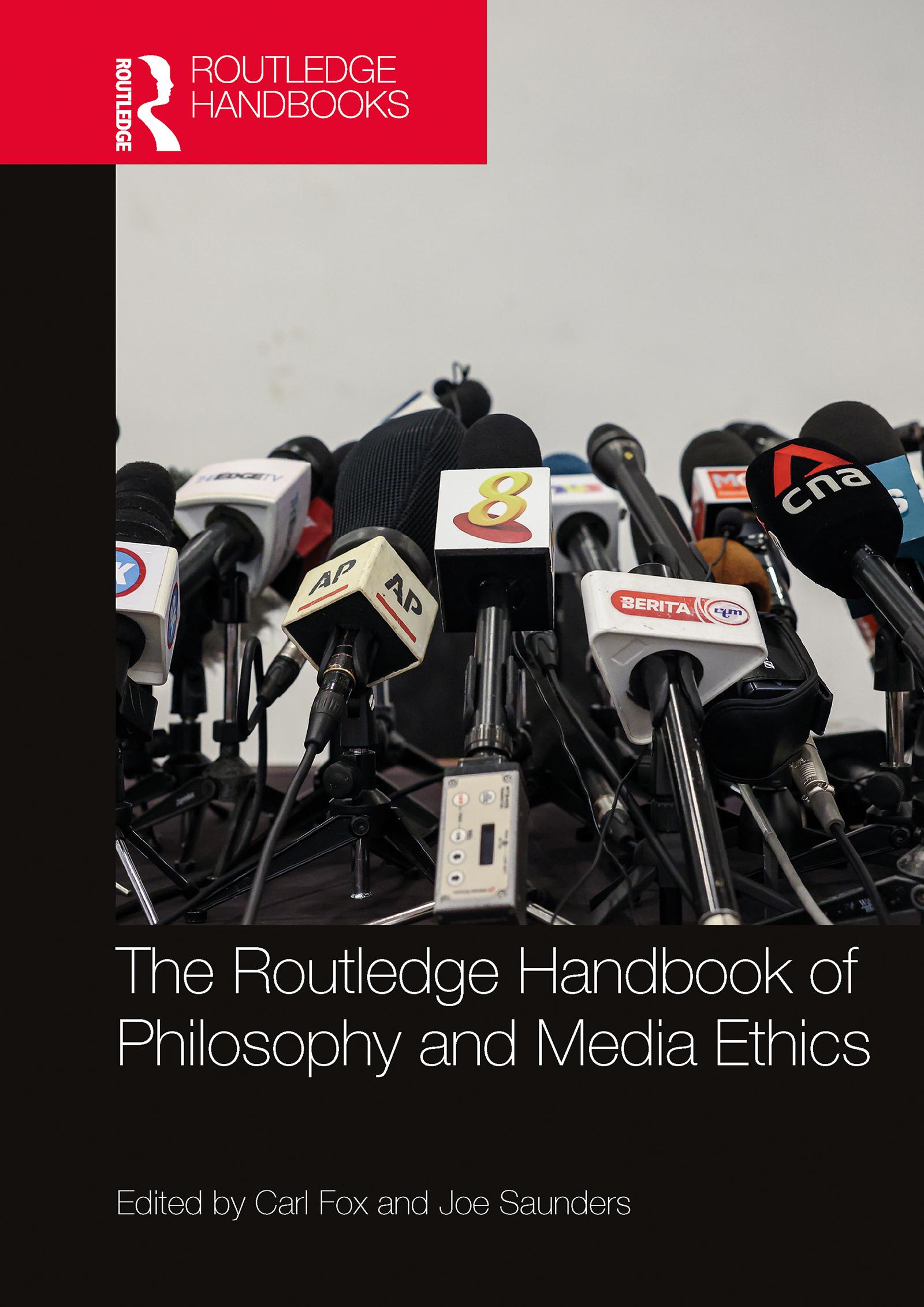
The media informs, entertains, and connects us. It is woven into the fabric of politics. Its increasing immediacy has become an inescapable feature of almost everybody’s life. We are, at the same time, subject to the media and participants in it. The ethical questions it raises have never been more urgent. Trust is in short supply, but we need to share information while dealing with problems like misinformation, disinformation, and echo chambers. And what responsibilities fall on the state, and on other actors such as artists, advertisers, and social media users, as we reckon with endemic problems like racism, sexism, and classism?
The Routledge Handbook of Philosophy and Media Ethics is an outstanding survey and assessment of this vitally important field. Comprising thirty chapters written by an international team of contributors, the Handbook is divided into five parts:
- Freedom of Speech, Privacy, and Censorship
- The News Media
- Broadening the Scope: Giving Other Aspects of the Media their Due
- Justice, Power, and Representation
- Vice and Virtue Online
The Routledge Handbook of Philosophy and Media Ethics is essential reading for students and researchers in philosophy, media and communication studies, politics, and law, as well as practising media professionals and journalists.
Betal nemt med kort, Klarna, Apple Pay eller Google Pay. Ikke tilfreds? Du har altid 14 dages fortrydelsesret. Læs mere i vores vilkår. Har du spørgsmål, så send os en mail på hello@memmo.org.
Memmo gør det nemmere at studere – uanset hvor du er i verden. Hos os samler du dine kursusbøger og smarte studieværktøjer ét sted: resuméer, quizzer, podcasts og flashcards. Og så er der Ted, din studieven, der svarer på alt, du undrer dig over. Over 50 000 studerende studerer allerede her – bygget til at hjælpe dig med at lære hurtigere og stresse mindre.