
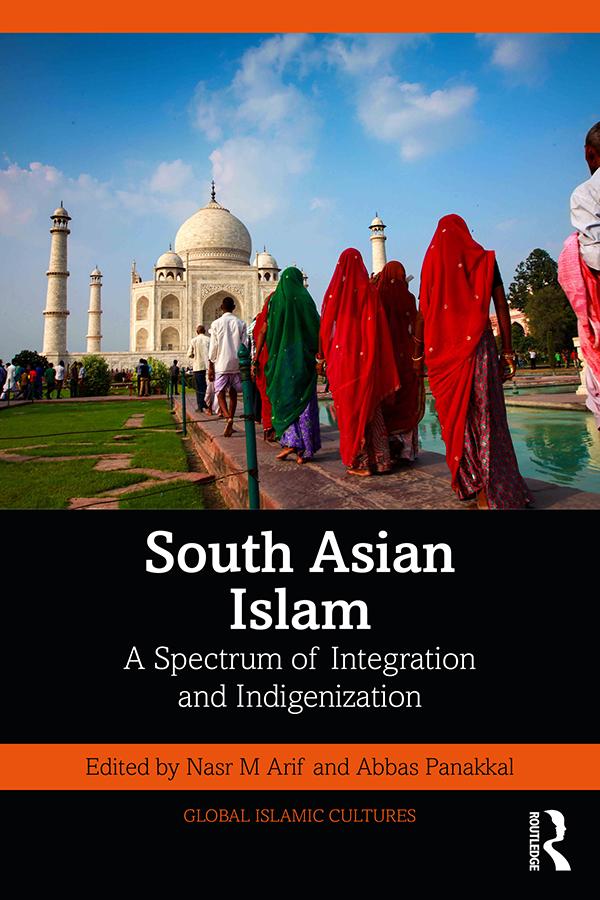
This volume explores the historical trajectory of the spread of Islam in South Asia and how the engagements of the past have played a crucial role in the making of the present outfits of South Asian Islam.
Islam in South Asia has maintained a distinct role while imbibing cultural, social, ethnic, folk, and artistic networks of the subcontinent in diverse echelons. In an unequivocal analysis, this volume showcases the visible varieties of Islam from an array of regional cultural, ethnic, and vernacular groups. While many characteristics remain distinct in different provinces or regions of South Asia, similarities are palpable in etiquettes, customary laws, art, and architecture. More than regional differences, various ethnic groups from all poles of the Indian subcontinent have paved the way for the dissimilar landscapes of Islam, in tandem with differences in language, culture, and festivals. The case studies in this book exhibit forms of cultural pluralism in the communities, which have helped in building a cohesive community.
Part of the ‘Global Islamic Cultures’ series that looks at integrated and indigenized Islam, this book will be of interest to students and researchers of religion, religious history, theology, study of Islamic law and politics, cultural studies, and South Asian Studies. It will also be useful to general readers who are interested in world religions and cultures.
Betal nemt med kort, Klarna, Apple Pay eller Google Pay. Ikke tilfreds? Du har altid 14 dages fortrydelsesret. Læs mere i vores vilkår. Har du spørgsmål, så send os en mail på hello@memmo.org.
Memmo gør det nemmere at studere – uanset hvor du er i verden. Hos os samler du dine kursusbøger og smarte studieværktøjer ét sted: resuméer, quizzer, podcasts og flashcards. Og så er der Ted, din studieven, der svarer på alt, du undrer dig over. Over 50 000 studerende studerer allerede her – bygget til at hjælpe dig med at lære hurtigere og stresse mindre.