
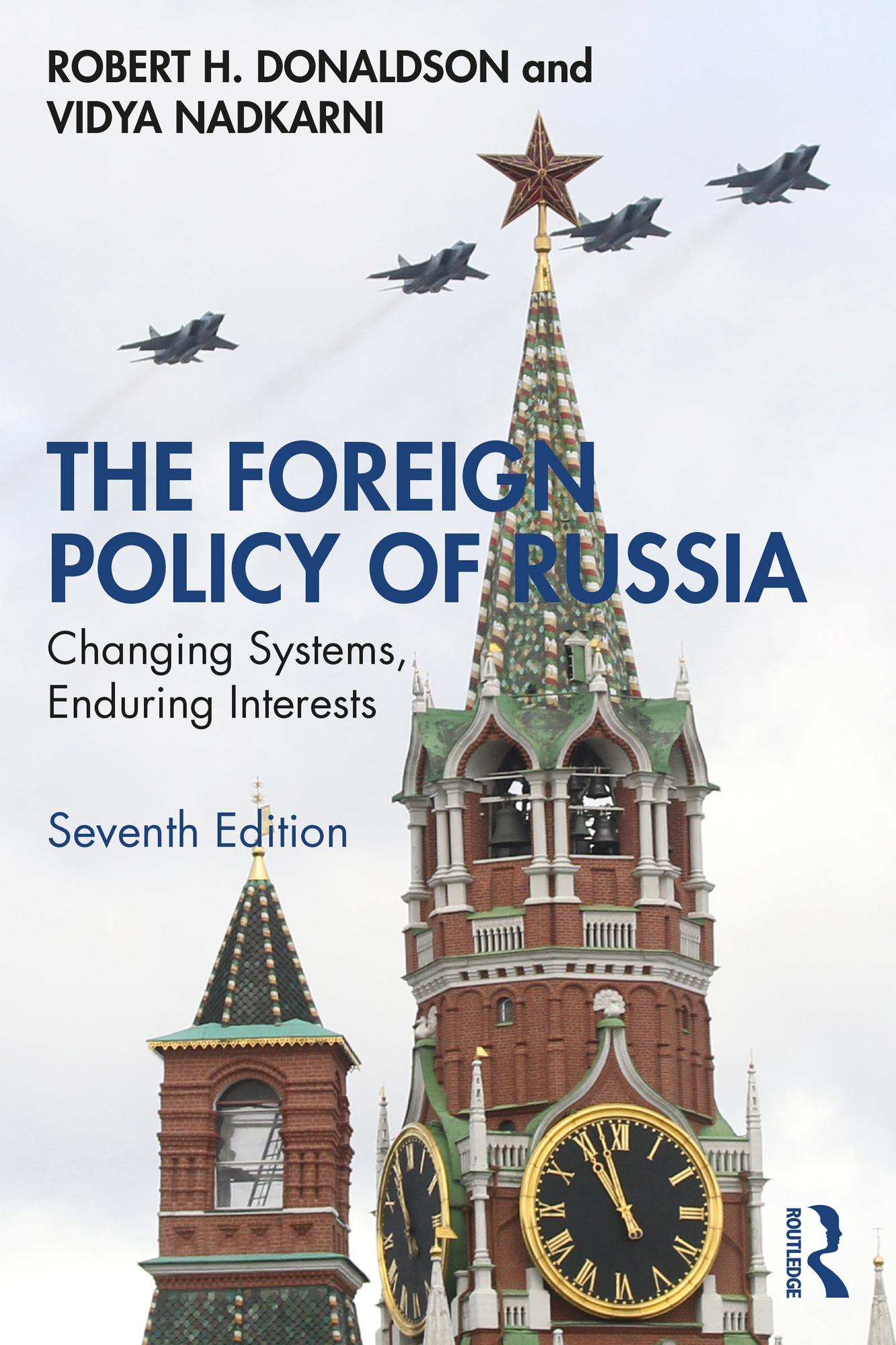
This text traces the lineage and development of Russian foreign policy with the insight that comes from a historical perspective. Now fully updated, the seventh edition incorporates new coverage of issues including relations with the major powers and with other post-communist states, with an emphasis on tensions with the United States and engagement with Ukraine, Crimea, and Syria. International security issues including arms control, sanctions, and intervention continue to grow in importance. Domestic and regional issues related to natural resource politics, human rights, Islamism, and terrorism also persist. Chronologically organized chapters highlight the continuities of Russia’s behavior in the world since tsarist times as well as the major sources of change and variability over the revolutionary period, wartime alliances and Cold War, détente, the Soviet collapse, and the first post-communist decades. The basic framework used in the book is a modified realism that stresses the balance of power and the importance of national interest, and it identifies several factors (both internal and external) that condition Russian policy. The interpretations are original and based on a mix of primary and secondary sources.
New to the Seventh Edition
- A new concluding chapter: Russia Openly Confronts the "Collective West".
- Thoroughly updated coverage of Russia’s bilateral relations with the United States and countries in Europe, Asia, Africa, and Latin America.
- Expanded discussion of Moscow’s efforts to control the flow of information at home and abroad as it employs Russia’s "soft power" assets.
- Russian-American relations, especially with respect to continuing interference in the U.S. elections and to U.S. foreign policy concerns in the Far East, Iran, and Syria.
- The full unfolding of the Ukraine crisis, culminating in Russia’s invasion of Ukraine.
- Vladimir Putin’s escalated claims of the superiority of Russian cultural values and more openly imperialistic ambitions.
- Expanded coverage of Russia’s relations with China and India, now in a separate chapter on this "strategic triangle."
- Greater attention to the impact of climate change on Russian foreign policy, including its heightened activity in the Arctic.
- Significant new developments in the Middle East including the collapse of the nuclear deal with Iran, the expanded Russian role in the Syrian civil war, and the growing complexity in Russian-Turkish relations.
Betal nemt med kort, Klarna, Apple Pay eller Google Pay. Ikke tilfreds? Du har altid 14 dages fortrydelsesret. Læs mere i vores vilkår. Har du spørgsmål, så send os en mail på hello@memmo.org.
Memmo gør det nemmere at studere – uanset hvor du er i verden. Hos os samler du dine kursusbøger og smarte studieværktøjer ét sted: resuméer, quizzer, podcasts og flashcards. Og så er der Ted, din studieven, der svarer på alt, du undrer dig over. Over 50 000 studerende studerer allerede her – bygget til at hjælpe dig med at lære hurtigere og stresse mindre.