
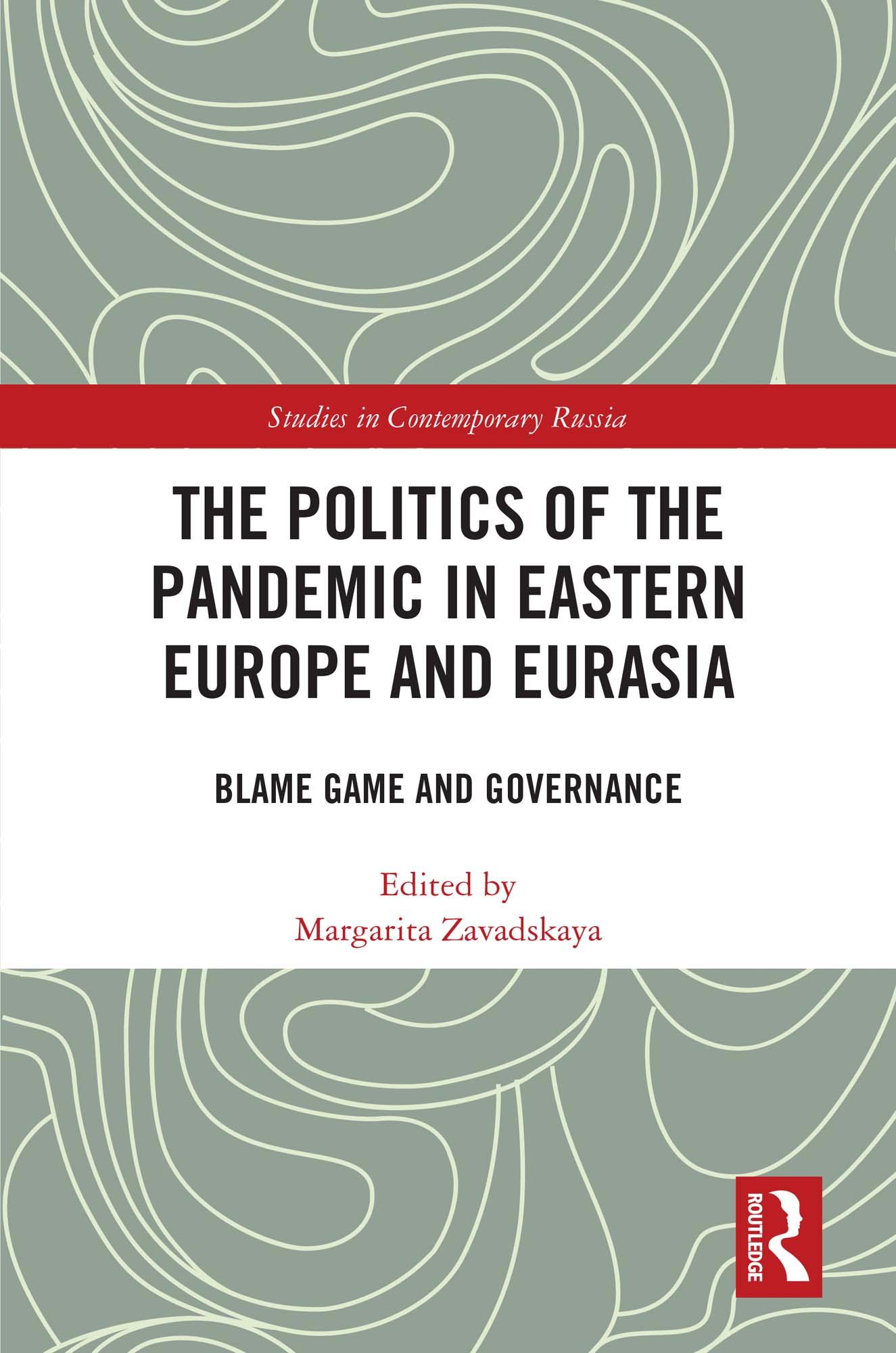
This book provides a comprehensive overview of the political impact of the COVID-19 emergency in central and eastern Europe and Eurasia. Offering a theoretical framework linking the authoritarian, post-Soviet institutional legacy with patterns of political behavior, support and governments’ policies, the expert contributors argue that domestic political regimes mediate and shape citizens’ perceptions of public health crises, and the very regimes’ political survival. The authors explore how the pandemic affected regime change, government stability, business groups and civil societies in more than 15 countries of the region from the discovery of the virus to the vaccination rollout. The studies rely on a broad range of empirical evidence from the region – survey, state statistics, ethnography and interviews.
Formulating, explaining and empirically testing the causal mechanisms that drive political accountability and support through a cross-country comparison and in-depth case studies of popular and electoral support attempting to highlight any patterns specific to the region, this book contributes to studies of governance and political accountability in low-trust countries with authoritarian legacies and proclivities. Drawing on an interdisciplinary approach that brings together area studies, history, sociology and political science, it will also be of value to those interested in systematic effect of political regimes on handling public health crises.
Betal nemt med kort, Klarna, Apple Pay eller Google Pay. Ikke tilfreds? Du har altid 14 dages fortrydelsesret. Læs mere i vores vilkår. Har du spørgsmål, så send os en mail på hello@memmo.org.
Memmo gør det nemmere at studere – uanset hvor du er i verden. Hos os samler du dine kursusbøger og smarte studieværktøjer ét sted: resuméer, quizzer, podcasts og flashcards. Og så er der Ted, din studieven, der svarer på alt, du undrer dig over. Over 50 000 studerende studerer allerede her – bygget til at hjælpe dig med at lære hurtigere og stresse mindre.