
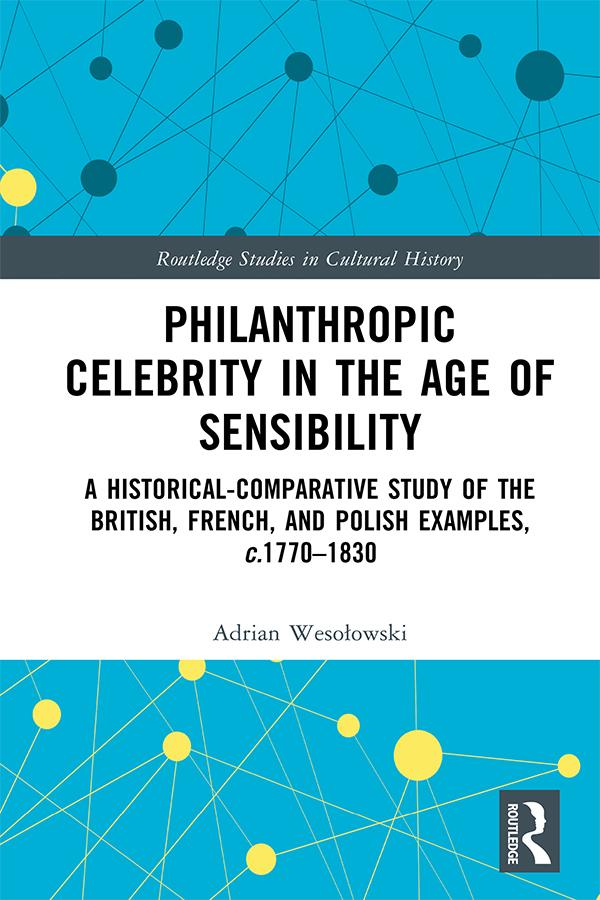
This volume, an original combination of biography, cultural history, and media studies, investigates the first moment in history when philanthropy was used as a self-standing claim to fame and philanthropists started being considered as a distinct breed of public figures.
In its search for the cause of this development, it examines the way in which public images of early philanthropists in different parts of Europe were shaped in the late eighteenth and early nineteenth centuries. The work draws on a comparison between British prison reformer John Howard, Alsatian pastor and humanitarian Jean-Frédéric Oberlin, and Stanisław Staszic, a key figure of Enlightenment politics in Congress Poland. Revealing parallel mechanisms at play in different national contexts, it argues that famous philanthropists ushered in a new genre of fame, ‘philanthropic celebrity’, that placed Enlightenment ideals about virtue within the framework of early celebrity culture.
The book is primarily aimed at advanced students and scholars of history, cultural studies, and social sciences, especially those interested in the concepts of fame and celebrity and in the origins of modern humanitarianism.
Betal nemt med kort, Klarna, Apple Pay eller Google Pay. Ikke tilfreds? Du har altid 14 dages fortrydelsesret. Læs mere i vores vilkår. Har du spørgsmål, så send os en mail på hello@memmo.org.
Memmo gør det nemmere at studere – uanset hvor du er i verden. Hos os samler du dine kursusbøger og smarte studieværktøjer ét sted: resuméer, quizzer, podcasts og flashcards. Og så er der Ted, din studieven, der svarer på alt, du undrer dig over. Over 50 000 studerende studerer allerede her – bygget til at hjælpe dig med at lære hurtigere og stresse mindre.