
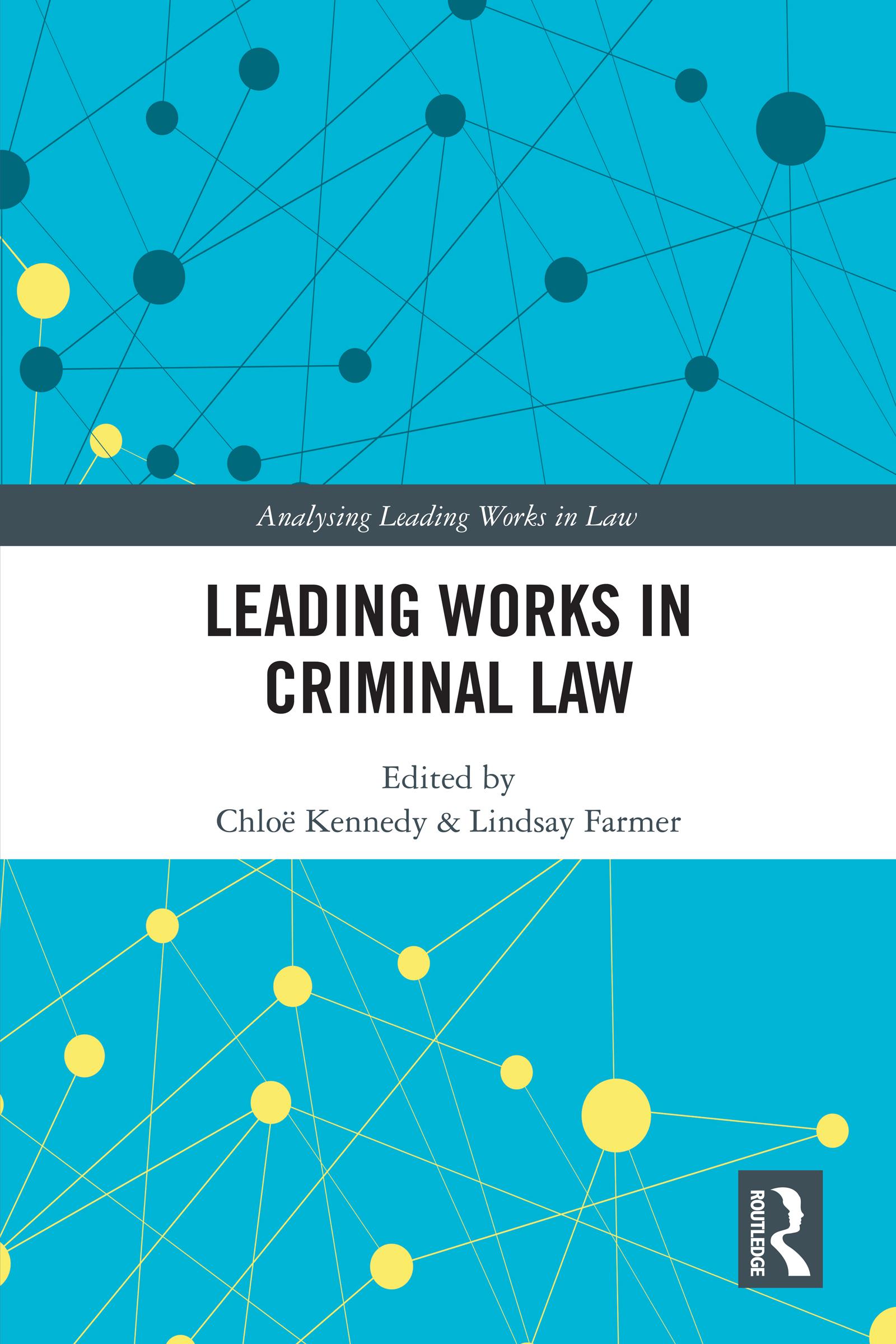
This book analyses a selection of leading works in the criminal law to ask questions about how the modern discipline of criminal law has developed, how it has been deployed in colonial and postcolonial contexts, and how criminal law scholarship has engaged with traditionally marginalised perspectives such as feminism, queer theory, and anti-carceral and abolitionist movements. The works analysed range from Macaulay’s Indian Penal Code (1837) to more recent textbooks and monographs on criminal law, and their jurisdictional reach extends to India, Canada, Australia, Malawi, the UK and the USA. The contributing authors include scholars, activists and legal practitioners, each of whom explores the intellectual development and geographical reach of Anglocriminal law via the work they analyse. Across the collection, the editors and contributors address the question of what it means to be a leading work in criminal law. The book will be a valuable resource for students, academics and researchers working in the area of criminal law.
Betal nemt med kort, Klarna, Apple Pay eller Google Pay. Ikke tilfreds? Du har altid 14 dages fortrydelsesret. Læs mere i vores vilkår. Har du spørgsmål, så send os en mail på hello@memmo.org.
Memmo gør det nemmere at studere – uanset hvor du er i verden. Hos os samler du dine kursusbøger og smarte studieværktøjer ét sted: resuméer, quizzer, podcasts og flashcards. Og så er der Ted, din studieven, der svarer på alt, du undrer dig over. Over 50 000 studerende studerer allerede her – bygget til at hjælpe dig med at lære hurtigere og stresse mindre.