
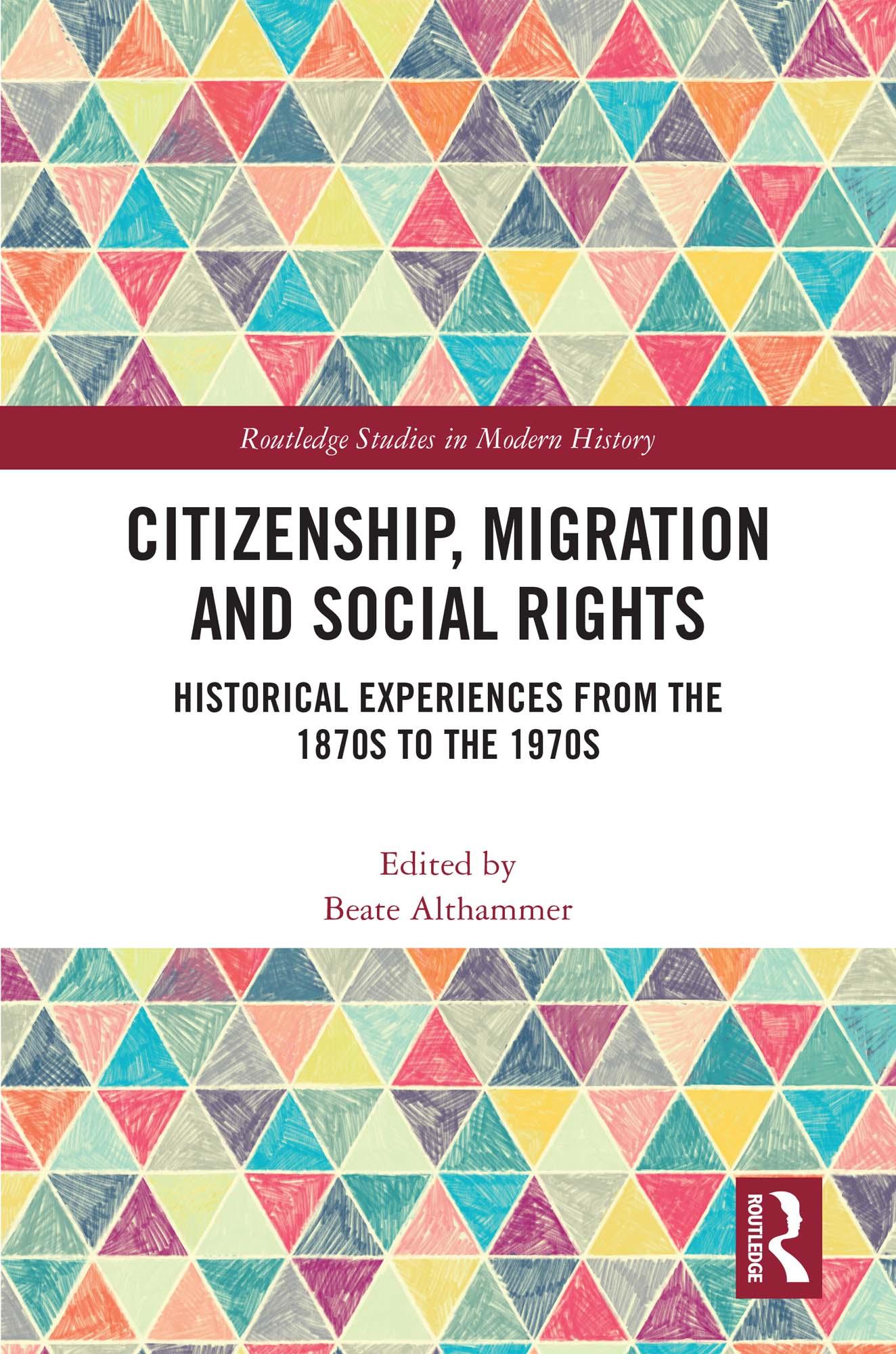
The tensions between European conceptions of the welfare state and transnational migration have caused heated political, public, and academic debates over the last decades. Historiography, however, has not yet explored in depth how European societies struggled with this dilemma-filled relationship in the formative phases of modern welfare states from the late nineteenth century to the post-war era.
The present volume contributes to filling this gap and thus to putting a highly topical issue into historical perspective. The focus is on Europe, but with a wide geographic scope that reaches also across the Atlantic. Following an introductory chapter, eleven case studies deal with four themes. The first part explores the agency of migrants in local-level administrative and judicial procedures that controlled practical access to formal rights. The second section investigates special regulations developed for seasonal labour migrants employed mainly in agriculture. The third part looks at the role of urban social policies in attracting, integrating, but also excluding both domestic and foreign migrants. The final section addresses the gradual globalisation of migrants’ social rights through international conventions.
The book will be of interest not only to historians of welfare, migration, and citizenship, but also to social scientists as well as to graduate students in these fields.
Betal nemt med kort, Klarna, Apple Pay eller Google Pay. Ikke tilfreds? Du har altid 14 dages fortrydelsesret. Læs mere i vores vilkår. Har du spørgsmål, så send os en mail på hello@memmo.org.
Memmo gør det nemmere at studere – uanset hvor du er i verden. Hos os samler du dine kursusbøger og smarte studieværktøjer ét sted: resuméer, quizzer, podcasts og flashcards. Og så er der Ted, din studieven, der svarer på alt, du undrer dig over. Over 50 000 studerende studerer allerede her – bygget til at hjælpe dig med at lære hurtigere og stresse mindre.