
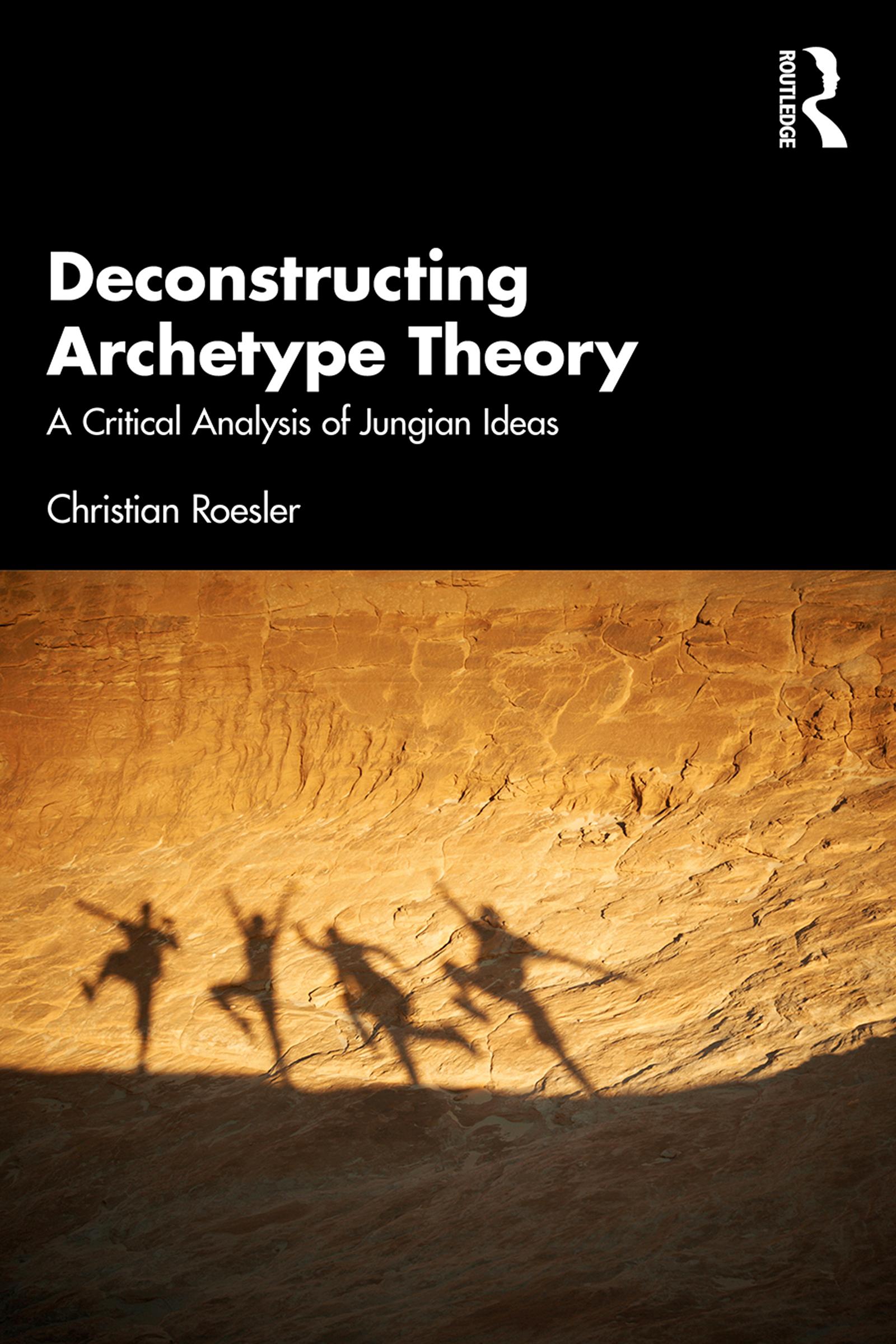
This important book offers a critical and timely reassessment of one of the cornerstones of analytical psychology, Jung’s concept of archetypes.
Exploring not only Jung’s original writings but also the range of interpretations used by Jungian scholars today, the book argues that Jung’s conceptualization of archetype theory is not a single coherent theory; rather, it is four different theories which must be understood separately. Roesler goes onto deconstruct these four ideas: the biological, the anthropological, the transcendental and the psychological in context with contemporary insights from each of these disciplines. A thorough analysis of the state of knowledge in the respective disciplines (i.e. biology, anthropology, religious and mythological studies) makes clear that the claims archetype theory makes in these fields have no support and should be given up. Deconstructing Archetype Theory concludes by arguing that a universal process of psychological transformation is the only part of archetype theory which should be maintained, as it provides a map for psychotherapy.
Rigorous and insightful, this is a book that will fascinate scholars and practitioners of analytical psychology, as well as anyone with an interest in Jung’s original work.
Betal nemt med kort, Klarna, Apple Pay eller Google Pay. Ikke tilfreds? Du har altid 14 dages fortrydelsesret. Læs mere i vores vilkår. Har du spørgsmål, så send os en mail på hello@memmo.org.
Memmo gør det nemmere at studere – uanset hvor du er i verden. Hos os samler du dine kursusbøger og smarte studieværktøjer ét sted: resuméer, quizzer, podcasts og flashcards. Og så er der Ted, din studieven, der svarer på alt, du undrer dig over. Over 50 000 studerende studerer allerede her – bygget til at hjælpe dig med at lære hurtigere og stresse mindre.