
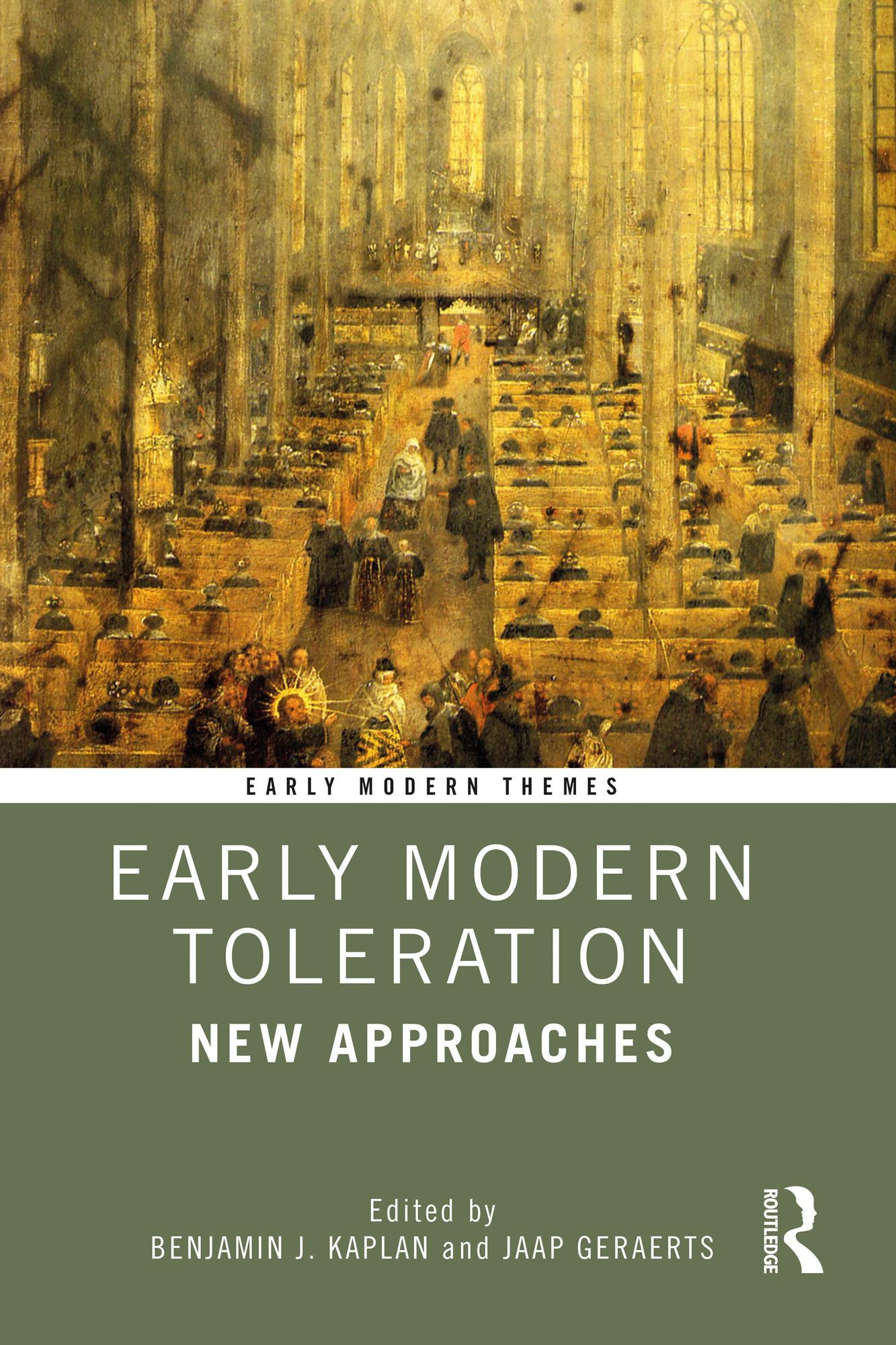
This book examines the practice of toleration and the experience of religious diversity in the early modern world.
Recent scholarship has shown the myriad ways in which religious differences were accommodated in the early modern era (1500–1800). This book propels this revisionist wave further by linking the accommodation of religious diversity in early modern communities to the experience of this diversity by individuals. It does so by studying the forms and patterns of interaction between members of different religious groups, including Christian denominations, Muslims, and Jews, in territories ranging from Europe to the Americas and South-East Asia. This book is structured around five key concepts: the senses, identities, boundaries, interaction, and space. For each concept, the book provides chapters based on new, original research plus an introduction that situates the chapters in their historiographic context.
Early Modern Toleration: New Approaches is aimed primarily at undergraduate and postgraduate students, to whom it offers an accessible introduction to the study of religious toleration in the early modern era. Additionally, scholars will find cutting-edge contributions to the field in the book’s chapters.
Betal nemt med kort, Klarna, Apple Pay eller Google Pay. Ikke tilfreds? Du har altid 14 dages fortrydelsesret. Læs mere i vores vilkår. Har du spørgsmål, så send os en mail på hello@memmo.org.
Memmo gør det nemmere at studere – uanset hvor du er i verden. Hos os samler du dine kursusbøger og smarte studieværktøjer ét sted: resuméer, quizzer, podcasts og flashcards. Og så er der Ted, din studieven, der svarer på alt, du undrer dig over. Over 50 000 studerende studerer allerede her – bygget til at hjælpe dig med at lære hurtigere og stresse mindre.