
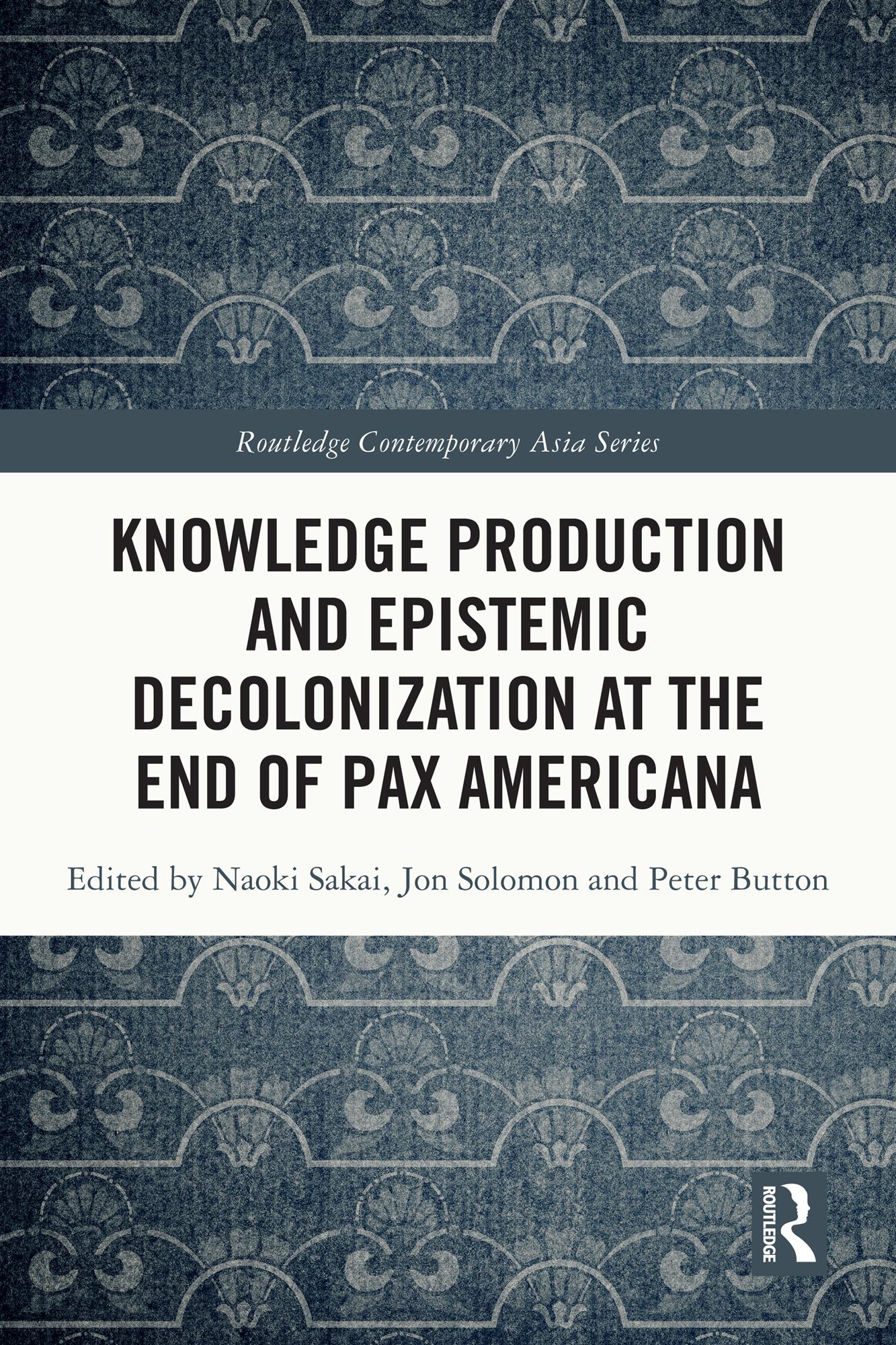
This book critically analyzes the global hegemony of the United States – a hegemony whose innovative aspect consists in articulating postcoloniality to imperial control – in relation to knowledge and knowledge production.
Through targeted case studies on the historical relationship between regional areas and the United States, the authors explore possibilities and obstacles to epistemic decolonization. By highlighting the connection between the control of work and the control of communication that has been at the core of the colonial regimes of accumulation (‘classic colonialism’), they present an entirely new form of disciplinary practice, not based on the equation of evolution and knowledge. An extensive introduction outlines the historical genealogy of Pax Americana epistemic hegemony, while individual chapters examine the implications for different regions of the world and different domains of activity, including visual culture, economy, migration, the arts, and translation.
This interdisciplinary collection will appeal to students and scholars in many fields, including Asian studies, American studies, postcolonialism, and political theory.
Betal nemt med kort, Klarna, Apple Pay eller Google Pay. Ikke tilfreds? Du har altid 14 dages fortrydelsesret. Læs mere i vores vilkår. Har du spørgsmål, så send os en mail på hello@memmo.org.
Memmo gør det nemmere at studere – uanset hvor du er i verden. Hos os samler du dine kursusbøger og smarte studieværktøjer ét sted: resuméer, quizzer, podcasts og flashcards. Og så er der Ted, din studieven, der svarer på alt, du undrer dig over. Over 50 000 studerende studerer allerede her – bygget til at hjælpe dig med at lære hurtigere og stresse mindre.