
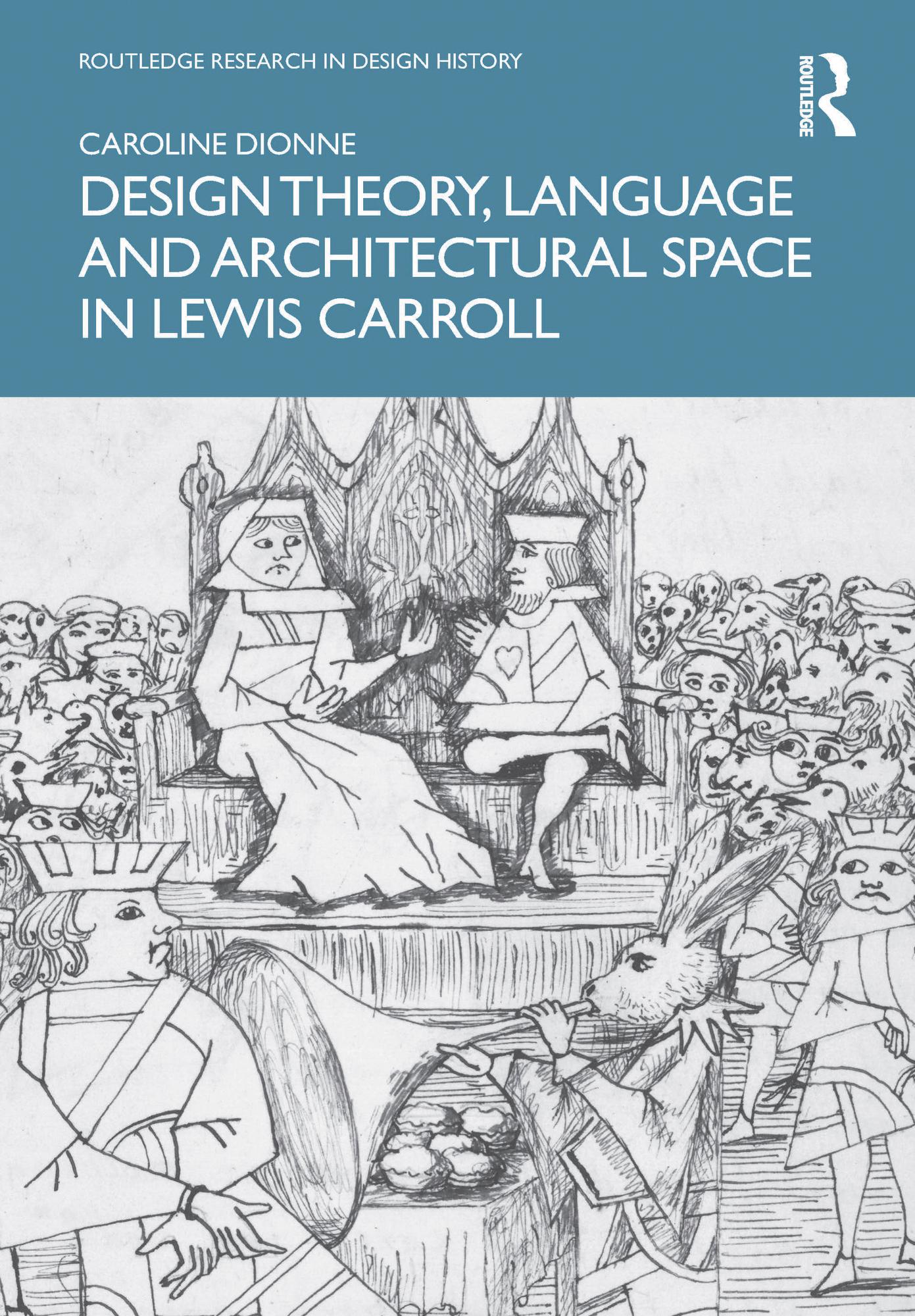
This volume offers spatial theories of the emergent based on a careful close reading of the complete works of nineteenth-century writer and mathematician Lewis Carroll—from his nonsense fiction, to his work on logic and geometry, including his two short pamphlets on architecture.
Drawing on selected key moments in our philosophical tradition, including phenomenology and sociospatial theories, Caroline Dionne interrogates the relationship between words and spaces, highlighting the crucial role of language in processes of placemaking. Through an interdisciplinary method that relates literary and language theories to theories of space and placemaking, with emphasis on the social and political experience of architectural spaces, Dionne investigates Carroll’s most famous children’s books, Alice’s Adventures in Wonderland and Through the Looking-Glass and What Alice Found There, in relation to his lesser-known publications on geometry and architecture.
The book will be of interest to scholars working in design theory, design history, architecture, and literary theory and criticism.
Betal nemt med kort, Klarna, Apple Pay eller Google Pay. Ikke tilfreds? Du har altid 14 dages fortrydelsesret. Læs mere i vores vilkår. Har du spørgsmål, så send os en mail på hello@memmo.org.
Memmo gør det nemmere at studere – uanset hvor du er i verden. Hos os samler du dine kursusbøger og smarte studieværktøjer ét sted: resuméer, quizzer, podcasts og flashcards. Og så er der Ted, din studieven, der svarer på alt, du undrer dig over. Over 50 000 studerende studerer allerede her – bygget til at hjælpe dig med at lære hurtigere og stresse mindre.