
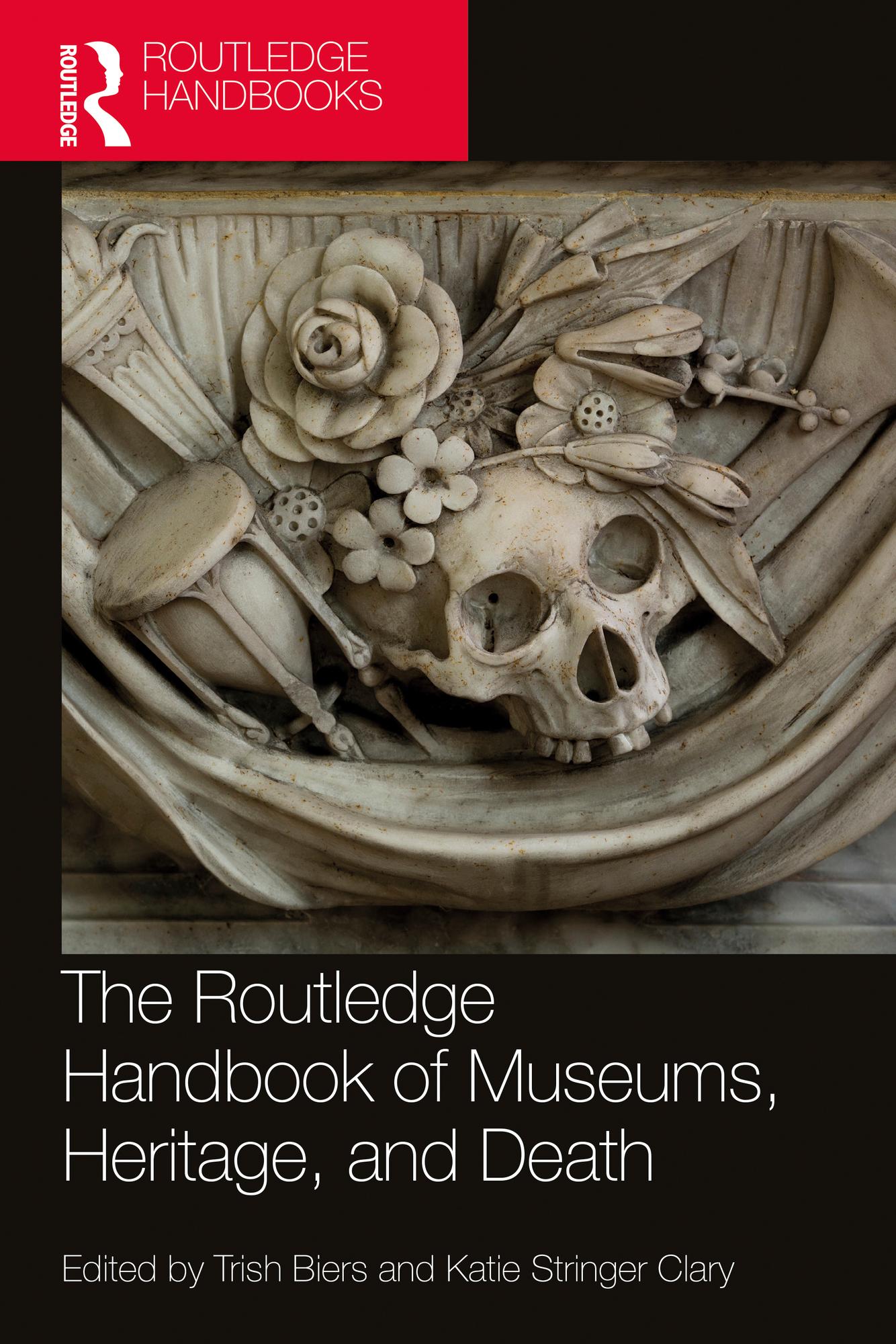
This book provides a comprehensive examination of death, dying, and human remains in museums and heritage sites around the world.
Presenting a diverse range of contributions from scholars, practitioners, and artists, the book reminds us that death and the dead body are omnipresent in museum and heritage spaces. Chapters appraise collection practices and their historical context, present global perspectives and potential resolutions, and suggest how death and dying should be presented to the public. Acknowledging that professionals in the galleries, libraries, archives, and museums (GLAM) fields are engaging in vital discussions about repatriation and anti-colonialist narratives, the book includes reflections on a variety of deathscapes that are at the forefront of the debate. Taking a multivocal approach, the handbook provides a foundation for debate as well as a reference for how the dead are treated within the public arena. Most important, perhaps, the book highlights best practices and calls for more ethical frameworks and strategies for collaboration, particularly with descendant communities.
The Routledge Handbook of Museums, Heritage, and Death will be useful to all individuals working with, studying, and interested in curation and exhibition at museums and heritage sites around the world. It will be of particular interest to those working in the fields of heritage, museum studies, death studies, archaeology, anthropology, sociology, and history.
Betal nemt med kort, Klarna, Apple Pay eller Google Pay. Ikke tilfreds? Du har altid 14 dages fortrydelsesret. Læs mere i vores vilkår. Har du spørgsmål, så send os en mail på hello@memmo.org.
Memmo gør det nemmere at studere – uanset hvor du er i verden. Hos os samler du dine kursusbøger og smarte studieværktøjer ét sted: resuméer, quizzer, podcasts og flashcards. Og så er der Ted, din studieven, der svarer på alt, du undrer dig over. Over 50 000 studerende studerer allerede her – bygget til at hjælpe dig med at lære hurtigere og stresse mindre.