
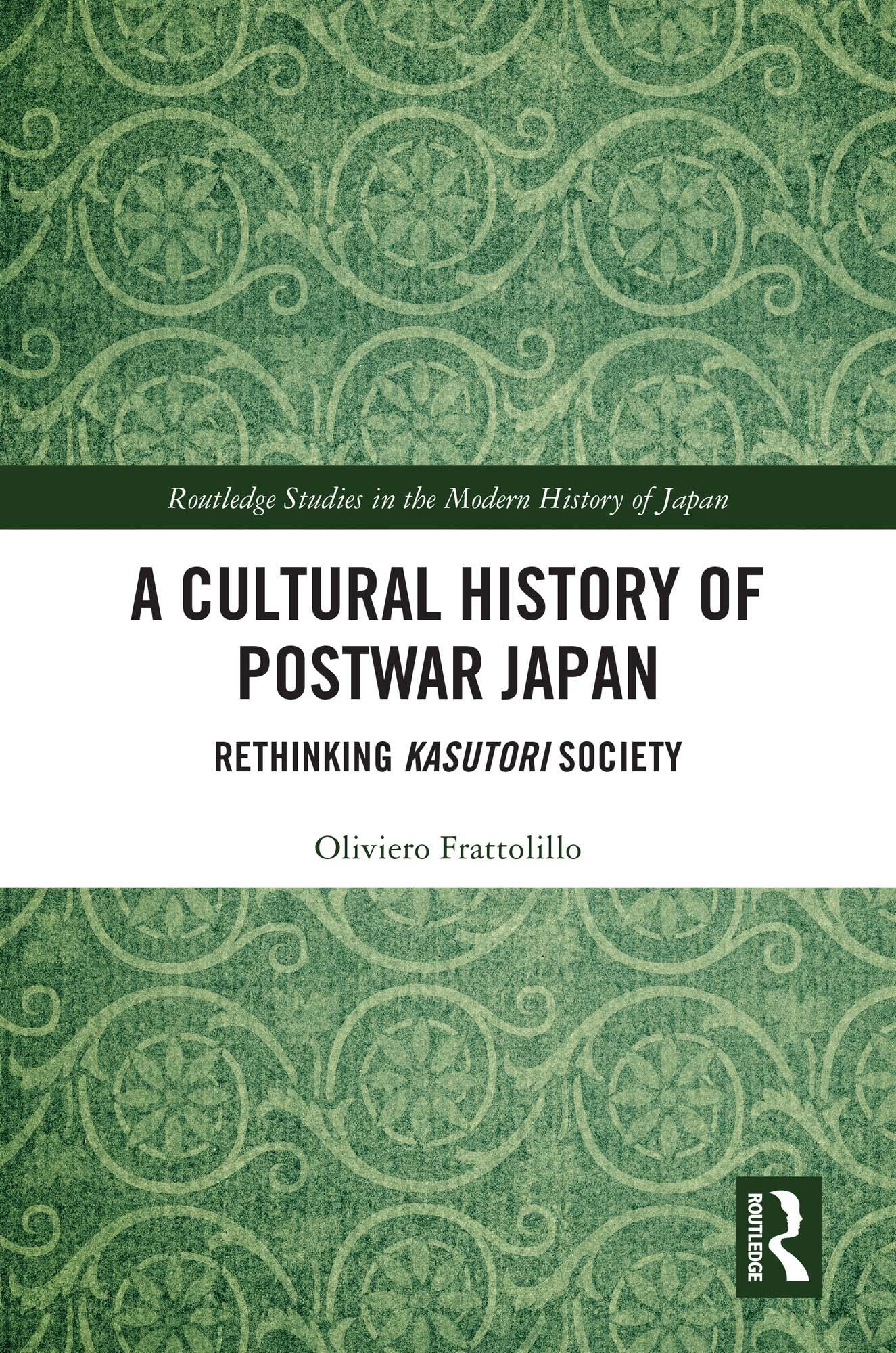
This book is a political and cultural history of the early postwar Japan aiming at exploring how the perception and cultural values of everyday life in the country changed along with the rise of the kasutori culture. Such a process was closely tied with both a refusal of the samurai culture and the interwar debate on modernity, and it resulted in a decadent way of life, exemplified by intellectuals such as Sakaguchi Ango.
It depicts a short-lived radical cultural and social alternative, one that forced people to rethink their relationship to the kokutai, modernity, social roles, daily practices, and the production of knowledge. The subjectivity and daily practices in those years were more important in shaping the cultural identities of the Japanese than the new public ideology of the nation. This challenges some Euro-American historical notions that the new private sphere has emerged in Japan as an effect of the country’s Americanization, rather than from within it. This work not only looks at the immediate aftermath of WWII from the perspective of Japan, but also tries to rethink Westernization in the light of its global appropriation.
This volume is addressed to specialists of Japanese or Asian history, but it will also attract historians of the United States and readers from political and intellectual history, cultural studies, and historiography in general.
Betal nemt med kort, Klarna, Apple Pay eller Google Pay. Ikke tilfreds? Du har altid 14 dages fortrydelsesret. Læs mere i vores vilkår. Har du spørgsmål, så send os en mail på hello@memmo.org.
Memmo gør det nemmere at studere – uanset hvor du er i verden. Hos os samler du dine kursusbøger og smarte studieværktøjer ét sted: resuméer, quizzer, podcasts og flashcards. Og så er der Ted, din studieven, der svarer på alt, du undrer dig over. Over 50 000 studerende studerer allerede her – bygget til at hjælpe dig med at lære hurtigere og stresse mindre.