
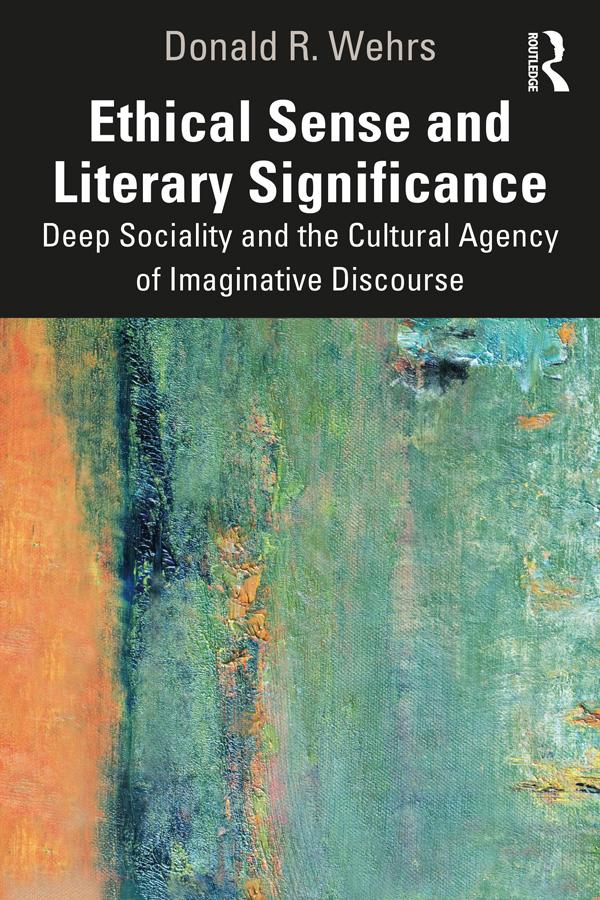
This study blends together ethical philosophy, neurocognitive-evolutionary studies, and literary theory to explore how imaginative discourse addresses a distinctively human deep sociality, and by doing so helps shape cultural and literary history. Deep sociality, arising from an improbable evolutionary history, both entwines and leaves non-reconciled what is felt to be significant for us and what ethical sense seems to call us to acknowledge as significant, independent of ourselves.
Ethical Sense and Literary Significance connects literary and cultural history without reducing the literary to a mere expression of something else. It argues that affective differences between non-egocentric and egocentric registers of significance are integral to the bioculturally evolved deep sociality that verbal art addresses—often in unsettling and socially critical ways. Much imaginative discourse, in early societies as well as recent ones, brings ethical sense and literary significance together in ways that reveal their intricate but non-harmonized internal entwinement.
Drawing on contemporary scholarship in the humanities and sciences, Donald R. Wehrs explores the implications of interdisciplinary approaches to topics central to a wide range of fields beyond literary studies, including neuroscience, anthropology, phenomenological philosophy, comparative history, and social psychology.
Betal nemt med kort, Klarna, Apple Pay eller Google Pay. Ikke tilfreds? Du har altid 14 dages fortrydelsesret. Læs mere i vores vilkår. Har du spørgsmål, så send os en mail på hello@memmo.org.
Memmo gør det nemmere at studere – uanset hvor du er i verden. Hos os samler du dine kursusbøger og smarte studieværktøjer ét sted: resuméer, quizzer, podcasts og flashcards. Og så er der Ted, din studieven, der svarer på alt, du undrer dig over. Over 50 000 studerende studerer allerede her – bygget til at hjælpe dig med at lære hurtigere og stresse mindre.